



“They Call It ‘Ninth Heaven’”: China’s Massive Drone Mothership Could Unleash 100 Kamikaze Drones at Once (but it might self-destruct first)
 By
Adam Kovács
By
Adam Kovács
| IN A NUTSHELL |
|
In the realm of modern warfare, technological advancements continue to reshape the battlefield. One such development is China’s ambitious project, the Jiu Tian or “Ninth Heaven” drone mothership. This colossal aircraft aims to deploy swarms of kamikaze drones, potentially altering military strategies. The concept is not without its challenges, and while it promises to expand battlefield capabilities, it also raises significant concerns about feasibility and vulnerability. As the U.S. monitors these developments, questions arise about the future of drone warfare and the technological hurdles that must be overcome.
The Concept of the Drone Mothership
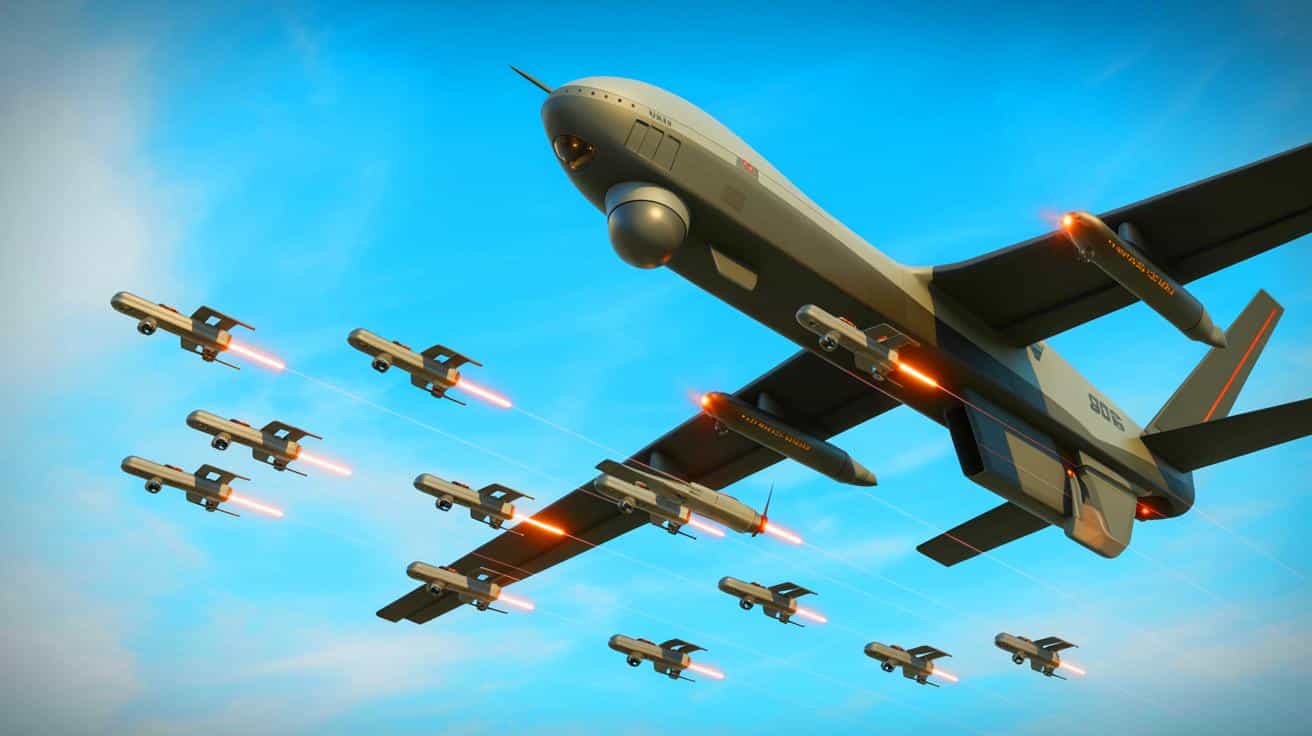
The Jiu Tian drone mothership represents a novel approach to modern warfare. Its primary function is to release up to 100 small, kamikaze drones designed to engage various targets on the battlefield. The idea behind this is to create a swarm of drones that can cover a larger geographic area, offering strategic advantages in reconnaissance and attack missions. This concept could allow for rapid deployment and concentration of drones in mission-critical areas, potentially overwhelming enemy defenses.
However, the practicality of housing such a large number of drones in one aircraft remains untested. The technical challenges are significant, including maintaining control over the drones and ensuring they hit their intended targets. Moreover, the aircraft itself is not designed for stealth operations, making it vulnerable to modern air defense systems. The Jiu Tian’s large size and lack of stealth capabilities could limit its effectiveness in contested airspaces where advanced defenses are present.
Technological Challenges and Vulnerabilities
The development of the Jiu Tian highlights several technological and operational challenges. One major issue is the physical constraints of the drones themselves. Small drones struggle to operate at high altitudes due to thin air, which impacts their lift and thrust capabilities. This means that the Jiu Tian would need to fly at lower altitudes to successfully deploy its drones, putting it at risk of being targeted by surface-to-air missiles.
Another challenge lies in the control systems required to operate the drones. Current technology does not support the level of autonomy needed for a swarm of drones to operate independently. Each drone would require a human operator, tethered through satellite links, which is logistically complex and resource-intensive. The Jiu Tian's current setup suggests inefficiencies and reliability issues, particularly against well-defended targets with high-altitude air defenses.
Comparisons and Lessons from Other Systems
The U.S. has explored similar concepts in the past, such as the mass drone-drop test conducted nine years ago. During this test, a swarm of 103 Perdix drones was released, demonstrating the potential of swarm tactics. However, the U.S. has since moved toward more sophisticated systems that can launch drones from larger aircraft, such as the Rapid Dragon system and Common Launch Tubes. These systems emphasize versatility and adaptability rather than overwhelming numbers.
The Jiu Tian project serves as a potential testbed for future advancements in drone autonomy and delivery systems. The focus is on developing scalable drone swarms capable of executing coordinated attacks with minimal human intervention. This requires significant investments in artificial intelligence and machine learning to achieve true swarm intelligence, where drones can make real-time decisions and adjust to external events as a cohesive unit.
The Future of Drone Warfare
The advent of the Jiu Tian raises important questions about the future of drone warfare. As militaries around the world continue to develop and deploy unmanned systems, the balance between cost and capability becomes crucial. While small, inexpensive drones offer certain tactical advantages, they also face limitations in range and altitude. Conversely, more advanced drone systems require significant investments in technology and infrastructure.
The Jiu Tian's development underscores the ongoing race to innovate in unmanned aerial systems. It highlights both the potential and the challenges of integrating large-scale drone swarms into military operations. As technology progresses, will future drone systems prioritize quantity over quality, or will they evolve to incorporate more sophisticated capabilities? How will these advancements shape the strategies and outcomes of modern warfare?