



“3D-Printed Cells Fight Diabetes”: Scientists Create Pancreatic Islets That Could Revolutionize Personalized Treatment Worldwide
 By
Adam Kovács
By
Adam Kovács
| IN A NUTSHELL |
|
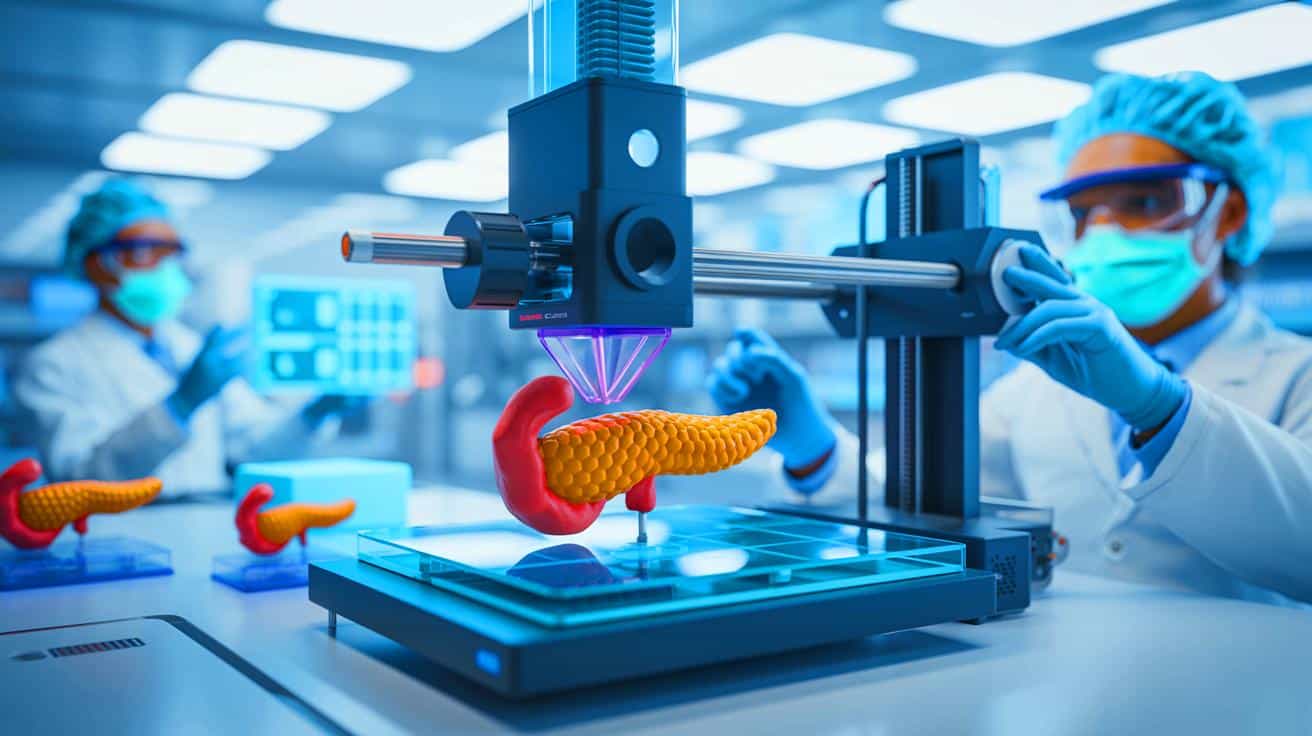
In a groundbreaking development for diabetes treatment, scientists have successfully 3D-printed human islets, potentially eliminating the need for insulin injections. This innovative approach could revolutionize the way we treat diabetes, offering a more personalized and less invasive therapy for millions of people worldwide. With a focus on recreating the natural environment of the pancreas, this advancement promises to improve the survival and functionality of transplanted cells, paving the way for a new era in diabetes care.
Revolutionizing Diabetes Treatment with 3D-Printed Islets
Diabetes affects millions globally, requiring daily management and treatment. Traditional methods like insulin injections are invasive and burdensome. However, the recent breakthrough in 3D printing human islets offers a transformative approach. Led by Dr. Quentin Perrier, scientists have developed a technique that uses a specialized bioink to recreate insulin-producing cells. These cells, known as islets, are crucial in regulating blood sugar levels.
The innovation lies in the ability to 3D print functional islets using a bioink that mimics the pancreas’s support structure. This development could provide a less invasive treatment option for Type 1 diabetes patients. By implanting these islets under the skin, rather than traditional islet transplants into the liver, patients might experience fewer complications and improved outcomes.
Dr. Perrier and his team have successfully addressed the challenges faced in previous attempts, ensuring the integrity and functionality of the printed islets. This breakthrough not only demonstrates the potential for a personalized approach to diabetes treatment but also signifies a major leap forward in medical science.
The Science Behind 3D-Printing Human Islets
The process of 3D-printing human islets involves meticulous calibration of the printer settings and the formulation of a unique bioink. Scientists used low pressure and slow print speeds to reduce stress on the fragile islets, ensuring they retained their natural shape. The bioink, a combination of alginate and decellularized human pancreatic tissue, provided the necessary environment for the islets to thrive.
Laboratory tests revealed that the bioprinted islets maintained over 90% cell survival. These cells remained functional for up to three weeks, responding effectively to glucose and releasing insulin as needed. This enhanced responsiveness underscores the potential for clinical application, offering a more efficient and reliable treatment method compared to current islet preparations.
The success of these experiments highlights the importance of the bioink’s composition and the precise control of the printing process. By ensuring the islets’ survival and functionality, scientists have set the stage for further advancements in diabetes treatment.
Smart Islets: A New Era in Diabetes Management
The bioprinted islets demonstrated remarkable capabilities, adapting to blood sugar levels more effectively than traditional methods. By day 21, these islets showed improved sensing and reaction to glucose, indicating a significant advancement in their design. The porous architecture of the printed islets allowed for better oxygen and nutrient flow, promoting long-term survival and function post-transplantation.
This study marks a significant departure from previous research, utilizing real human islets instead of animal cells. The implications of this are profound, potentially leading to an off-the-shelf treatment that could eliminate the need for daily insulin injections. The team’s ongoing research includes testing in animal models and exploring storage options like cryopreservation, which could make these therapies widely available.
As the research progresses, the potential for adapting this method to use alternative insulin-producing cells, such as stem-cell-derived islets and xeno-islets from pigs, could address donor shortages and further expand treatment options for diabetes patients.
The Future of Diabetes Treatment: Personalized and Accessible
While the current focus is on refining the 3D-printing process and ensuring the viability of the printed islets, the implications for diabetes treatment are vast. The ability to create a personalized therapy that is both effective and accessible could transform the quality of life for millions of individuals living with diabetes.
As clinical trials continue, the potential for this technology to become a mainstream treatment option grows. The hope is that these advancements will lead to a more sustainable and less invasive solution for diabetes management, reducing the reliance on insulin injections and improving patient outcomes.
With these promising developments, the question remains: How soon can we integrate 3D-printed islets into everyday diabetes treatment, and what impact will this have on the global diabetes community?
Continue reading