


The best european cities for art lovers
 By
Adam Kovács
By
Adam Kovács
|
IN A NUTSHELL |
|
Europe’s cultural map remains a compelling argument for the art-minded traveler: concentrated within a handful of cities are museums and collections that define epochs, provoke debate and reshape taste. From the grand halls of Paris and the Renaissance sanctuaries of Florence to the modern provocations of Bilbao and the canal‑side treasures of Amsterdam, the continent stages an unrivaled conversation between past and present. These urban centers are not merely repositories of masterpieces; they are active agents in how we interpret artistic value, national identity and historical memory.
Practical pressures, timed tickets, peak crowds and ever‑changing exhibitions, mean planning is no longer optional for serious visitors. Note that this guide includes a small number of affiliate links; purchases made through them can generate a commission at no extra cost to readers. For anyone intent on seeing Europe’s essential works, the choice of city determines the narratives you will encounter, the movements you will trace and the surprises you will take home.
Paris: the unrivaled density of masterpieces
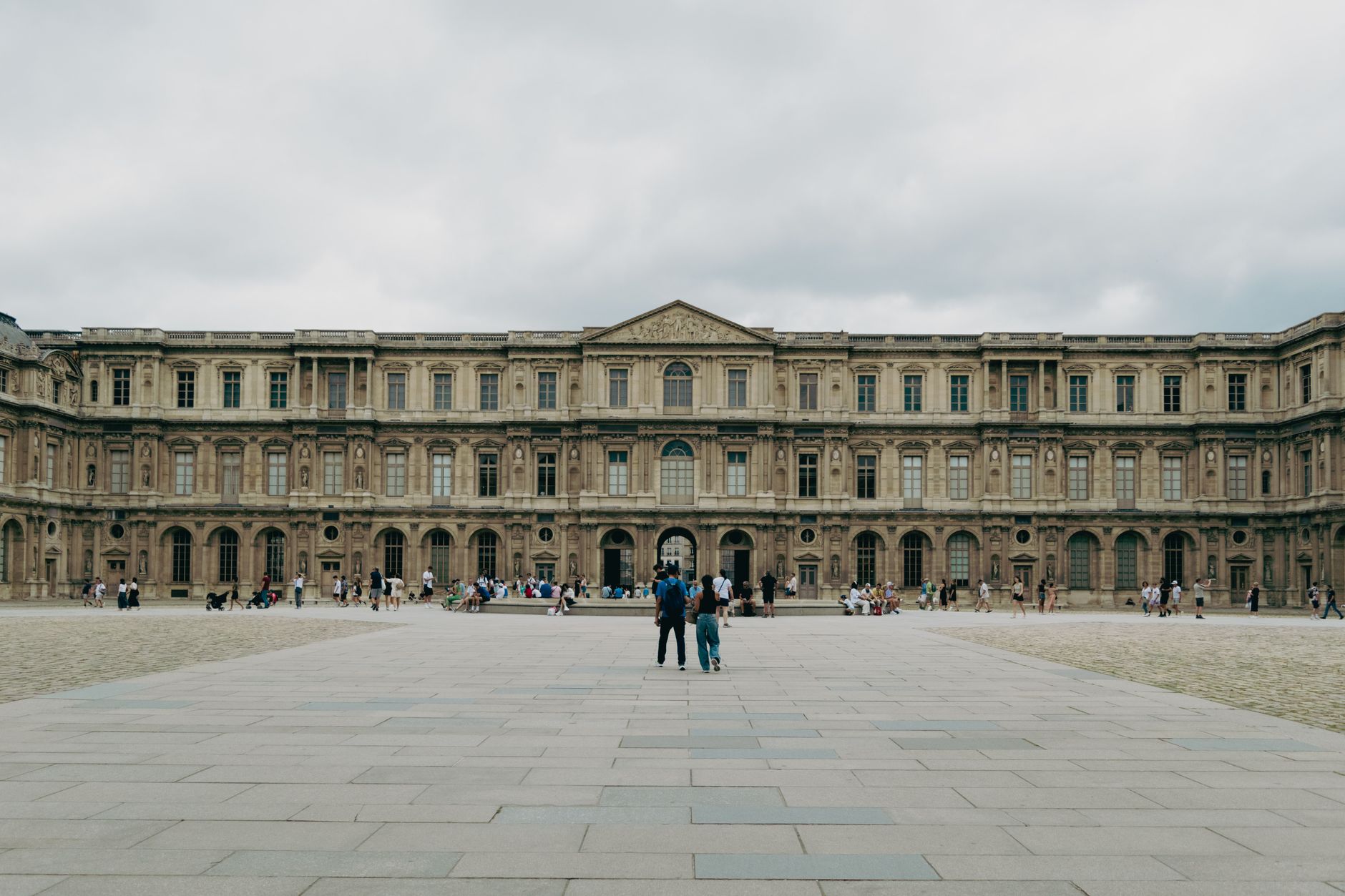
Paris remains the most persuasive argument for anyone who insists that the best museum experiences are inseparable from the city that nurtures them. The Louvre, Musée d’Orsay and Centre Pompidou are not isolated attractions; they form a network that stages the evolution of European visual culture from antiquity through modernity. If your trip is about quality rather than ticking boxes, prioritizing Paris will repay you in sustained aesthetic returns.
The Louvre’s scale forces a curatorial decision: you either accept being consumed by its magnitude or you curate your own visit. That is why booking a timed-entry ticket or a private, guided route is rational rather than indulgent, it converts overload into a focused experience. The Musée d’Orsay complements that approach by offering an unrivaled concentration of Impressionist and Post-Impressionist works in an environment whose architecture amplifies the paintings’ light and color. Compared to the Louvre’s chronological and encyclopedic presentation, the Orsay’s clarity makes complex movements instantly legible.
The Centre Pompidou, for critics and curators alike, proves that modern architecture can be both manifesto and museum: its visible structure argues for the art inside. For smaller, higher-value encounters, the Rodin Museum and the myriad single-artist houses reward the patient visitor with intimacy and contextual depth. Pragmatically, you should combine blockbuster venues with at least one intimate house museum to achieve a meaningful balance.
For further reading on why Paris remains an essential art destination, curated travel roundups such as The Times and The Culture Trip provide useful comparative perspectives, while specialist travel journals outline practical itineraries and seasonal strategies. These resources can help you decide whether to prioritize blockbuster masterpieces or nuanced discoveries during a Paris stay.
Florence and Rome: the argument for Renaissance centrality
Florence and Rome present a persuasive case that the Renaissance is not a historical period to visit casually; it demands a city-scale engagement. Florence concentrates the social and political origins of the movement: the Uffizi and Galleria dell’Accademia are less collections than civic statements about patronage, technique and public identity. Botticelli, Michelangelo and Leonardo are not merely displayed; they define the urban experience. If you want to understand how art transformed public life, Florence is irreplaceable.
The Uffizi’s density of major works forces you to choose what to study closely; the reward for deliberate focus is a clear view of how pictorial language evolved across decades. The Accademia’s placement of Michelangelo’s David in a compact space turns sculpture into a social document: the statue reads as civic rhetoric as much as masterful anatomy. Meanwhile, Florence’s palaces and chapels reinforce why context matters when viewing Renaissance art.
Rome advances the argument by demonstrating how the Renaissance matured into grand, multi-media religious and political displays. The Vatican Museums, with the Sistine Chapel and Raphael Rooms, are orchestrated to persuade and to overwhelm; Bernini’s sculptures in churches and the Borghese Gallery’s concentrated masterpieces show how three-dimensional art competed with painting for civic and sacred influence. Rome proves that the Renaissance was not merely about refinements in technique but about constructing monumental narratives.
Both cities reward slow encounters: reserve timed tickets, choose one or two marquee sites per day, and permit long, unhurried viewing sessions. For curated itineraries and deeper historical framing, consult luxury travel guides and specialist posts that relate architecture, patronage and museum practice to visitor strategy.
Amsterdam, The Hague and Bilbao: Dutch precision and Basque boldness
The Netherlands and northern Spain make a compact but forceful argument for diversity within European museum culture. Amsterdam represents rigorous national self-portraiture: the Rijksmuseum situates Golden Age painting within civic identity, while the Van Gogh Museum isolates an artist to illustrate modern subjectivity. The Stedelijk and Moco articulate the city’s role in contemporary debates about street art and institutional display. Amsterdam demonstrates how a small geography sustains a wide conceptual spectrum.
The Hague refines the Dutch case with intimacy: the Mauritshuis concentrates masterpieces into a focused interpretive program, Vermeer’s Girl with a Pearl Earring and Rembrandt’s major works become more legible here than in any encyclopedic setting. Nearby museums dedicated to Mondrian and Escher underline how the Netherlands fostered both abstraction and optical play.
Bilbao presents a different but related thesis: architecture and collection can redefine a city’s identity. The Guggenheim Bilbao is case study and manifesto, proving that ambitious contemporary architecture plus a shifting program of modern works can catalyze urban regeneration. The Museo de Bellas Artes offers a corrective: a deep historical collection that argues for a balanced museum ecosystem rather than a single iconic anchor.
| City | Museum | Highlight | Visiting tip |
|---|---|---|---|
| Amsterdam | Rijksmuseum | Rembrandt’s Night Watch | Book morning entry to avoid crowds |
| Amsterdam | Van Gogh Museum | Largest Van Gogh collection | Pre-book timed tickets |
| The Hague | Mauritshuis | Girl with a Pearl Earring | Combine with a local guided tour |
| Bilbao | Guggenheim | Contemporary installations & Gehry architecture | Consider an architect-led walk plus museum tour |
These cities argue for a calibrated approach: combine the national narrative of Amsterdam, the concentrated mastery of The Hague, and Bilbao’s metropolitan transformation to experience how museums can define civic character. For travel writing and comparative lists that support this framing, see pieces published by The Times, The Luxury Travel Book and The Culture Trip.
Munich, Vienna and Copenhagen: how regional institutions shape artistic eras
Arguing that regional museums matter is easiest with examples from Munich, Vienna and Copenhagen. The Munich Kunstareal demonstrates institutional layering: the Alte Pinakothek, Neue Pinakothek and Pinakothek der Moderne create a museum quarter in which historical continuity is legible across buildings. The Lenbachhaus and Brandhorst bring concentrated Expressionist and contemporary holdings into a single district, showing that museum ecosystems succeed when they cluster complementary strengths.
Vienna makes an even stronger claim because its museum story extends from imperial collection-building to modernist rebellion. The Kunsthistorisches Museum and Belvedere show how dynastic collecting can translate into public cultural capital; the Leopold and Albertina prove that private passion and graphic art remain decisive for modern scholarship. Vienna’s museums argue that political power and private collecting together produce a uniquely rich civic palette.
Copenhagen illustrates a different logic: a national character shaped by design and a measured embrace of modernity. The Ny Carlsberg Glyptotek’s blend of ancient sculpture and Impressionist painting, together with the nearby Louisiana Museum’s modernist displays, demonstrates how scale and landscape can complement curatorial ambition. These institutions show that good museums are not always the largest but rather the most coherent in their statements about art and society.
When planning, factor in museum quarters and inter-museum passes that reduce transit friction. Read regional travel journalism, for instance pieces on cultural highlights and evolving travel trends, to align visits with temporary exhibitions and infrastructure updates. The argument here is institutional: concentrated collections, civic architecture and curatorial clarity make these cities disproportionately rewarding for committed visitors.
London, Madrid, Venice and Berlin: strategic visiting and practical rules
These cities form the pragmatic backbone of any European art itinerary because they combine breadth with institutional accessibility. London’s mix of free national museums and paid specialist galleries allows a visitor to tailor depth without excessive cost. The British Museum and National Gallery offer encyclopedic access; the Tate Modern and V&A provide targeted explorations of modernity and design. The sensible visitor treats free entry as an invitation to repeat visits rather than a single marathon.
Madrid makes the focused-case for triangulation: Prado, Reina Sofía and Thyssen form a complementary triad that demonstrates Western art’s historical sweep into modernity. Booking small-group tours here pays off because these museums reward comparative reading across rooms. Venice emphasizes in situ experience: palazzo museums and the Peggy Guggenheim Collection argue that setting alters meaning. The Doge’s Palace and Scuola Grande di San Rocco are reminders that public architecture and private collecting are both museums in their own right.
Berlin synthesizes archaeological depth and contemporary critique: Museum Island’s Pergamon and Neues Museum confront antiquity, while the East Side Gallery and numerous smaller contemporary houses testify to Berlin’s role as laboratory for politically engaged art. These contrasts demand a deliberate schedule: reserve marquee tickets in advance and leave margin for unplanned gallery discoveries.
Practical rules: buy timed-entry tickets, visit early or late to avoid peak crowds, and mix large institutions with intimate houses to avoid fatigue. This guide contains a small number of affiliate links; if you choose to purchase through them I may earn a modest commission at no additional cost to you, a minor contribution that supports further research and curated recommendations. For comparative city-break planning and curated itineraries, refer to travel resources such as TheTravel, ForTheStory, The Luxury Travel Book and Visegrad Post, which regularly publish updates on cultural travel trends and festival programming.
Europe offers an unrivaled spectrum of cultural experiences, and the cities highlighted stand as compelling proof: from the vaulted halls of the Renaissance in Florence to the daring galleries of Bilbao and the encyclopedic collections of Paris and London. It is reasonable to argue that these destinations do more than display art; they shape how we understand artistic movements, national identities, and the history of visual expression. Choosing which city to visit should be driven by what you want to see, whether that is concentrated masterworks, immersive modern shows, or the layered context that palace museums and archaeological collections provide.
Practical considerations strengthen that argument. Popular institutions draw huge crowds, so a sensible plan that includes pre-booked tickets, well-timed arrivals, and the selective use of guided tours or private visits will produce a far richer experience than a scattershot approach. If your goal is depth rather than breadth, prioritize fewer cities with strong thematic focus, Renaissance in Florence, Dutch Golden Age in Amsterdam, or modernism in Vienna, rather than attempting to skim every major museum on a single trip. That strategy yields better engagement with the works and avoids the fatigue that dilutes appreciation.
Finally, the true case for these cities rests on variety: established institutions and smaller, singular collections coexist, ensuring every kind of art lover finds a provocation or revelation. Invest time in research, align your itinerary with your artistic priorities, and accept that some treasures require advance booking or a willingness to visit at off-peak hours. On balance, the payoff is undeniable: sustained encounters with masterpieces, surprising discoveries in lesser-known venues, and the kind of cultural immersion that transforms casual sightseeing into a sustained, meaningful dialogue with art.
Frequently Asked Questions, The Best European Cities for Art Lovers
Q: Which cities should every serious art lover prioritize in Europe?
A: For a focused and rewarding itinerary prioritize Paris, Florence, Amsterdam, Vienna, Madrid, London, Rome, Venice, Bilbao, Munich, and Berlineach offers distinct strengths in terms of Renaissance, Baroque, Impressionist, and contemporary collections and will deliver the greatest return on a limited trip.
Q: Which city is the undisputed destination for Renaissance art?
A: Florence is indispensable for Renaissance devotees: the Uffizi and the Galleria dell’Accademia (home to Michelangelo’s David) make Florence the primary argument for anyone traveling to study or admire the High Renaissance.
Q: Where should I go for Impressionism and Post‑Impressionism?
A: If your priority is Impressionism and Post‑Impressionism, choose Paris (the Musée d’Orsay) and Amsterdam (the Van Gogh Museum), both present concentrated, contextualized collections that make comparative study meaningful rather than scattershot.
Q: Which European cities are best for modern and contemporary art?
A: For modern and contemporary practice, the most compelling cases are Bilbao (the Guggenheim’s transformative architecture and contemporary holdings), London (Tate Modern), Berlin (cutting‑edge galleries and exhibition spaces), and Paris (Centre Pompidou), plus Basel during Art Basel season, each city defines different facets of the recent art conversation and should be chosen according to your interest in installation, painting, or institutional programming.
Q: How should I plan to avoid the worst crowds at major museums?
A: The sensible strategy is to book timed‑entry tickets or guided tours in advance, aim for early morning or late afternoon slots, and reserve a private tour for the busiest icons (for example the Louvre); that combination reliably yields a more focused, less frenetic experience.
Q: Are there cost‑saving opportunities like free admission days, and are they worth it?
A: Many institutions offer free admission days or evenings, but those times are often far more crowded and therefore not ideal if you value quiet contemplation, free entry is attractive for budget travel, but it is a trade‑off in terms of time and comfort.
Q: Should I prioritize museum highlights or explore entire museum districts?
A: An argumentative but practical approach: prioritize a handful of must‑see masterpieces in each city (for example Botticelli at the Uffizi, Guernica at the Reina Sofía, Mona Lisa at the Louvre) and then use museum neighborhoods, like Museum Island in Berlin, the Kunstareal in Munich, or the MuseumsQuartier in Vienna, to fill in context if time allows; this yields depth without exhaustion.
Q: Are guided tours worth the price?
A: Yes, a well‑led guided tour or small group visit provides essential context, prioritizes highlights, and frequently includes skip‑the‑line access; for complex collections or for first‑time visitors to major museums, guided interpretation converts passive viewing into understanding.
Q: How many museums should I plan to visit in a single day?
A: Realistically plan for one to two major museums per day: large institutions demand time for meaningful engagement, and packing more encourages surface‑level viewing; prioritize quality and depth over quantity to truly appreciate the works.
Q: Which cities are most family‑friendly or accessible for non‑specialists?
A: Cities such as London (many free museums with family programs), Amsterdam (interactive displays at the Van Gogh Museum), and Paris (smaller house museums and child‑oriented programming) make persuasive cases for family visits; look for museums advertising family trails, audio guides for kids, and accessible facilities before committing an itinerary.
Q: When is the best time of year to visit these museum capitals?
A: The most convincing choice is the shoulder seasons of spring and autumn: you avoid the peak summer crowds, enjoy milder weather for walking between sites, and often find better availability for timed‑entry tickets and guided tours.
Q: Do you earn money from links or recommendations in this guide?
A: This guide includes a small number of referral links; if you choose to use them I may receive a modest commission at no additional cost to you. That support helps maintain the research and recommendations, but it never changes the argument I make about which museums and cities deserve your time.