

Why Europe is a must-see for history enthusiasts
 By
Adam Kovács
By
Adam Kovács
|
IN A NUTSHELL |
|
Europe is indispensable for history enthusiasts. With an unparalleled concentration of heritage sites, UNESCO-designated monuments, layered cityscapes and extensive archaeological complexes, it presents a continuous timeline from Palaeolithic cave art and ancient empires to medieval courts, colonial expansion and twentieth-century conflicts. Cities such as Rome, Athens and Prague compress centuries into walkable districts where temples, palaces and museums coexist with battlegrounds and preserved neighborhoods that document social transformation. Robust preservation efforts and accessible scholarship let visitors move seamlessly from curated exhibitions to immersive ruins, guided tours and primary archives that convert objects into coherent narratives. Equally persuasive is the variety of sites, royal palaces, fortified castles, industrial complexes and solemn memorials, each providing a distinct perspective on power, belief and everyday life. Coupled with dense transport networks, multilingual interpretation and world-class institutions, Europe’s infrastructure makes serious historical inquiry both practical and immediate, transforming curiosity into structured exploration of the past.
Layered eras accessible within short distances
Europe’s decisive appeal for anyone who loves history is its concentration of distinct eras coexisting within remarkably small geographic footprints. You can stand where classical Greece theorized politics and philosophy at the Acropolis, then travel a few hours to examine a medieval fortification or a Renaissance palace. That proximity forces a clear argument: a trip to Europe is not leisure plus a museum visit; it is an intensive, comparative seminar in how societies build, repurpose, and narrate their pasts.
That juxtaposition, ancient temples, imperial forums, Gothic cathedrals and modern memorials within a single itinerary, turns observation into analysis. When you visit the Roman Forum and the Colosseum and later walk through the Alhambra’s courtyards, you are not merely looking at stone; you are witnessing competing civic ideals and religious legacies. The interpretive value grows because these monuments are preserved and curated differently: some are restored, others are conserved, and a few stand intentionally as ruins. Each treatment conveys a claim about cultural value and collective memory.
Practical resources reinforce this point: travel essays and guides explain why history-lovers should prioritize Europe’s diversity of sites (why you need to visit Europe if you love history) and curated lists help prioritize what to see (historical sites in Europe). These guides are not just promotional: they underline the educational density available to an engaged visitor. Visiting one country can feel like traversing several epochs, and that concentrated layering makes Europe uniquely productive for comparative historical study.
It is impossible to separate the thrill of discovery from the argument that contextual proximity sharpens historical understanding. That is precisely why Europe should be framed as a must-see: the continent is a living laboratory where different chronological layers overlap and force questions about continuity, rupture, and cultural transmission, questions that no single isolated ruin could make you ask with the same force.
Density of UNESCO sites and curated monuments
Europe’s global status as a historical hub is not just sentimental; it is verifiable in the number of UNESCO World Heritage designations and the variety of preserved sites. The density of formally protected locations means visitors encounter professional conservation, detailed interpretation, and institutional narratives. These systems of care convert isolated ruins into comparative data points for scholars, students, and informed travelers alike.
Countable heritage matters because it structures what stories are told and how reliably you can study them on-site. A single trip can expose you to Paleolithic cave art at Lascaux, imperial Rome’s administrative heart, and 20th-century sites of trauma like Auschwitz. That range also enables visitors to test assertions about continuity and change: how did urban planning evolve from Roman grids to medieval street patterns? How have commemorative practices transformed since WWII?
| Site | Country | Period | Type | Why it matters |
|---|---|---|---|---|
| Palace of Versailles | France | 17th, 18th c. | Palace | Symbol of absolutism and court culture |
| Lascaux (reproduction) | France | Paleolithic | Prehistoric art | Earliest visual culture, ritual interpretation |
| Roman Forum & Colosseum | Italy | 8th c. BCE, 6th c. CE | Archaeological site | Core of civic and imperial life |
| Auschwitz-Birkenau | Poland | 1940 to 1945 | Concentration camp | Definitive site for Holocaust education |
| Diocletian Palace | Croatia | 3rd c. | Palace | Roman domestic and military overlap |
Reliable travel references such as curated lists and expert roundups help prioritize visits for maximum educational return (best historic vacation spots, best European destinations for history lovers). The institutional backing, museums, UNESCO status, and heritage trusts, creates a scaffolding where tourists can transform curiosity into informed analysis. That scaffolding is precisely what turns a sightseeing itinerary into serious historical inquiry.
Immersive experiences and the ethics of difficult histories
Argumentatively, one must insist that Europe is unique because it does not shy away from presenting unsettling pasts alongside triumphant ones. Sites like Auschwitz, the Anne Frank House, and the Berlin Wall are curated to teach difficult lessons rather than to sanitize memory. That curatorial choice is an ethical stance: museums and memorials here often aim to provoke reflection, not merely to entertain.
Visitors are expected to confront complexity; the continent’s museological tradition encourages moral and civic learning. This creates friction, some travelers prefer celebratory narratives, but the insistence on difficult remembrance is itself a reason historians should prioritize Europe. The presence of battlefields, concentration camps, and sites of colonial memory means that historical study here must address consequences, culpabilities, and the long-term social effects of political choices.
Complementary to memorialization are immersive reconstructions and interpretive centers that make abstract events tangible. The Wieliczka Salt Mine’s subterranean chapels and the Lascaux reproduction are not gimmicks; they are methodological tools that enable visitors to understand material conditions of past lives. Educational projects, digital reconstructions, and reconstructed spaces make the past legible.
Recent archaeological revelations underscore why a visit matters beyond photography: new discoveries can alter timelines and interpretations, which is why staying current with research is essential (history-is-wrong: startling discovery). Engaging these sites is both an emotional and an intellectual exercise: you come to witness, to learn, and to revise what you thought you knew about humanity’s past.
Accessibility, curation and varied visitor formats
One pragmatic argument for prioritizing Europe is the sheer range of visitor formats that make historic study accessible. Whether you favor self-guided walking routes, audio tours, early-access museum passes, or specialized experiences like Stonehenge’s Stone Circle Experience, Europe offers curated options that fit different study styles and time constraints. This flexibility matters: the ability to tailor a visit turns tourism into research.
Practical design, interpretive signage, multilingual guides, affordable rail links, means the barrier to serious historical engagement is lower here than in many parts of the world. Practical innovations extend to how sites are presented: interactive exhibits, digital archives, and onsite libraries permit sustained inquiry. Museums cooperate with universities, and many sites host lectures, seminars, and temporary exhibitions that reflect contemporary scholarship.
Travel platforms and curated blogs explain how to plan learning-focused itineraries (historical sites in Europe, European cities for history lovers). These resources do not merely advertise, they provide methodological advice on sequencing visits so one can compare evidence across periods. For instance, pairing the Roman Forum with Pompeii and Diocletian’s Palace illustrates differing urban logics within the Roman sphere.
Finally, accessibility is not only physical but epistemic: Europe’s museums and archives are largely open to international scholars and documentary requests. This creates a feedback loop: robust scholarship attracts visitors, and informed visitors demand higher-quality interpretation. That loop strengthens both public knowledge and academic inquiry, making Europe indispensable for anyone serious about history.
Sustained research, new findings and why narratives change
Europe’s historical value is reinforced by an active research ecosystem that continuously reshapes narratives. Archaeological digs, reinterpretations of documentary evidence, and technological advances, radiocarbon dating, remote sensing, DNA analysis, regularly revise our timelines and frameworks. When discoveries surface, they do not remain academic curiosities: they alter how heritage sites are explained to the public, which is why returning to Europe after new research can be a revelatory experience.
New findings are not peripheral; they force re-evaluation of long-standing assumptions and invite travelers to update their understanding. Recent headlines about the emergence of ancient structures or surprising artifacts have reframed debates about human movement and innovation (lost temple emerges, startling discovery of ancient tools).
These shifts also highlight an essential point: history is contested. Political transformations, ideological movements, and new technologies can reframe the past, for instance, contemporary debates about national narratives and memory politics require on-site investigation to grasp how communities choose to remember. That is not merely academic; it has real-world implications, as seen when political histories are reinterpreted and when infrastructure projects or geopolitical developments intersect with heritage management (political re-evaluations).
Travelers who care about history should therefore prioritize destinations where research is ongoing and narratives are actively debated. Europe’s combination of living institutions, open archives, and dynamic scholarship makes it the best field classroom for testing hypotheses, revising beliefs, and experiencing history as an argument in progress. For those reasons, no other region offers the same return on intellectual investment for history enthusiasts.
Why Europe Is Unmissable for History Enthusiasts
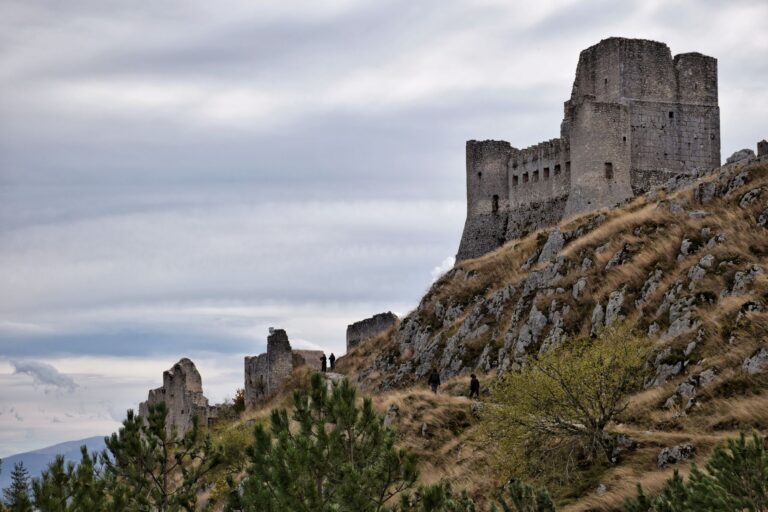
Europe compels the committed history enthusiast because it concentrates an unparalleled diversity of eras and narratives within a relatively compact geography. From prehistoric sites and megaliths to imperial palaces, medieval fortresses and 20th-century memorials, the continent offers a dense, continuous timeline that allows visitors to move effortlessly from one epoch to another. That concentrated variety makes every itinerary a comparative study: you can weigh Roman urban planning against Byzantine sacred architecture, or contrast Renaissance court life with modern political upheaval.
Moreover, Europe preserves its past with exceptional institutional care. Countless sites are safeguarded as UNESCO World Heritage properties, museums curate contextualized collections, and archaeological parks present layered stratigraphy in situ. This attention to preservation turns visits into more than sightseeing; they become meaningful encounters with primary sources and living evidence. For a history lover, that means authentic encounters with the material culture, temples, manuscripts, salt mines, and battlefields, that supply the most persuasive arguments about how societies lived, believed and changed.
The continent’s cities are themselves arguments for historical study: public spaces, museums, and urban fabrics function as interpretive frameworks. Walking the streets of an ancient capital or climbing a castle tower doesn’t merely illustrate facts; it demonstrates how power, religion and commerce shaped daily life and urban form. Because many sites remain integrated within modern communities, visitors also witness continuity, how past structures are woven into contemporary identity, ritual and memory.
Finally, Europe offers accessibility and depth. Dense transport networks, multilingual interpretive materials and a broad base of scholarship make deep exploration feasible even on short trips. For those who argue that history must be experienced to be understood, Europe is a compelling case: it makes rigorous, tactile learning possible at scale, continually rewarding curiosity with new perspectives and discoveries.
Q: Why should a history enthusiast prioritize visiting Europe over other regions? A: Because Europe concentrates an unparalleled layering of eras, from prehistoric cave art and classical antiquity to medieval castles, Renaissance palaces and modern memorials, so a single trip can demonstrate how civilizations evolved, collided and shaped the modern world. Q: Which historical periods are best represented across Europe? A: Europe compellingly represents a broad range: Palaeolithic sites, Roman architecture and urban ruins, Medieval fortresses and monasteries, Early Modern palaces and gardens, plus 20th‑century sites tied to global conflicts and political transformations. Q: Aren’t many famous sites just tourist traps? Are they still worth visiting? A: Yes, some sites are crowded, but the prominence of a site usually reflects genuine historical significance. With intentional planning, early entry, guided tours or off‑peak visits, you can access both the iconic narratives and the authentic details that justify their reputations. Q: How do I choose which historical sites to visit on a limited itinerary? A: Prioritize by the stories you want to learn: political history (capitals, palaces), ancient civilization (Roman Forum, Pompeii), religious heritage (cathedrals, monasteries) or social history (memorials, industrial sites). Combine a high-profile site with one regional gem to balance depth and breadth. Q: Are UNESCO designations a reliable guide for history lovers? A: Largely yes: UNESCO status highlights sites of outstanding cultural or historical value and often ensures preservation and interpretation resources, making these sites especially informative for enthusiasts seeking well‑documented experiences. Q: How should I approach visiting sensitive or dark historical sites like concentration camps or battlefields? A: Visit them with respectful intent and informed preparation: read context beforehand, choose guided tours that prioritize education, and be mindful of the emotional weight, these sites demand ethical attention, not casual sightseeing. Q: Are there worthwhile lesser‑known historical sites beyond the famous list? A: Absolutely. Many regions preserve extraordinary but undervisited places, unexcavated archaeological landscapes, reconstructed medieval castles and hybrid sites where nature and history intersect, offering concentrated insight without the crowds. Q: What’s the best way to get deeper historical understanding at a site? A: Combine a local guide or expert lecture with primary‑source displays in on‑site museums, and supplement visits with targeted reading or audio guides; this layered approach turns monuments into narratives rather than mere photo opportunities. Q: Can families and younger travelers get value from European historical sites? A: Yes, many sites offer interactive exhibits, reconstructions and story‑driven tours that engage younger visitors. Choosing a mix of immersive experiences and open archaeological parks helps sustain interest across ages. Q: How do preservation rules affect what I can see (for example, caves or fragile ruins)? A: Preservation often restricts direct access to protect artifacts and environments; however, many sites offer high‑quality reproductions, museums and virtual displays that convey the same historical value while ensuring long‑term conservation. Q: Is it possible to combine nature and history on the same trip? A: Yes, Europe’s top historical sites frequently occupy striking landscapes: island abbeys, mountain fortresses, saline mines and archaeological parks set in protected environments, so trips can satisfy both natural and cultural interests. Q: How should I budget for visiting multiple major historical sites across Europe? A: Costs vary, but you can reduce expenses by prioritizing a region, purchasing city or regional passes where available, and booking timed‑entry tickets in advance to avoid premium last‑minute prices; investing in a few well‑chosen guided experiences yields high educational value.Frequently Asked Questions, Why Europe Is a Must-See for History Enthusiasts