

“They’ve Unleashed a Warship Without a Crew”: U.S. Reveals the World’s Most Advanced Autonomous Vessel in Stunning Military Debut
 By
Adam Kovács
By
Adam Kovács

| IN A NUTSHELL |
|
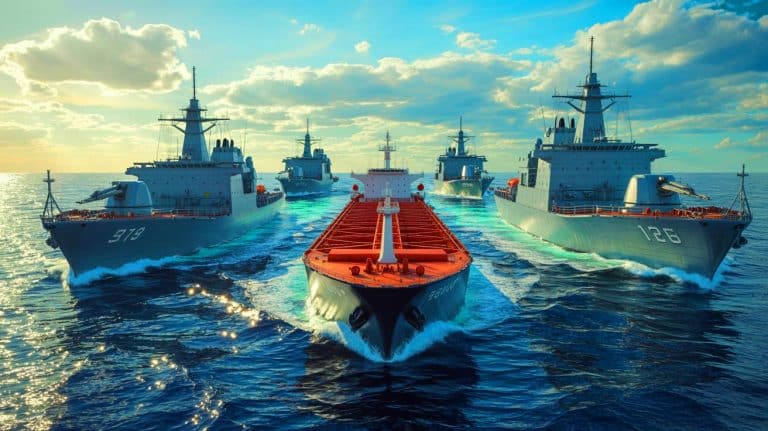
The introduction of the AIRCAT Bengal MC marks a significant milestone in naval technology, positioning the United States at the forefront of autonomous maritime warfare. Developed by the collaborative efforts of Eureka Naval Craft and Greenroom Robotics, this cutting-edge vessel promises to revolutionize naval operations with its impressive speed, advanced weaponry, and autonomous capabilities. As tensions rise in strategic waters such as the South China Sea and the Arctic, the Bengal MC emerges as a versatile asset, designed to meet the evolving demands of modern naval warfare.
The Birth of an Innovative Era for Diverse Missions
The AIRCAT Bengal MC was born from the partnership between Eureka Naval Craft and Greenroom Robotics, with design input from ESNA Naval Architects. Measuring approximately 118 feet in length, this formidable vessel can carry up to 97,000 pounds of cargo, equivalent to two 40-foot ISO containers. With a top speed exceeding 57 mph and a range of over 1,150 miles, it is engineered for fast, long-distance operations. At its core, the advanced GAMA AI system transforms the Bengal MC into a robust workhorse, capable of performing a wide range of missions efficiently and effectively.
Designed for both crewed and uncrewed operations, the Bengal MC is equipped to launch Tomahawk cruise missiles and Naval Strike Missiles (NSM), eliminating the need for larger, costlier vessels to deliver heavy firepower. Bo Jardine, CEO of Eureka Naval Craft, emphasized the vessel’s transformative potential, stating, “Too many ships are becoming obsolete, slow, and expensive. The Bengal MC is fast, heavily armed, and ready to change the game.”
Advanced Options for Multiple Uses
The Bengal MC’s capabilities extend beyond offensive missions. It can serve as a troop transport, support vessel for amphibious landings, or operate in electronic warfare roles, much like a multifunctional drone. Additionally, it can act as a mothership for drones or assist in laying and countering mines. These versatile features make the Bengal MC a valuable asset for current naval forces seeking operational flexibility.
The integration of the autonomous GAMA system has already been successfully tested on the Armidale-class patrol vessel, Sentinel. James Keane, CEO of Greenroom Robotics, praised this achievement by declaring, “This is a remarkable ship, and we are truly excited to collaborate with Bo Jardine and the Eureka team on the software.”
An Evolving International Market
The cost-efficiency offered by the Bengal MC has not gone unnoticed. With improved energy efficiency and reduced operational costs, the AIRCAT presents a compelling option for navies aiming to modernize their fleets. The vessel is intended for use by the U.S. Navy and Marine Corps, as well as allied nations, including AUKUS and NATO member countries. Additionally, Asian nations such as Singapore, Japan, South Korea, Vietnam, Thailand, and the Philippines are potential clients, reflecting the growing global interest in autonomous naval solutions.
Further Reading: The Future of Autonomous Naval Warfare
As the international demand for autonomous vessels continues to grow, the AIRCAT Bengal MC stands out as a beacon of innovation and strategic advantage. Its ability to operate independently or with minimal human intervention signifies a new era in naval operations. With potential applications across various missions and the promise of reduced costs, this vessel is set to redefine how navies approach maritime warfare.
As we look to the future, the question remains: how will the advent of autonomous naval vessels like the Bengal MC shape the geopolitical landscape and influence future maritime strategies?
Continue reading