


“They’re Prepping for the Unthinkable”: US Converts Cargo Containers Into Nuke Bunkers, Fueling Explosive Fears of Remote War Escalation
 By
Adam Kovács
By
Adam Kovács
| IN A NUTSHELL |
|
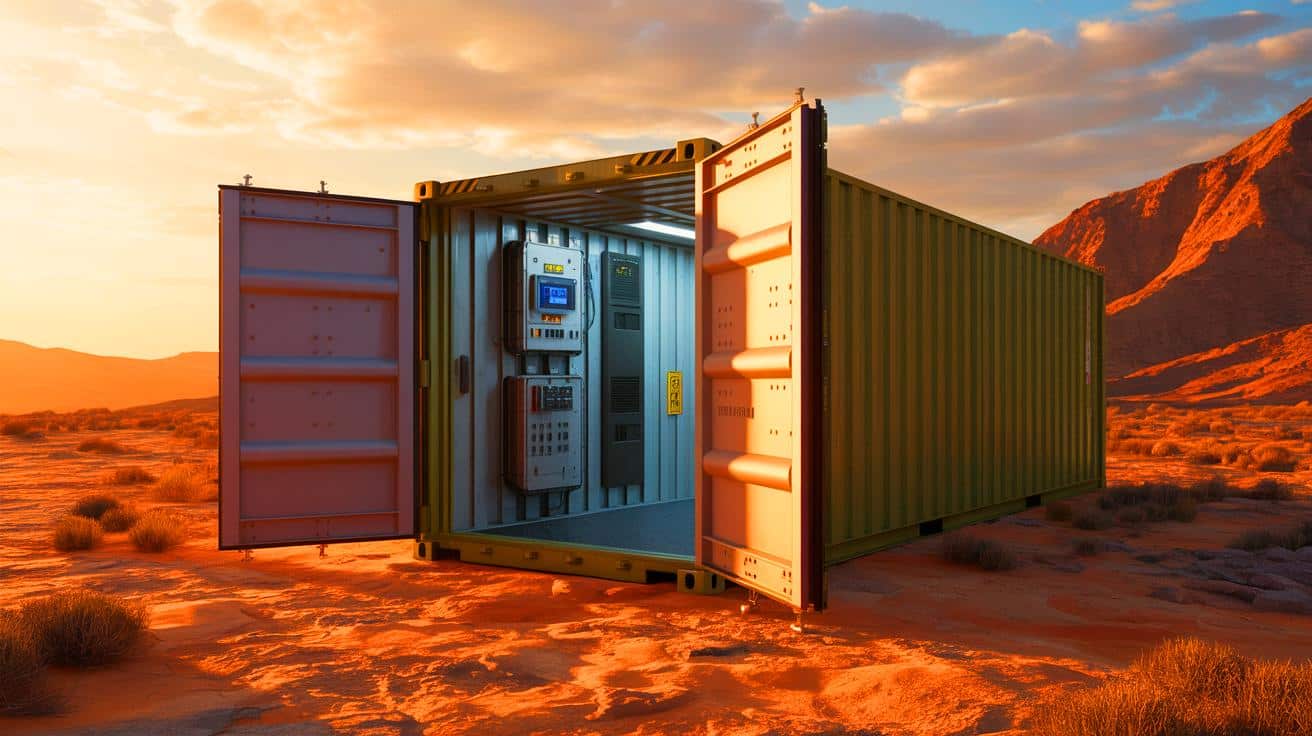
The United States is pioneering an innovative approach to safeguard its most critical assets with the development of mobile vaults housed in 20-foot shipping containers. These vaults offer a deployable and secure alternative to traditional bunkers, providing a versatile solution for protecting nuclear weapons in temporary or remote locations. This advancement is a testament to the country’s commitment to national security and the ingenuity of its defense sector. With the successful completion of the project in a mere six months, the mobile vaults are poised to transform how sensitive materials are stored and transported, ensuring they remain secure under various conditions.
Mobile Vault for Secure Storage of Nuclear Weapons
The creation of these mobile vaults is spearheaded by Sandia National Laboratories, a leader in national defense solutions. Built under the guidance of Sandia’s Transportation Safeguards and Surety Program, the vaults are set to undergo rigorous testing during the upcoming Grey Flag 25 exercise. This joint Department of Defense event will simulate real-world operational conditions to evaluate the vaults’ effectiveness. Stephen Neidigk, a program manager at Sandia, expressed immense pride in the project, highlighting the team’s dedication and innovative approach. The vaults were developed with a focus on adaptability and performance, rather than rigid specifications, enabling the team to meet tight deadlines without compromising security.
In just two weeks, the team selected a final design from ten concepts, aided by a 1:14-scale mock-up model. This model, costing less than $500, allowed stakeholders to visualize the vault’s components and facilitated valuable feedback. The final design prioritizes maximum protection within the confines of the container’s size and weight, ensuring that the vaults are both secure and portable. These efforts underscore the commitment to delivering cutting-edge solutions that enhance the nation’s defensive capabilities.
Safeguarding Weapons, Nuclear Materials
To expedite the production of the full-scale prototype, Sandia’s team employed model-based manufacturing techniques. A 3D solid model enabled early procurement of vital parts, such as the semi-custom vault door and steel framework. The integration of additive manufacturing and off-the-shelf components significantly reduced development time, allowing engineers to meet quality and schedule requirements efficiently. The collaborative effort involved experts in welding, machining, and sheet metal work, utilizing some of the lab’s largest equipment to keep the project on track.
The resulting mobile vaults offer a flexible and scalable solution for high-security storage in field conditions, broadening both military and civilian mission capabilities. As the technology transitions to industry for broader production and deployment, these vaults are poised to play a crucial role in safeguarding nuclear materials and other critical assets during transport or field operations. According to Neidigk, the vaults provide unprecedented options for secure capability, whether on the battlefield or in a disaster zone, expanding the possibilities for future defense strategies.
30,000-Acre ‘Gothic Fire’ Scorches Military Training Range Near Nevada’s Secretive Area 51
Innovative Design and Rapid Prototyping
The development of the mobile vaults highlights the remarkable innovation and rapid prototyping capabilities at Sandia National Laboratories. By leveraging model-based manufacturing and rapid prototyping techniques, the team was able to design and build the vaults in record time. Electrical engineers played a crucial role in developing the access control, alarm systems, and sensors, ensuring that the vaults are equipped with state-of-the-art security features. The use of off-the-shelf parts facilitated quick assembly, minimizing the time required to bring the prototypes to life.
The mobile vaults exemplify the potential of adaptive design and swift execution, offering a blueprint for future projects that demand both speed and precision. The ability to quickly iterate and refine designs based on real-world feedback underscores the importance of flexibility in defense technology development. As these vaults undergo further testing and refinement, they stand as a testament to the power of innovation in enhancing national security.
Future Implications and Industry Transition
With the successful completion of the mobile vault prototypes, the next step involves transitioning this groundbreaking technology to industry partners for mass production and deployment. This move promises to enhance the United States’ ability to safeguard critical assets in diverse environments, from military operations to emergency response scenarios. The adaptability and quick deployment of these vaults make them an invaluable asset in securing sensitive materials and ensuring national security.
The broader implications of this technology extend beyond military applications. The potential for industry collaboration opens avenues for civilian use, particularly in sectors requiring secure storage and transport of valuable assets. As the vaults enter the next phase of development, the question remains: how will this innovative approach to mobile security shape the future of asset protection and influence global defense strategies?