


“Russia Just Stole Everything”: EU Reels as Lithium Treasure Grab Sparks Uncontrollable Panic Across Global Energy Markets
 By
Adam Kovács
By
Adam Kovács
| IN A NUTSHELL |
|
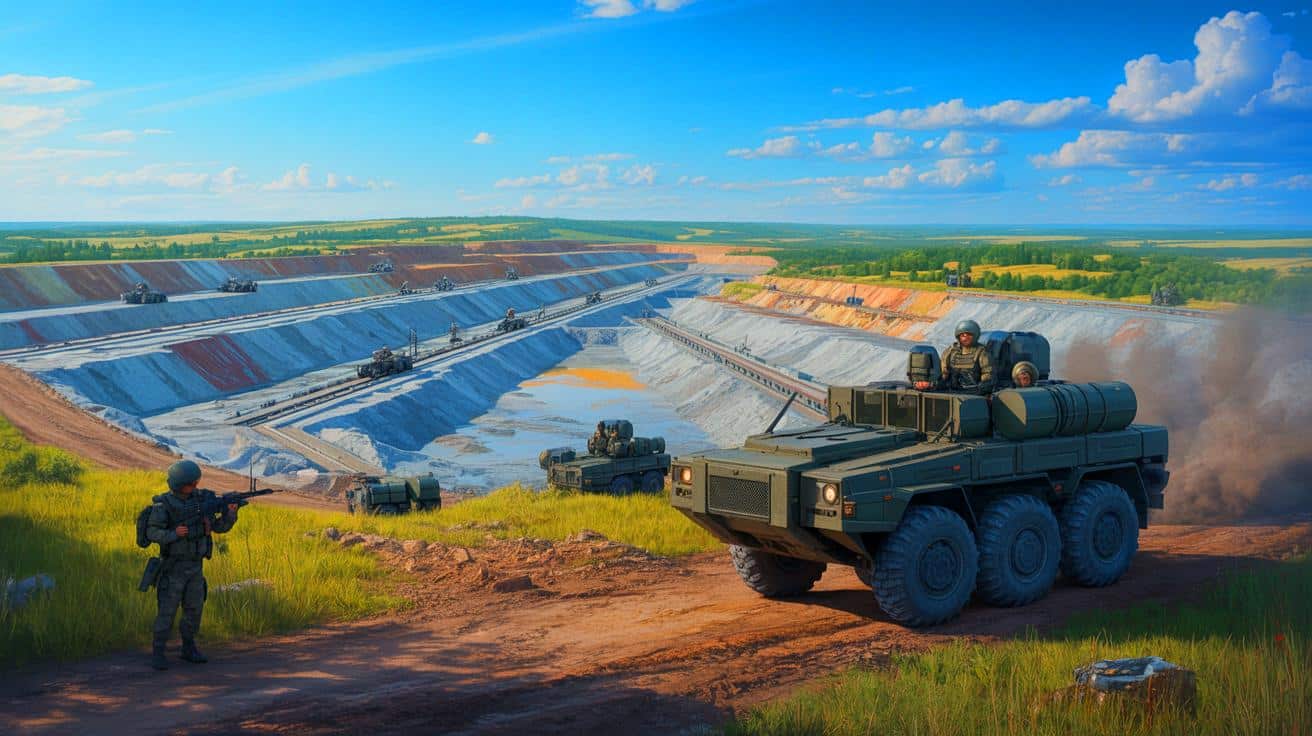
The recent seizure of a lithium-rich region by Russian forces near Shevchenko in Ukraine’s Donetsk region has sent shockwaves around the world. This strategic maneuver underscores the increasing importance of natural resources in geopolitical conflicts. The region, encompassing about 250 acres, hosts one of Europe’s most significant lithium reserves. As global demand for lithium surges, driven by decarbonization efforts and technological advances, control over these resources becomes ever more valuable. This article delves into the impact of Russian control over this site on global mineral security and geopolitical dynamics.
Understanding the Significance of Shevchenko’s Lithium Reserves
The Shevchenko deposit is located approximately six miles from the city of Velyka Novosilka, which was occupied by Russian forces earlier this year. While the village itself holds little tactical importance, its underground resources are of immense strategic value. Lithium, frequently termed “white gold,” is a crucial component in the production of batteries for electric vehicles, aerospace materials, energy storage systems, and electronics.
In 2022, lithium prices soared to over $87,000 per ton, reflecting its high demand and value. Although prices have recently dropped to about $9,000 per ton in China by June 2025, the mineral remains commercially and strategically significant. By occupying the Shevchenko site, Russia not only acquires a valuable resource but also strengthens its hold over Ukraine’s natural assets. This occupation exemplifies a broader pattern targeting critical resources, potentially hindering Ukraine’s post-war recovery and future international investments.
Impact on Ukraine’s Economic Prospects
Prior to the invasion, the Shevchenko area had attracted considerable foreign interest due to its rich mineral wealth, as Ukrainian state agencies sought to decrease reliance on imported resources. However, the Russian occupation of this site disrupts these plans and poses a substantial challenge to Ukraine’s economic outlook.
Analysts suggest that this move is part of a broader Russian strategy to dominate resource corridors, thereby impeding Ukraine’s access to domestic revenue sources. With control over key mineral extraction zones, Ukraine faces new obstacles in rebuilding its industrial base. This is particularly concerning as international support for reconstruction strategies continues to grow. The occupation not only affects Ukraine’s immediate economic recovery but also casts doubt on its long-term industrial stability and ability to attract foreign investment.
A Major Challenge for the U.S. and Allies
In May, the United States and Ukraine formally concluded a bilateral agreement to establish the Investment Fund for Reconstruction and Critical Mineral Partnership. This initiative, a 50/50 joint project between Washington and Kyiv, aims to channel investments into mining, oil, gas, infrastructure, and processing projects within Ukraine. Shevchenko’s lithium deposit was identified as a potential development site within this framework.
With Russia now controlling this area, the feasibility of these plans is in jeopardy. The occupation challenges U.S. and European efforts to establish resilient, non-Chinese supply chains for battery-grade lithium and other critical minerals. As global competition intensifies, the strategic significance of mineral security becomes crucial for NATO and EU member states. Lithium, cobalt, and rare earth elements are integral to energy transitions, defense production, and economic stability, making them a central issue in international policy and security discussions.
Geopolitical and Economic Implications
By expanding its presence in Donetsk and controlling the Shevchenko lithium site, Russia enhances its ability to influence regional resource flows and broader geopolitical dynamics. This action highlights the growing role of mineral deposits in global markets and modern hybrid warfare, where economic assets are as contested as territorial boundaries.
The strategic importance of the Shevchenko site and similar reserves cannot be overstated. As nations grapple with energy transition challenges and supply security, control over critical minerals is expected to shape future diplomatic and economic landscapes. As the world watches these developments, one question arises: How will the international community respond to the increasing threat of resource-driven conflicts?
Continue reading