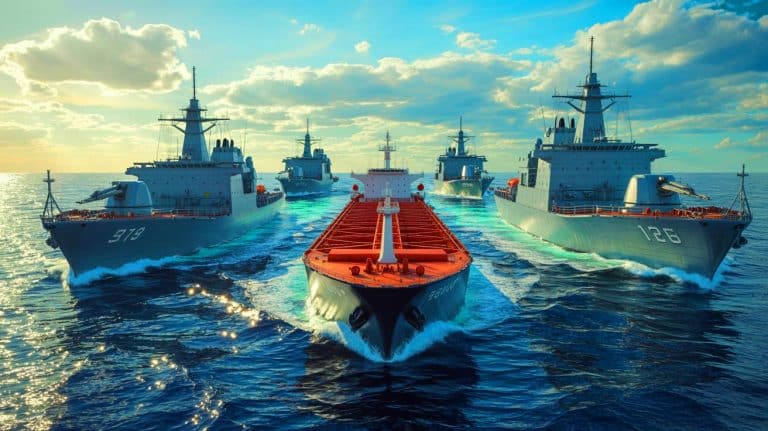



“Fleet Shrinks From 471 to 295 Ships”: US Navy Plans $40 Billion Annual Investment to Reach 390 Vessels by 2054
 By
Adam Kovács
By
Adam Kovács
| IN A NUTSHELL |
|
The decline in the relative maritime power of the United States stands as a significant concern for the nation. Despite maintaining an impressive fleet of aircraft carriers and nuclear submarines, the U.S. Navy’s supremacy is increasingly threatened by China’s growing naval capabilities. Over the past three decades, the U.S. fleet has diminished from 471 ships to just 295. To reverse this trend, the United States plans to expand its fleet to 390 ships by 2054, requiring an annual investment of $40 billion. This ambitious strategy raises questions about how it will be implemented amidst substantial industrial and financial challenges.
The Urgency of a Rapid Response to China
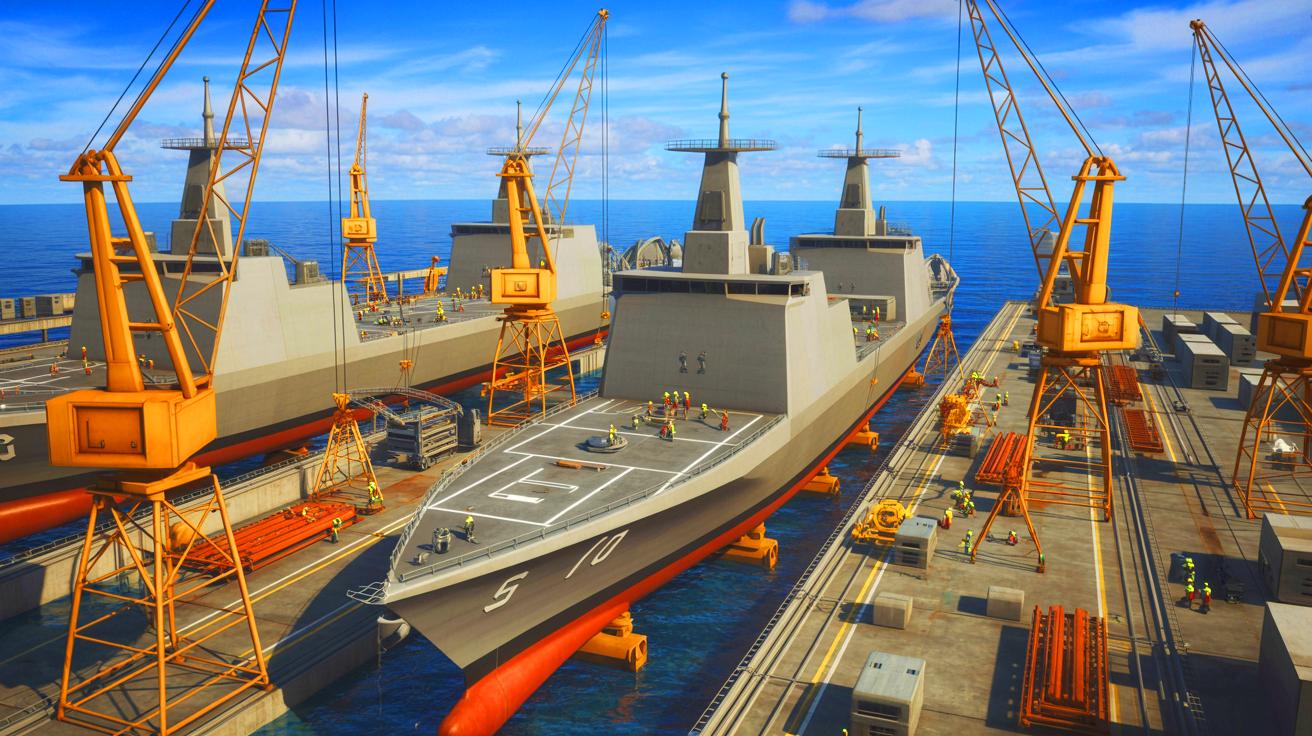
The rise of China’s naval power poses a significant strategic challenge for the United States. By 2024, China had reportedly secured approximately 1,700 ship orders, compared to a mere five by American shipyards. This stark imbalance highlights the urgent need for Washington to respond swiftly. Former President Trump voiced his resolve to reverse this trend by setting a 210-day deadline to reinvigorate American civilian shipbuilding. The “Make Shipbuilding Great Again” executive order aims to revitalize U.S. shipyards, a critical sector for restoring balance.
Concurrently, the U.S. seeks to forge partnerships with foreign allies to bridge this technological and industrial gap. South Korean and Japanese companies, along with Australia, have shown interest in aiding the modernization and expansion of the U.S. fleet. This international collaboration could provide a temporary solution, yet it also underscores the U.S.’s growing reliance on allies to maintain naval supremacy.
« 50 Drones Per Minute »: Australia’s Apollo Laser Obliterates Swarms in 1.5 Second Bursts for NATO
The Root Causes of Losing Supremacy
The decline in American naval supremacy can be traced back to the economic policies of the 1980s. Under the Reagan administration, economic liberalization led to a gradual withdrawal of state support, leaving American shipyards vulnerable to fierce international competition. Foreign competitors, benefiting from substantial government subsidies, gradually outpaced the U.S. industry. This dynamic resulted in a significant decline in American competitiveness on the global market.
Additionally, budget priorities often favored other military branches or non-defense projects, limiting resources allocated to the U.S. Navy. This resulted in chronic underfunding, negatively impacting the maintenance and modernization of the existing fleet. Regaining naval supremacy will require a profound reassessment of these economic and budgetary policies.
UK’s Sea Dagger Autonomous Craft Deploys 12 Commandos at 46 MPH Using Trusted Mission AI Technology
The Strategy for Modernization and Expansion
To achieve the ambitious goal of 390 ships by 2054, the U.S. Navy must implement a robust strategy for modernization and expansion. This involves not only significant financial investments but also an innovative approach to shipbuilding. Incorporating cutting-edge technologies and improving production processes will be essential to enhance efficiency and reduce costs.
Partnerships with foreign companies can provide valuable expertise and expedite the modernization process. However, it is crucial for the U.S. to simultaneously develop its internal capabilities to avoid long-term dependency. Emphasis should be placed on training and skill development to ensure American shipyards can compete globally. The path to reclaiming naval supremacy requires substantial industrial and technological transformation.
An Uncertain Future for American Naval Power
The challenge of restoring American naval power is immense and complex. Efforts to increase the fleet to 390 ships face numerous obstacles, including financial and industrial hurdles. The question remains whether the United States can overcome these challenges and reaffirm its maritime dominance. Success depends on the ability to mobilize necessary resources, establish effective strategic partnerships, and reform economic and industrial policies.
As the U.S. strives to catch up, the global naval balance of power remains uncertain. How will the U.S. Navy adapt to these rapid changes and maintain its position in the face of an increasingly powerful China?
Continue reading