


“China Turned 3,000 Dead Jets Into Zombies”: Soviet Fighters Attack Without Pilots While Taiwan’s Missiles Can’t Stop Them All
 By
Adam Kovács
By
Adam Kovács
| IN A NUTSHELL |
|
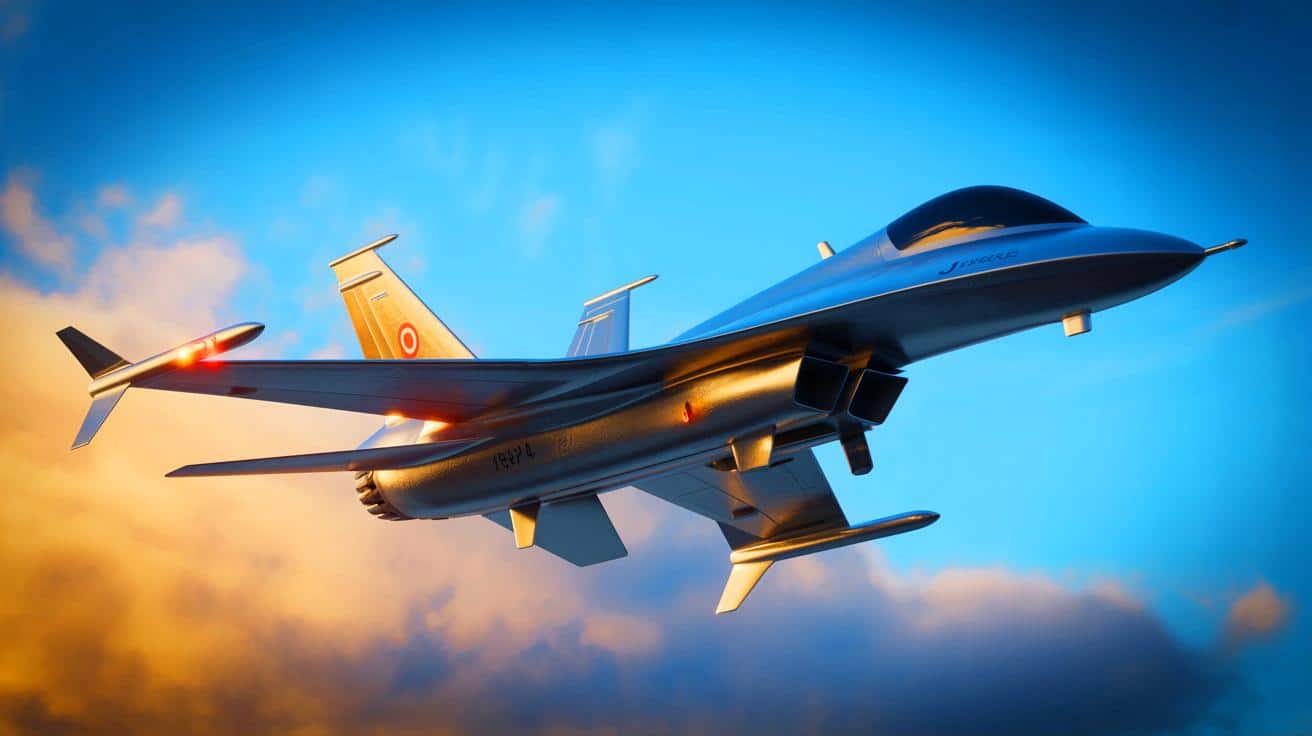
In a remarkable blend of historical legacy and modern military technology, China has unveiled a new combat drone developed from a Soviet-era fighter jet. This initiative, which transforms the retired J-6 fighter into a sophisticated unmanned aircraft, was showcased at the Changchun Air Show in northeastern China. The development has sparked concerns regarding its implications for potential conflicts, particularly over Taiwan. The conversion of these jets marks a significant stride in China’s military strategy, showcasing how older technology can be repurposed for contemporary warfare.
From Soviet Relics to Modern Drones
The J-6 fighter, a derivative of the Soviet MiG-19, played a vital role in the People’s Liberation Army (PLA) Air Force from the 1960s to the 1980s. While it was once a cornerstone of China’s air capabilities, the J-6 has since become obsolete compared to the country’s modern jets. However, its transformation into an unmanned combat drone illustrates a strategic pivot. The conversion process involves stripping the aircraft of all crew-related systems and integrating advanced technologies like autonomous flight control and navigation systems.
This evolution is not merely a technological feat but a cost-effective strategy. With an estimated 3,000 airframes still in existence, China is leveraging its vast inventory for attrition warfare. These drones could be deployed in large numbers during a conflict, such as with Taiwan, to conduct saturation strikes or act as decoys. The use of full-size jets, albeit with outdated avionics, provides a unique advantage. They are potentially less susceptible to electronic jamming, offering a resilient alternative to smaller, more vulnerable drones.
The Strategic Implications of Supersonic Drones
The introduction of these drones has not gone unnoticed by Taiwan, where military analysts have expressed significant concern. Retired Taiwanese Lt. Gen. Shuai Hua-ming highlighted the potential threat posed by swarms of these aircraft, which could be more daunting than ballistic missiles. The challenge lies in the cost and logistics of intercepting such a large number of drones with expensive missile systems like the U.S.-made Patriot missiles.
Song Zhongping, a former PLA instructor, emphasized the strategic value of these unmanned vehicles. In a conflict scenario, they could serve as the initial assault wave, forcing Taiwan to deplete its missile defenses. The conversion of the J-6 into a kamikaze drone represents the simplest and most economical military strategy. Beijing's stance on Taiwan, viewing it as part of its territory, adds gravity to these developments. The potential use of these drones in a conflict scenario underscores the delicate balance of power in the region.
Technological Transformation and Military Strategy
The shift from manned to unmanned warfare reflects broader trends in military strategy. As technology advances, the role of human pilots is increasingly supplanted by autonomous systems. This transformation allows for riskier operations without endangering personnel. The J-6 conversion project exemplifies how legacy systems can be revitalized to meet contemporary military needs.
Moreover, the use of these drones in attrition warfare aligns with China's strategic objectives. By deploying large numbers of cost-effective drones, China can overwhelm an adversary's defenses. This approach not only conserves more advanced resources but also complicates the adversary's defense strategy. The adaptability of the J-6 platform for such roles demonstrates the ingenuity in China's military planning.
Global Military and Political Repercussions
China's advancements in drone technology and their strategic applications have stirred international debate. As tensions over Taiwan persist, the global community closely monitors these developments. Most nations, including the United States, do not recognize Taiwan as an independent state but oppose any unilateral changes to the status quo.
The deployment of these drones could alter the dynamics of military engagements in the region. Their potential use in large-scale operations poses questions about the future of air defense strategies. The international community is left to ponder the consequences of such technological shifts. How will global powers respond to the increasing use of unmanned systems in warfare? And what measures can be taken to ensure stability in the face of these advancements?
The transformation of the J-6 fighter into a combat drone is a testament to the evolving nature of military technology and strategy. As China continues to leverage its historical assets for modern warfare, the implications are profound. What strategies will other nations adopt in response to this shift, and how will they address the challenges posed by such technological advancements?
Continue reading