



“Chinese Jets Threaten Richmond”: Simulated Strike On Royal Navy Ship In Taiwan Strait Signals Escalating Harassment And Rising Risk Of Miscalculation
 By
Adam Kovács
By
Adam Kovács
| IN A NUTSHELL |
|
The recent activities of Chinese fighter jets in the Taiwan Strait have stirred international attention and concern. As tensions between China and Taiwan continue to simmer, the actions of the Chinese military have raised alarms about potential escalation in the region. The incident involving the Royal Navy’s HMS Richmond highlights the growing geopolitical complexities of the South China Sea. The simulated attack underscores the intricate balance of power and the strategic gamesmanship at play. This unfolding situation prompts questions about the future of international maritime operations and the potential for conflict in this critical region.
Simulated Attacks and Military Posturing
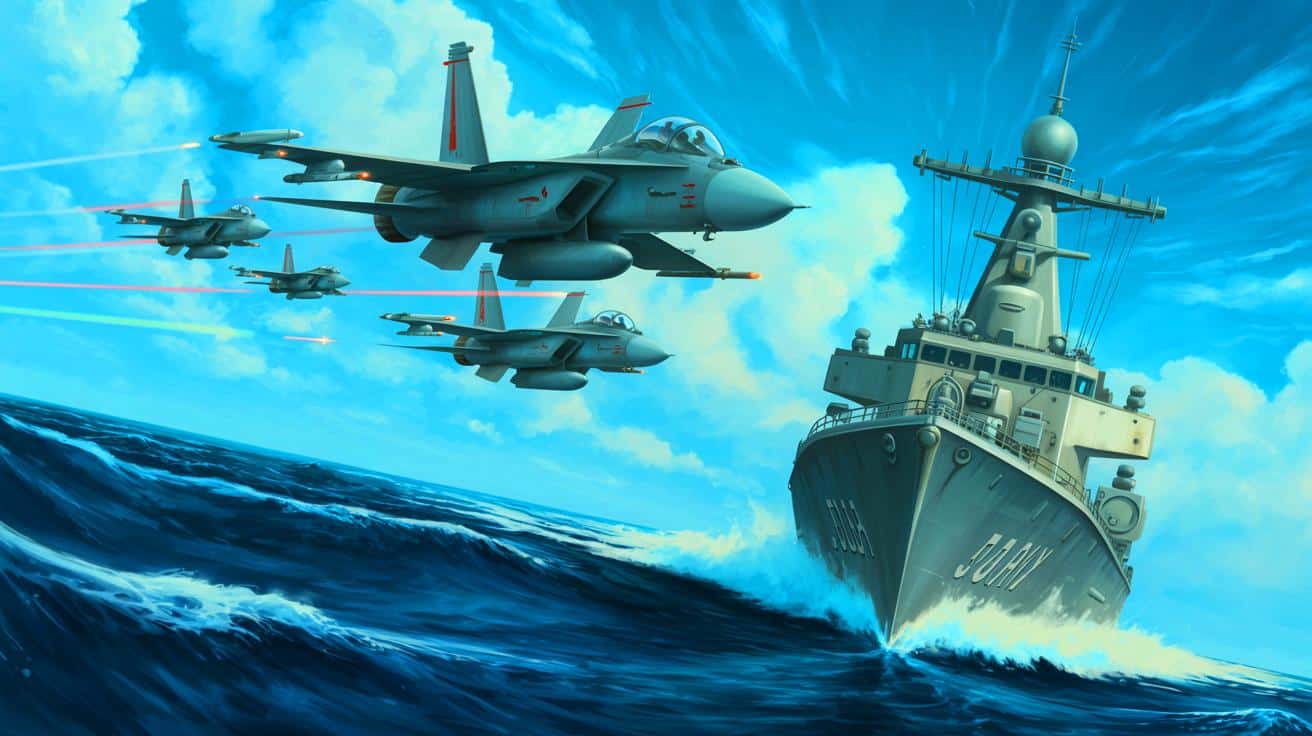
The incident involving Chinese fighter jets and the Royal Navy’s HMS Richmond marks a significant moment in military posturing within the Taiwan Strait. The jets executed a “simulated kill,” a maneuver that mimicked a missile attack without actual engagement. This action was part of a broader pattern of military exercises conducted by China, which appears to be testing the boundaries of international response. The HMS Richmond was part of the UK’s carrier strike group, navigating alongside the USS Higgins, a U.S. destroyer. The presence of these naval forces underscores the strategic importance of the region and the commitment of Western powers to uphold freedom of navigation.
The simulated attack was described by Sub-Lt Rohan Lewis as a form of harassment. According to his account, the Chinese jets attempted to provoke the convoy by getting perilously close and executing aggressive maneuvers. Such actions are indicative of an information warfare strategy, aimed at demonstrating military capability and resolve. While the officers aboard the HMS Richmond anticipated a reaction, they did not expect it to escalate to physical violence. This restraint reflects the complex rules of engagement that govern international waters and the delicate balance of deterrence and diplomacy.
Tensions in the Taiwan Strait
The Taiwan Strait remains one of the world's most contentious maritime regions. The strategic waterway separates Taiwan from mainland China and is a frequent flashpoint for military activities. China's assertive actions in the region are viewed as a demonstration of its claim over Taiwan, which it regards as a breakaway province. The recent incidents involving simulated attacks on foreign vessels signal a more aggressive stance from Beijing. This raises concerns about the potential for miscalculation and escalation into open conflict.
International observers are closely monitoring these developments, as the implications for regional stability are significant. The presence of Western naval forces in the Taiwan Strait serves as a counterbalance to Chinese military power. However, it also increases the risk of unintended confrontations. The strategic importance of the region cannot be overstated, as it is a vital corridor for global trade and a linchpin in the security architecture of the Indo-Pacific. The actions of the Chinese military in this context are emblematic of the broader geopolitical contest between China and Western powers.
Geopolitical Implications for the South China Sea
The South China Sea, of which the Taiwan Strait is a part, is a critical area for global maritime trade. It is also a region fraught with territorial disputes involving multiple nations. China's actions, including land reclamation and militarization of artificial islands, have been a source of tension with its neighbors and the international community. The recent simulated attack on the HMS Richmond further complicates the geopolitical landscape, as it highlights China's willingness to project power beyond its immediate borders.
The response from Western nations, particularly the United States and the United Kingdom, is pivotal in maintaining a balance of power in the region. The presence of their naval forces serves as a deterrent to unilateral actions by China and reassures regional allies of their commitment to upholding international norms. However, this dynamic also poses challenges, as it requires careful navigation to avoid escalating tensions further. The strategic interests of various stakeholders in the South China Sea make it a focal point for international diplomacy and security policy.
The Path Forward: Diplomacy or Confrontation?
The simulated attack on the HMS Richmond underscores the need for diplomatic engagement to address the underlying tensions in the Taiwan Strait. While military posturing serves as a demonstration of power, it ultimately heightens the risk of conflict. Engaging in dialogue and fostering mutual understanding is essential to de-escalate tensions and establish norms for peaceful coexistence. The role of international organizations and regional forums is crucial in facilitating such discussions and promoting stability.
The question remains: how can the international community effectively balance the need for deterrence with the pursuit of diplomatic solutions? As the situation in the Taiwan Strait evolves, it is imperative for global leaders to prioritize dialogue and cooperation. The stakes are high, and the potential consequences of miscalculation are profound. What steps should be taken to ensure that strategic competition does not lead to conflict, and how can the principles of international law be upheld in this complex theater of global politics?
Continue reading