


Watchdog Report Reveals $148 Billion Afghan Rebuilding Failure, Exposing Deep Flaws in U.S. Reconstruction Efforts
 By
Adam Kovács
By
Adam Kovács
| IN A NUTSHELL |
|
The U.S. government’s ambitious attempt to rebuild Afghanistan, with a staggering $148 billion investment, has ended in failure, according to a final report by the Special Inspector General for Afghanistan Reconstruction (SIGAR). This watchdog office, tasked with tracking every dollar spent on security, development, and humanitarian aid, presents a sobering narrative of waste and inefficiency. Despite early warnings, the efforts did not bring the promised stability and democracy to Afghanistan, serving as a significant cautionary tale for future policymakers. The report underscores the importance of accountability and learning from past mistakes to avoid similar failures in future international reconstruction efforts.
The Unheeded Warnings of a Watchdog
For 17 years, SIGAR meticulously documented the U.S. government’s expenditure on Afghanistan’s reconstruction. From as early as 2012, the office identified signs of deteriorating conditions, with warnings about the Taliban’s resurgence going largely ignored. Gene Aloise, SIGAR’s acting inspector general, emphasized that their reports consistently showed an increase in districts falling to the Taliban. Despite these red flags, the reports failed to spark the necessary policy changes from the U.S. government or military. The culmination of SIGAR’s efforts is a comprehensive 125-page “forensic audit,” a stark reminder of the financial and strategic missteps in Afghanistan. As the office prepares to close, the lessons drawn from its findings are crucial for future endeavors.
The report highlights that the mission’s failure to achieve its objectives of stability and democracy should serve as a cautionary tale for policymakers. Aloise stresses that any future missions of similar scale and ambition must confront the real possibility of failure. The independent nature of SIGAR, which allowed for fierce pursuit of information, is also emphasized as a model for future oversight bodies. However, Aloise expresses doubt that such independent oversight will be replicated, which raises concerns about accountability in future international interventions.
Wasted Efforts and Lost Opportunities
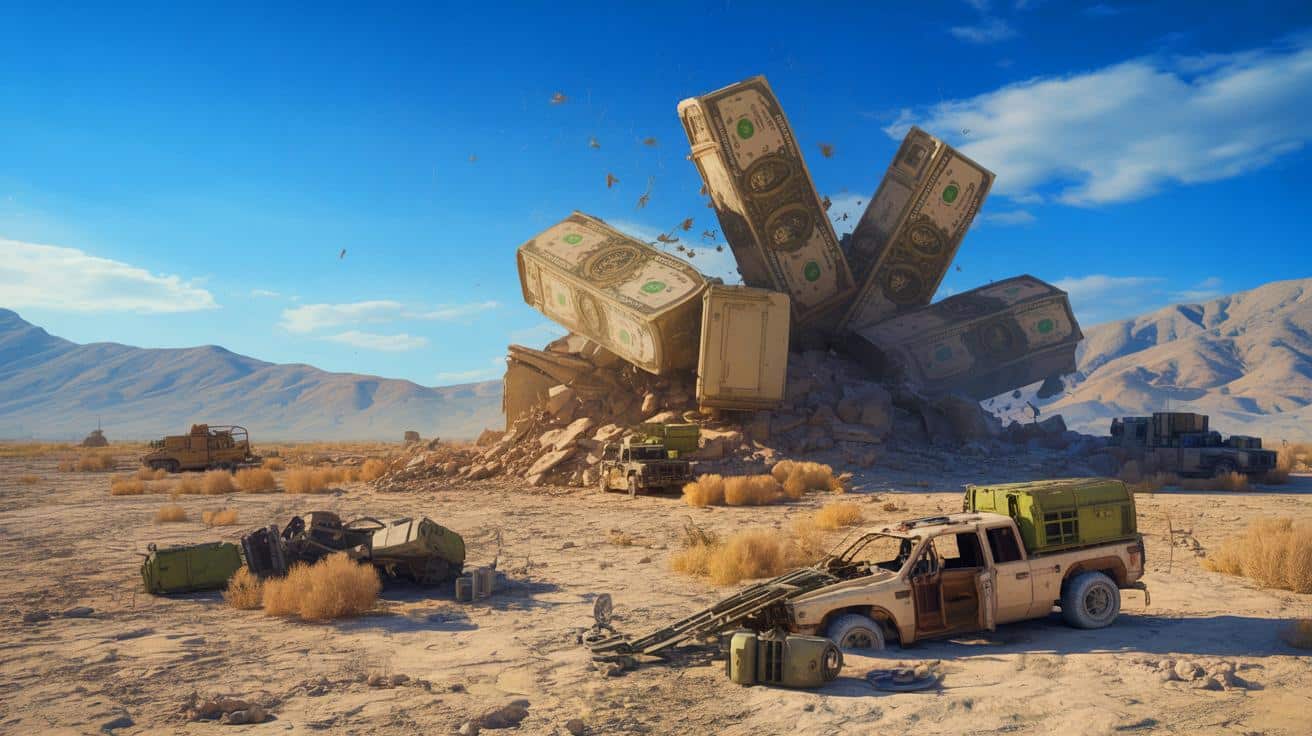
SIGAR’s investigations uncovered significant waste, fraud, and abuse, with an estimated $26 billion to $29 billion effectively disappearing. One stark example is the U.S. government’s counternarcotics missions. Despite investing $7.3 billion, Afghanistan remains the world’s largest opium supplier. Corruption within the narcotics industry severely hampered efforts to stabilize the country. Additionally, various U.S.-funded projects failed to deliver on their promises. A $355 million power plant operated at less than one percent capacity, and $85 million in loans intended for construction projects near the U.S. Embassy resulted in abandoned shells.
Moreover, poor contractor work directly led to U.S. service member fatalities. An Afghan-owned company failed to install proper security measures, resulting in two soldiers’ deaths from an improvised explosive device. These failures, compounded by rampant corruption, severely undermined the U.S. government’s objectives. SIGAR’s investigations led to the conviction of 171 individuals and nearly $1.7 billion in fines and restitutions. However, the deep-seated corruption that fueled these issues remains a critical factor in the overall failure of the reconstruction efforts.
Security Focus and Its Consequences
One of SIGAR’s major revelations was the disproportionate spending on security, which absorbed about 60 percent of the $148 billion. The funds were used to supply the Afghan National Defense and Security Forces with a vast array of equipment, including 96,000 ground vehicles and 427,300 weapons. However, when the U.S. evacuated in 2021, approximately $7.1 billion worth of equipment was left behind, ultimately falling into Taliban hands. This left the Taliban well-equipped with U.S. taxpayer-funded resources, which now form the core of their security apparatus.
These revelations underscore a critical oversight in the reconstruction efforts: the prioritization of military aid over sustainable development and humanitarian initiatives. Experts like Catherine Lutz from Brown University’s Costs of War project argue that the public misunderstood the reconstruction project, perceiving it largely as a humanitarian mission. This misperception contributed to a lack of public scrutiny and ultimately, accountability. The heavy focus on security measures rather than comprehensive development programs has been a significant factor in the overall failure of the mission.
Lessons for the Future
As SIGAR concludes its operations, its final report serves as a critical repository of lessons learned. Interviews with senior U.S. officials reveal that the 2020 Doha Agreement played a pivotal role in sealing Afghanistan’s fate. The agreement undermined the Afghan government’s legitimacy and emboldened the Taliban, significantly impacting the U.S. withdrawal strategy. Despite recognizing potential failures as early as 2012, the lack of decisive action led to the current situation.
Moving forward, the creation of independent oversight bodies like SIGAR is imperative. Aloise advocates for using SIGAR’s authorizing legislation as a model for future watchdogs, emphasizing the importance of independence and transparency. However, he remains skeptical about the likelihood of such entities being established again. As the U.S. reflects on its involvement in Afghanistan, the challenge remains to ensure that future international interventions are guided by lessons learned, fostering accountability and ultimately, more effective outcomes.
The final report by SIGAR paints a grim picture of the U.S. efforts in Afghanistan, highlighting the importance of learning from past mistakes. As policymakers contemplate future reconstruction efforts, the question remains: Will they heed these lessons and ensure greater accountability and success in the next chapter of international interventions?