


Boat-Strike Defense Evolves: “Signalgate” Report Published Amid $148B Failure, Sparking National Security Concerns
 By
Adam Kovács
By
Adam Kovács

| IN A NUTSHELL |
|
The evolving landscape of U.S. national security is marked by complex challenges, from controversial military strategies to significant internal policy shifts. Recent revelations about the U.S. government’s evolving defense tactics and administrative decisions have sparked considerable debate among lawmakers, military officials, and the public. These issues are further complicated by the intricate interplay of legal frameworks and ethical considerations that underpin U.S. military actions and national security policies. As the nation grapples with these multifaceted issues, it becomes crucial to examine the implications of such decisions for both U.S. interests and global stability.
Boat-Strike Defense Under Scrutiny
The White House’s justification for a controversial boat-strike tactic has been met with fierce debate. Officials claim the second strike was meant to destroy the vessel, not its crew, positioning it as a legally defensible action. Yet, this rationale is contentious, with critics labeling the move as either murder or a war crime. Former Justice Department attorney Joyce Vance articulated the dilemma succinctly: “If we were at war, it was a war crime. If we were not, it was murder.”
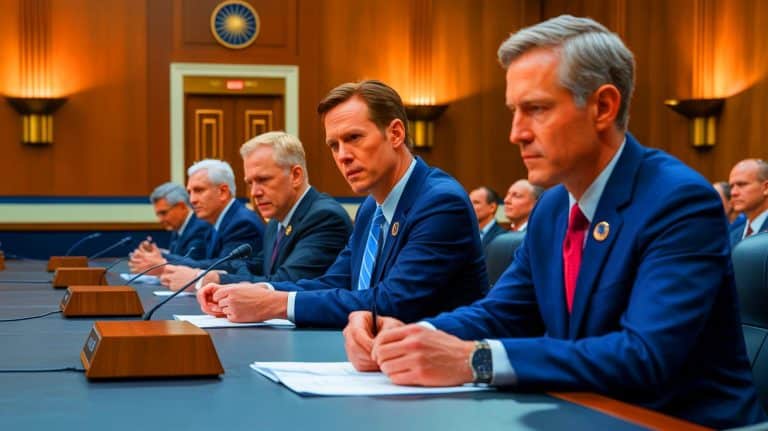
This defense relies heavily on a secret Office of Legal Counsel (OLC) memo that supports the legality of the strike. According to sources, the memo asserts that the expected fatality of those on board does not render the boat an improper military target. However, this position has been criticized by legal experts due to insufficient evidence supporting claims that the strikes were necessary to curb drug-financed armed violence. The debate intensifies as Navy Adm. Frank Bradley is set to testify before lawmakers, potentially shedding new light on the strikes’ rationale.
Signalgate: The Risks of Digital Communication
Defense Secretary Pete Hegseth’s use of the Signal app to share sensitive military plans has sparked significant controversy. The Defense Department’s inspector general released a report highlighting the potential risk to U.S. military operations. Hegseth reportedly shared precise attack timings against Houthi rebels in Yemen, raising concerns about the security of such communications. If intercepted, this information could have jeopardized American lives and mission success.
“Hegseth risked compromising sensitive military information, which could have endangered American troops and mission objectives,” CNN reported.
Despite the gravity of these actions, it appears Hegseth will not face repercussions due to his authority to declassify information. The incident underscores the urgent need for secure communication tools for senior military leaders, as emphasized by Senate Armed Services Committee members. However, the lack of accountability continues to draw criticism from various quarters, further complicating the narrative around national security leadership.
The $148 Billion Afghan Reconstruction Failure
The final report from the Special Inspector General for Afghanistan Reconstruction (SIGAR) delivers a scathing assessment of the U.S. efforts in Afghanistan. Over 17 years, the U.S. invested $148 billion in reconstruction, yet the results fell drastically short. The report describes the initiative as fraught with waste and fraud, achieving neither stability nor democracy in Afghanistan.
US Strategy to Constrain ISIS and Iran Faces Challenges Beyond Troop Presence at Key Syrian Airbase
SIGAR’s forensic audit examines the myriad failures of this effort, comparing it unfavorably to the successful Marshall Plan. The findings serve as a stark warning to policymakers considering similar future undertakings. As SIGAR’s office prepares to close per the 2025 defense authorization act, the report raises critical questions about the effectiveness of large-scale foreign reconstruction efforts and the lessons to be learned from America’s longest war.
Press Freedom and Pentagon Policy
The New York Times has filed a lawsuit against the Pentagon, challenging new policies that restrict press access. The policies require media outlets to obtain formal authorization before gathering information, a move that many argue infringes upon the First Amendment. NPR reports that this policy grants unchecked power to government officials, which could undermine independent journalism.
Gabe Rottman of the Reporters Committee for Freedom of the Press criticized the policy as unlawful. The need for transparent, independent journalism is crucial, especially in times of heightened scrutiny of the Department of Defense’s actions. This legal battle highlights the ongoing tensions between national security interests and the fundamental rights of a free press, an issue that remains at the heart of democratic governance.
As these complex issues unfold, they present a multitude of challenges and questions about the future of U.S. national security policy. How will the balance between transparency, security, and accountability be maintained in a rapidly changing world? The answers will shape the United States’ strategic posture and its role on the global stage for years to come.
Continue reading