



“See What We’ve Done to the Amazon”: These Unstoppable Fires Released More Carbon Than Germany (and Scientists Warn the Worst Is Yet to Come)
 By
Adam Kovács
By
Adam Kovács
| IN A NUTSHELL |
|
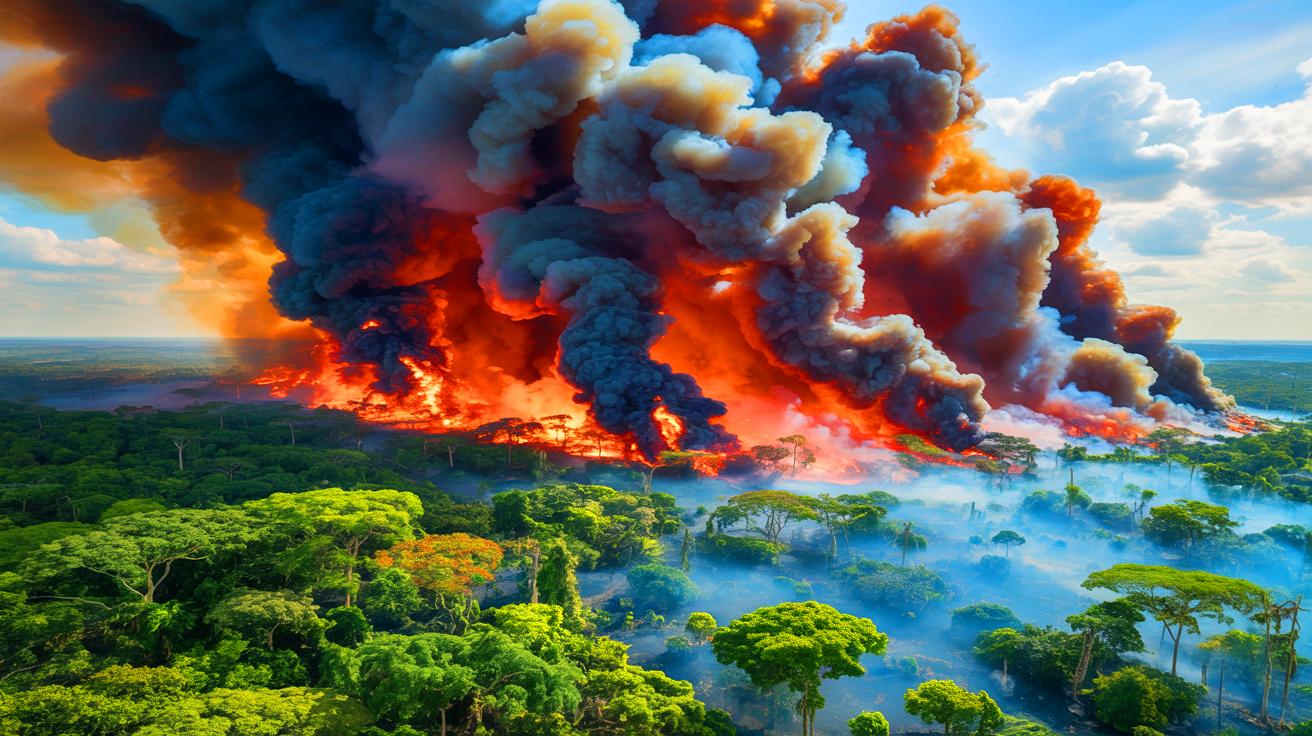
The Amazon rainforest, often referred to as the “lungs of the Earth,” faced an unprecedented environmental crisis in 2024. Fires ravaged vast areas of this crucial ecosystem, marking the most devastating season in over two decades. This relentless wave of fires released an alarming 791 million tons of carbon dioxide, equating to Germany’s annual emissions. The fires impacted 3.3 million hectares, an area nearly the size of Belgium. A new study reveals that these fires were driven by a combination of environmental stress and human mismanagement, highlighting a shift from deforestation to fire-induced degradation as the primary source of carbon emissions in the Amazon.
Amazon: Drought and Mismanagement
The Amazon rainforest is more than just a dense jungle; it is a critical component of the global ecosystem. It supports unparalleled biodiversity, serves as a massive carbon sink, and plays a vital role in regulating climate patterns. However, the recent study underscores a growing ecological crisis in this region. Scientists attribute the surge in Amazon fires to a dangerous mix of environmental pressures and human activities.
At the heart of this crisis is extreme drought, exacerbated by climate change, which leaves the forest highly susceptible to fires. This vulnerability is further compounded by forest fragmentation, making it easier for fires to spread. Mismanagement of land use, including accidental escape fires and deliberate arson by land grabbers, has also played a significant role. This confluence of drought, fragmentation, and mismanagement has driven the spike in fire-induced forest degradation.
In 2024, the fires spread alarmingly across geographical boundaries. Brazil recorded its highest emissions from forest degradation, while fires in Bolivia affected more than 9% of the country’s remaining intact forest. These developments highlight the need for comprehensive strategies to address the root causes of this crisis.
Insidious Threat of Degradation
The research employed cutting-edge satellite technology to accurately detect fires and assess their impact. By integrating data from the Tropical Moist Forest monitoring system and the Global Wildfire Information System, researchers were able to filter out false signals and focus on real fire-driven degradation. Carbon emissions were calculated using a robust Monte Carlo simulation framework, adhering to international standards.
The study highlights an “insidious threat”: fire-driven forest degradation, distinct from outright deforestation. While these forests may appear untouched from above, they have suffered significant losses in biomass and ecological function. Unfortunately, such degradation often goes unmeasured in national and international policy frameworks.
Researchers emphasize the need for enhanced international climate finance mechanisms that address forest degradation, not just deforestation. A 2024 study has already warned that the Amazon could reach its “tipping point” by 2050 if current trends continue. The research team calls for immediate, collaborative action to curb fire use, strengthen forest protection policies, and support conservation efforts by local and Indigenous communities.
Satellite Technology and Global Implications
The use of satellite technology in this study provides a new level of precision in tracking and assessing forest fires. By utilizing advanced imagery, researchers could distinguish between agricultural fires, cloud cover, and actual forest fires. This nuanced approach has revealed the true extent of forest degradation, which is often overlooked by traditional methods.
The global implications of this research are significant. The Amazon rainforest plays a crucial role in sequestering carbon dioxide, a key factor in mitigating climate change. As fire-induced degradation increases, the forest’s ability to act as a carbon sink diminishes, amplifying the effects of climate change worldwide. This underscores the urgency of international collaboration and policy reform to protect the Amazon and, by extension, the global climate.
The study serves as a wake-up call for policymakers and environmentalists worldwide. It emphasizes the need for innovative approaches to forest management that prioritize ecological health and resilience. As the world grapples with the realities of climate change, the Amazon’s fate remains a pivotal issue on the global stage.
Future Directions and Challenges
Addressing the ecological crisis in the Amazon requires a multifaceted approach. Policymakers must prioritize the development of sustainable land-use practices that minimize fire risk and promote reforestation. International cooperation is essential to ensure that financial resources are allocated effectively to support conservation efforts.
Furthermore, empowering local and Indigenous communities to take an active role in forest management can lead to more sustainable outcomes. These communities possess invaluable knowledge about the ecosystem and are often on the front lines of conservation efforts. Strengthening their capacity to manage and protect the forest is crucial.
As we look to the future, the challenge lies in balancing economic development with environmental preservation. The Amazon is a vital resource, and its health is intrinsically linked to the well-being of our planet. This study serves as a call to action for the global community to come together and safeguard this invaluable ecosystem for future generations.
The recent findings on the Amazon fires highlight the complex interplay between environmental stressors and human actions. As the rainforest faces unprecedented challenges, the question remains: How can the global community effectively address the underlying causes of forest degradation while balancing the needs of economic development and environmental conservation?