



“In A First China’s Fujian Carrier Launches Jet Using Catapult”: Military Experts Shocked By Historic Breakthrough
 By
Adam Kovács
By
Adam Kovács
| IN A NUTSHELL |
|
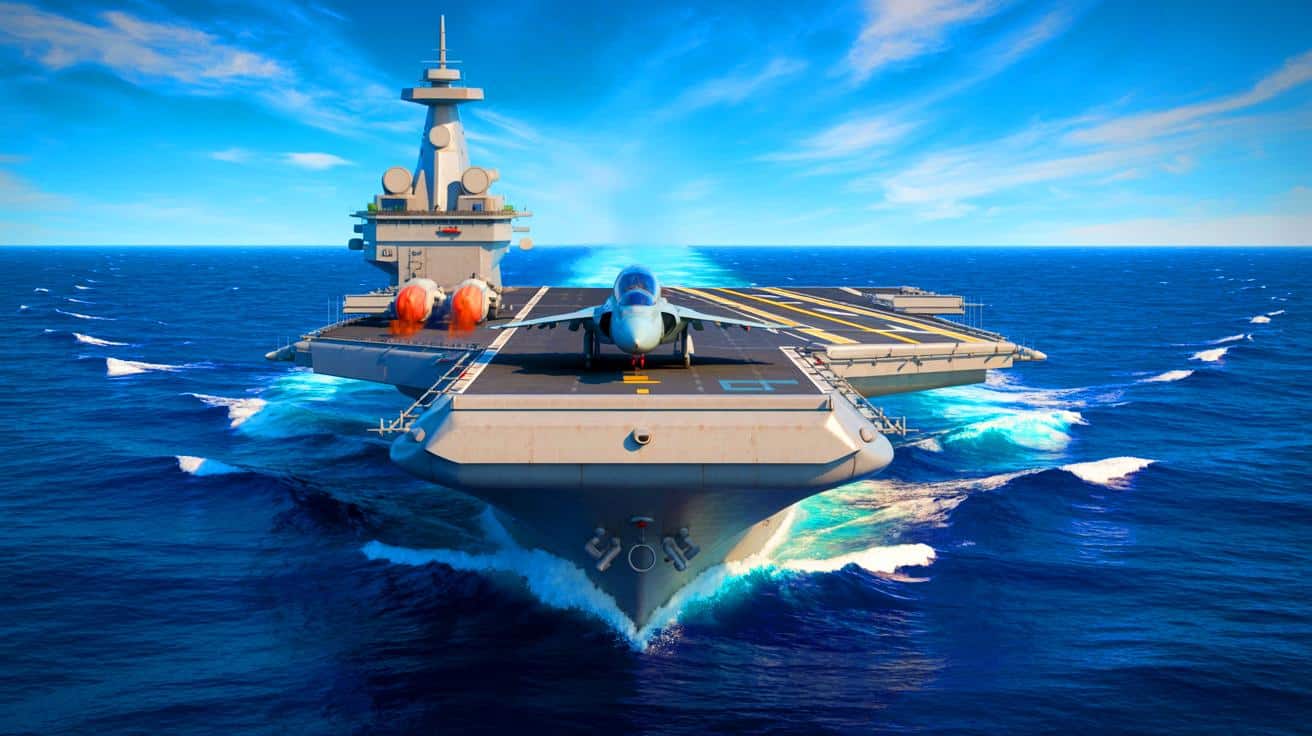
In a significant development in military naval advancements, China’s state broadcaster, CCTV, recently aired a segment that appears to show catapult take-off trials onboard its third and most advanced aircraft carrier, the Fujian. This revelation, if accurate, marks a crucial milestone for China’s military prowess. The footage, aired as part of the celebration of the 98th anniversary of the People’s Liberation Army (PLA), hints at the carrier’s transition to full operational status. Although the clips did not show the actual launches, audio from the control room suggests successful takeoffs, marking an essential step toward enhancing China’s naval capabilities.
Unveiling the Fujian’s Achievements
The broadcast showcased emotional reactions from the crew and researchers onboard the Fujian, highlighting the significance of the event. The statement “17 years! That’s enough time for a child to grow up!” uttered by a crew member, underscores the long development period of this advanced technology. The clip’s caption, “Every successful simulation was preparation for this actual take-off,” further emphasizes the dedication and hard work invested in this project.
Notably, the footage hinted at the presence of a J-15T fighter jet, implying its successful launch from the carrier’s deck. Senior Captain Tian Wei, head of naval aviation aboard the Fujian, mentioned that the ship is exploring take-offs with more carrier-based models, potentially expanding its operational capabilities. This development aligns with China’s goal of enhancing its naval aviation and achieving seamless transitions from ski-jump to catapult take-offs.
Ukrainian Hackers “Declare War” as Russian Flights Face Chaos Sparking Global Tensions
Strategic Implications for China’s Navy
The Fujian, equipped with an electromagnetic catapult launch system (EMALS), signifies a major leap forward for China’s naval capabilities. This technology, also used by the U.S. Navy’s latest carrier, the USS Gerald R. Ford, allows aircraft with larger payloads to launch from the carrier’s deck. Unlike its predecessors, Liaoning and Shandong, which utilize ski-jump ramps, the Fujian’s EMALS facilitates the launch of heavier and more advanced aircraft, including electronic warfare and early-warning planes.
China’s advancements in carrier technology bring it closer to matching U.S. capabilities in sustained flight operations and force projection. The successful catapult test suggests that China is nearing the realization of its blue-water navy aspirations, allowing for global reach and not just regional defense. This development holds strategic implications for the balance of power in international waters, potentially altering the dynamics of maritime security.
Comparisons with U.S. Naval Capabilities
The introduction of the EMALS on the Fujian positions China on a trajectory parallel to U.S. naval capabilities. The ability to launch heavier and more advanced aircraft enhances the carrier’s operational flexibility and combat readiness. This technological leap forward could enable China to operate stealth fighters, such as the under-development J-35, from its carriers, further bolstering its air-wing composition.
While the U.S. Navy has long been the benchmark for naval power projection, China’s advancements signify its determination to bridge the gap. The potential for sustained flight operations and an advanced air-wing composition underscores China’s commitment to enhancing its military capabilities. As China continues to invest in its naval infrastructure, the global naval landscape may witness a shift in power dynamics, prompting discussions on the implications for regional and global security.
Looking Ahead: The Future of Naval Warfare
As the Fujian enters its final preparatory stage, China’s focus remains on optimizing its transition from ski-jump to catapult take-off. Senior Captain Tian Wei emphasized the importance of achieving seamless transitions to rapidly attain combat capability upon commissioning. This development highlights China’s commitment to advancing its naval aviation and expanding its operational reach.
The successful catapult test marks a pivotal moment in China’s naval history, signifying its readiness to compete with established naval powers. As China continues to enhance its carrier capabilities, questions arise about its future role in global maritime affairs. How will China’s growing naval power influence international relations and the strategic balance in the Asia-Pacific region?