



Pentagon Insider Warns “It’s No Silver Bullet” as Doubts Erupt Over Golden Dome’s True Power to Stop Hypersonic and Swarm Attacks in New Space Arms Showdown
 By
Adam Kovács
By
Adam Kovács
| IN A NUTSHELL |
|
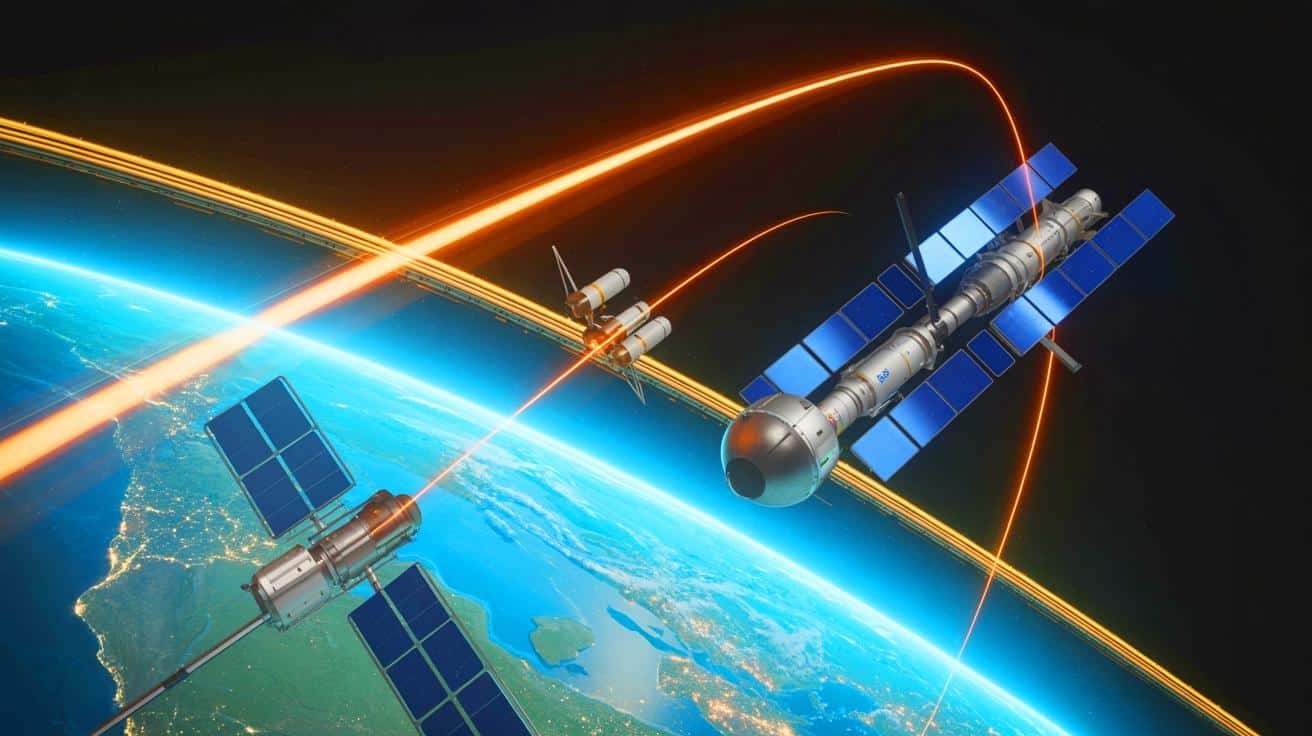
In early 2025, former President Donald Trump announced an ambitious plan to develop a new missile defense system known as the “Golden Dome.” This system aims to deploy hypersonic weapons from storage orbits around the Earth as a means of defense. The proposal comes amid growing global tensions and the continued evolution of military technology. However, experts are questioning the effectiveness of this system. As history has shown, no missile defense system is foolproof, and the challenges of intercepting advanced weaponry remain significant.
Missile Interceptors in Space
The concept of space-based missile defense is not entirely new. The Israeli Iron Dome, a mobile air defense system, has been operational since 2011. It was designed primarily to intercept short-range rockets and artillery shells, especially those originating from the Gaza Strip. However, this system faced significant challenges during the so-called “Twelve-Day War” in June 2025, when Iranian missiles breached the Iron Dome, causing damage across Israel.
Despite its technological prowess, the Iron Dome is not infallible. Experts estimate its effectiveness at approximately 90%, leading some to refer to it as a “leaky umbrella.” This system serves as a point of reference for evaluating the potential of the Golden Dome project, which aims to include detectors and interceptors in space. These components are tasked with identifying and neutralizing missiles before they can reach the United States.
Defending Against Multiple Types of Weapons
The Heritage Foundation, a conservative think tank, has played a significant role in shaping the Golden Dome initiative through its Project 2025. This extensive policy proposal document underscores the threat posed by long-range ballistic missiles, which are becoming increasingly common worldwide. The Golden Dome, developed by Lockheed Martin, is designed to intercept not only intercontinental ballistic missiles but also cruise missiles, hypersonic weapons, and fractional orbital bombardment systems (FOBS).
While ballistic missiles are relatively easy to detect due to their predictable trajectories, the situation is more complicated with cruise missiles and hypersonic gliders. These weapons fly at low altitudes and are highly maneuverable, making them difficult to track. FOBS, on the other hand, enter orbit and can exit at any time to strike targets, revealing their destination only at the last moment. This unpredictability poses significant challenges for any missile defense system.
Partial Reliability
Currently, the United States employs space-based detection systems, but its sole ground-based missile interception system is the Ground-based Midcourse Defense (GMD). This system, managed from bases in Alaska and California, is designed to intercept missiles during their midcourse phase. However, this phase lasts only a few minutes, and missiles can deploy countermeasures such as decoys during this time.
The GMD is effective against ballistic missiles due to the predictability of their trajectories. However, it struggles with hypersonic gliders and FOBS. The challenge increases when multiple missiles are launched simultaneously. This underscores the partial reliability that can be expected from the future Golden Dome system. Given the vast size of the United States, which is 18 times larger than France, defending such a large territory poses additional logistical challenges.
“US Firm’s New System With High-Tech Sensors”: Experts Say Precision Targeting Just Hit A New Level
Technological and Strategic Challenges
The development of the Golden Dome system involves significant technological and strategic hurdles. Interceptor missiles must be capable of reaching speeds of at least 11,200 miles per hour to effectively target incoming threats. Furthermore, the system’s components must be positioned within 310 miles of potential launch sites to be effective, further complicating deployment strategies.
The complexity of intercepting multiple types of weapons simultaneously requires advanced tracking and guidance technologies, which are still in development. Moreover, the geopolitical implications of deploying such a system could lead to increased tensions with other nations, particularly those with advanced missile capabilities. As the U.S. government and defense contractors continue to work on the Golden Dome, they must balance technical innovation with diplomatic considerations.
As the United States pursues the development of the Golden Dome, questions remain about its feasibility and effectiveness. While the system promises to enhance national security by intercepting advanced missile threats, the challenges it faces are significant. How will the U.S. address these technological and strategic obstacles to ensure the system’s success, and what impact will this have on global military dynamics?
Continue reading