


“Robots Won’t Know Who to Kill”: Chinese Army Issues Chilling Warning as Humanoid Soldiers Threaten Era of Blind Violence and Unstoppable Battlefield Chaos
 By
Adam Kovács
By
Adam Kovács
| IN A NUTSHELL |
|
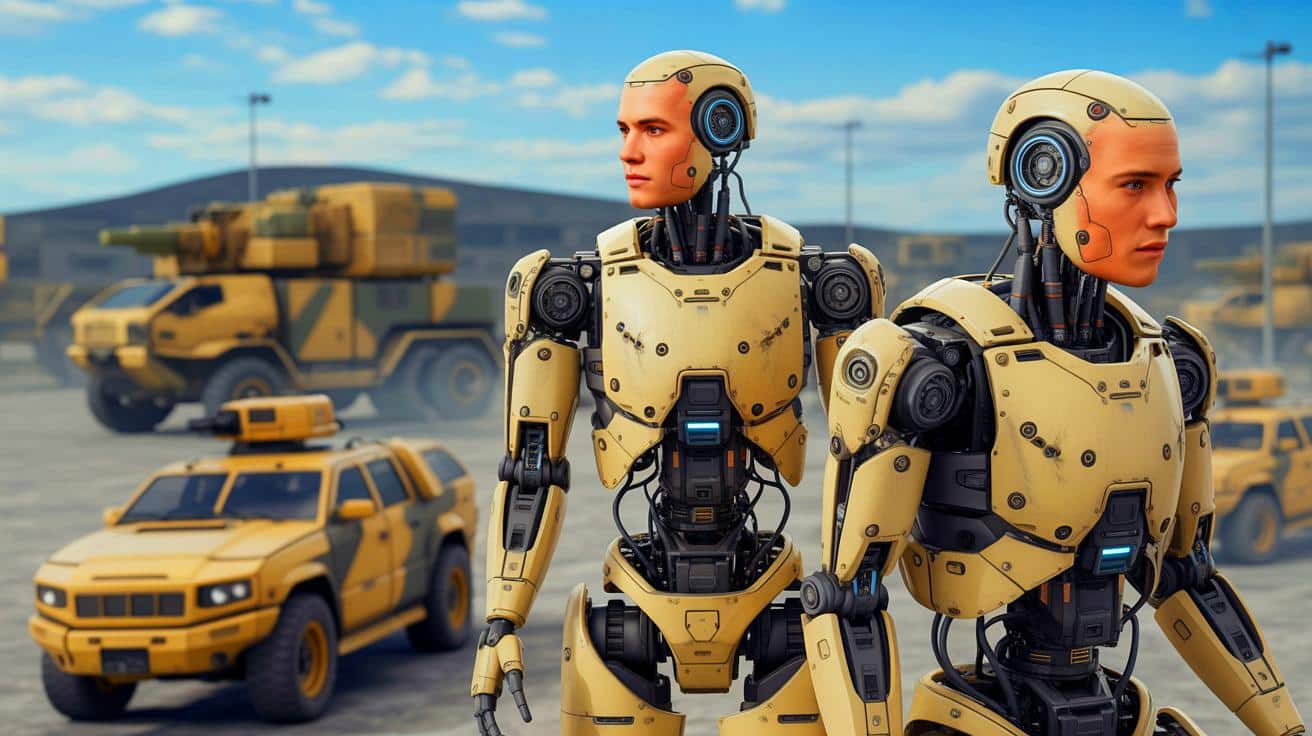
The future of warfare is increasingly being shaped by technological advancements, particularly through the rapid development of humanoid robots capable of operating on battlefields. While the excitement surrounding this innovation is palpable, it also brings significant concerns to light. Recently, the official newspaper of the Chinese army, the People’s Liberation Army Daily, highlighted these issues. In an article published on July 10, and echoed by the South China Morning Post, Chinese military experts have raised alarms, urging urgent research on the ethical and legal dimensions of deploying humanoid robots in warfare. They emphasized the risks of “blind killings” and “accidental deaths” associated with these machines.
Promises and Perils of Humanoid Robots
Military humanoid robots represent the culmination of a long journey of innovation at the intersection of artificial intelligence, advanced robotics, and autonomous systems. Their ability to mimic human movements, manipulate objects with precision, and navigate complex environments makes them particularly attractive for military operations. In theory, these robots could undertake missions deemed too dangerous for human soldiers, reduce human casualties, and perform tactical tasks with unprecedented speed and adaptability.
However, as noted by the authors of the People’s Liberation Army Daily article, Yuan Yi, Ma Ye, and Yue Shiguang, these machines raise significant ethical questions. Unlike drones or other unmanned systems, humanoid robots can physically interact with their surroundings, complicating decisions about the use of force and respect for human life. The risk of fatal errors or “blind killings,” as they term it, is not negligible.
Ethical Weight of Robotics Laws
The authors reference the famous “three laws of robotics” conceived by science fiction writer Isaac Asimov. The first law states that a robot must not harm a human being, or, through inaction, allow a human to come to harm. However, as they point out, military humanoid robots clearly violate this principle due to their nature and intended use.
They argue for the need to revise these rules in light of current advancements and to develop a strict legal framework to govern the use of these machines to avoid “moral pitfalls” and legal liabilities. According to them, robots should obey precise directives, respect human life, and limit the use of force by automatically detecting and preventing any excess or illegal acts.
The Costly and Complex Technological Revolution
Despite their undeniable advantages, humanoid robots are not set to fully replace other autonomous military systems. The article highlights that, compared to drones or unmanned vehicles, humanoid robots are more expensive and technologically complex to design and deploy.
This complexity results in technical challenges related to mobility, object and situation recognition, and autonomous decision-making. Their high cost and more difficult maintenance explain why they are likely to complement rather than supplant existing military robot fleets.
China’s Lead in Military Robotics
This public warning comes as China intensifies efforts to establish itself as a global leader in military robotics and artificial intelligence. Several Chinese companies have recently unveiled versatile humanoid robots, symbols of an ambitious strategy aimed at dominating key technologies of the future.
In this strategic competition, particularly against the United States, China is investing massively not only in robotics but also in advanced manufacturing and embodied intelligence, which is the ability of machines to integrate into their environment and act autonomously.
Toward a Global Debate on Conflict Robotization
This Chinese stance aligns with a global debate stirring scientific, military, and ethical circles worldwide. How can technological progress and human values be reconciled? What regulations should be implemented to prevent the misuse of autonomous killer robots? Who would be held accountable in case of a fatal error?
China Boasts « Our Super Steel Will Make Nuclear Fusion Plants Stronger And Safer Than Ever Before »
As these machines become more sophisticated and autonomous, these questions grow more urgent. The Chinese case thus illustrates the tensions between technological innovation and the need for clear and rigorous governance.
Ultimately, the Chinese warning highlights a major paradox: military humanoid robots embody both a significant technological advancement and an unprecedented ethical challenge. The future of warfare, with its autonomous machines capable of acting on the ground, calls for thorough reflection to ensure that technological power does not sacrifice fundamental principles of human protection.
As the world grapples with the rapid rise of technology in warfare, the pressing question remains: How can we ensure that these advancements serve humanity without compromising ethical standards or safety?