


“Scientists Warn Of Disaster”: NASA Radar Uncovers Camp Century’s Buried Nuclear Waste As Greenland Ice Loss Threatens Release Into Arctic Waters
 By
Adam Kovács
By
Adam Kovács
| IN A NUTSHELL |
|
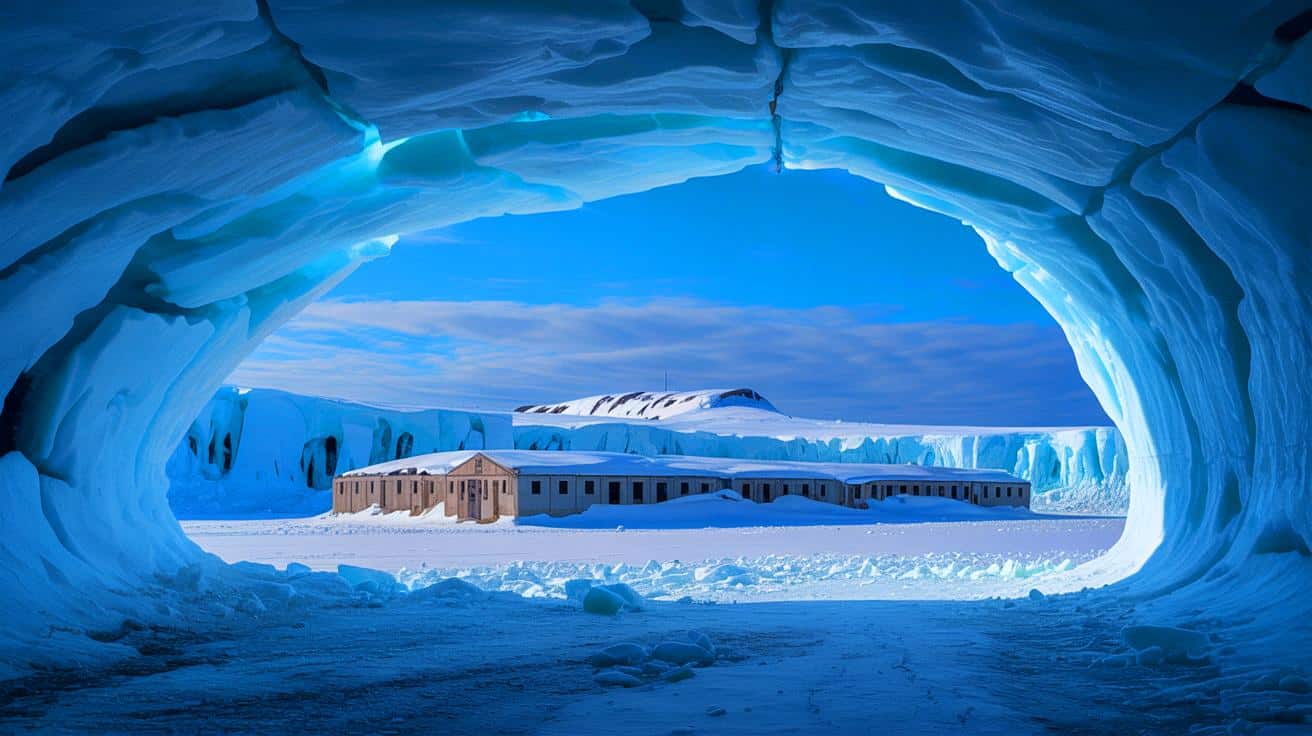
Deep beneath the Greenland ice sheet lies the remnants of a Cold War relic, a once-secret U.S. Army base named Camp Century. Built in the late 1950s and early 1960s, this base was part of a larger, ambitious plan called Project Iceworm, aimed at establishing a network of nuclear missile launch sites. However, the instability of the ice sheet halted these plans, leading to the base’s abandonment in 1967. Today, the remnants of Camp Century are buried under 100 feet of ice, raising environmental concerns as climate change accelerates the melting of polar ice. Recent radar surveys have reignited interest in the base, shining a light on its potential environmental impact.
The Discovery of Camp Century
Scientists with NASA, flying over the Arctic in a Gulfstream III jet, were on a mission to measure the thickness of the ice sheet using advanced radar technology. During this survey, they unexpectedly detected Camp Century buried beneath the ice. Initially, the scientists were unsure about the identity of the structures beneath them. “We were looking for the bed of the ice and out pops Camp Century,” said Alex Gardner, a cryospheric scientist with NASA’s Jet Propulsion Laboratory. The discovery was both surprising and concerning, given the vast amount of waste left behind when the base was abandoned.
Camp Century was originally constructed by the U.S. Army Corps of Engineers as a series of 21 tunnels spanning 1.86 miles. Designed to accommodate 200 soldiers year-round, the base was powered by a nuclear reactor. Its remote location was chosen for strategic reasons, but the unstable ice sheet led to the project’s premature end. The base was left to the elements, and over time, it has become entombed in ice, hiding its contents from view.
The Environmental Concerns
When Camp Century was abandoned, thousands of tons of waste, including hazardous materials, were left behind. Among these were radioactive materials, 200,000 liters of fossil fuel, and 24 million liters of wet waste such as sewage. As the ice continues to melt, scientists worry that these materials could seep into the ocean, posing a significant environmental threat. Radar surveys have intermittently highlighted the base's presence, likening it to an "environmental time bomb" beneath the ice.
The melting of the Greenland ice sheet is occurring at an alarming rate, losing 35 percent of its volume since 1978. This rapid ice loss heightens the risk of the waste contaminating the surrounding environment. The original assumption, that the ice would permanently encapsulate the waste, has proven to be a miscalculation. Instead, as the ice degrades, the waste may become more accessible, potentially leading to ecological disasters.
Technological Advances in Detection
In April 2024, NASA scientists utilized the Uninhabited Aerial Vehicle Synthetic Aperture Radar (UAVSAR) to gain unprecedented insight into Camp Century. This technology was able to capture detailed images of the base's structures, providing a clearer understanding of what lies beneath. "In the new data, individual structures in the secret city are visible in a way that they've never been seen before," remarked Chad Greene, another scientist at NASA's Jet Propulsion Laboratory. Despite this advancement, the primary focus of the research remains on understanding the ice sheet's overall thickness and the broader implications of its melting.
The UAVSAR technology represents a significant leap forward in our ability to study ice sheets and their hidden secrets. While it offers detailed views of buried structures, its primary value lies in improving our understanding of how ice sheets respond to changing climates. The data collected will help scientists project future sea level rise, a crucial factor in global climate change models.
Future Implications and Unanswered Questions
The discovery of Camp Century and the subsequent radar survey highlight the complex legacy of Cold War-era projects. As the Arctic continues to warm, the environmental risks associated with abandoned military bases become increasingly apparent. Currently, there is no concrete plan to address the waste at Camp Century. Instead, researchers are focusing on broader climate impacts, using the site as a case study in the potential consequences of ice sheet melting.
Understanding the full impact of the melting ice sheets is vital for predicting future climate scenarios. As scientists continue to gather data, questions remain about the best course of action to mitigate the environmental risks posed by sites like Camp Century. How will global stakeholders address the legacy of military and industrial waste left in such vulnerable regions? What strategies can be developed to prevent similar situations in the future?
The story of Camp Century serves as a poignant reminder of the unforeseen consequences of human endeavors in fragile environments. As we grapple with the effects of climate change, the lessons from this hidden base could inform our approach to environmental stewardship. What steps will be taken to ensure that history does not repeat itself in the world's most remote and vulnerable landscapes?