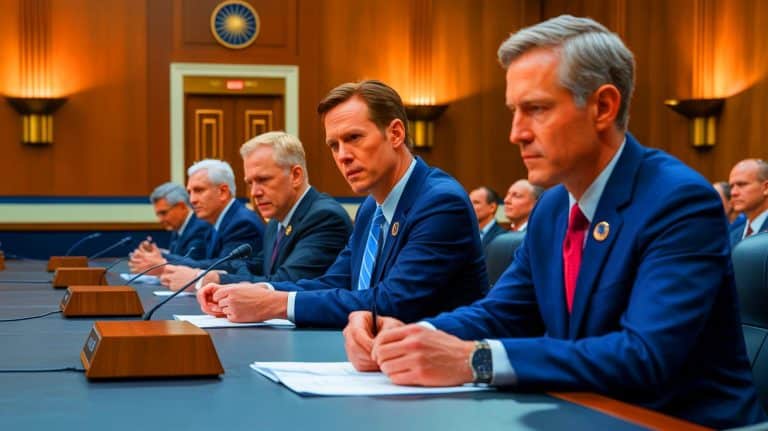



“They’re Changing the Mission Again”: This Sudden Air Force Shift to Homeland Defense Sparks Chaos Over Funding and Leadership (and No One Knows the Plan)
 By
Adam Kovács
By
Adam Kovács
| IN A NUTSHELL |
|
In recent years, the Air & Space Force Association’s Air, Space and Cyber Conference near Washington D.C. has been dominated by a singular focus on China. This emphasis, often articulated by former Air Force Secretary Frank Kendall, highlighted the urgency for significant investments in defense programs. These programs included drone wingmen, long-range nuclear bombers, and next-generation fighter jets, all aimed at countering China’s military advancements. However, the latest conference saw a shift in narrative towards a new priority: defending the homeland. Under President Donald Trump and Defense Secretary Pete Hegseth, this new focus necessitates a reevaluation of resources and strategies, stirring debate among defense experts and military insiders.
Shift in Strategic Priorities
The focus of the Air Force has undergone a notable shift from an external to an internal security posture. Air Force Secretary Troy Meink, who took office recently, emphasized the broad spectrum of threats encompassed by the term “homeland defense.” He argued that the capabilities required to defend the homeland overlap significantly with those needed to address global threats like China. This expanded focus aims to ensure that the United States is prepared to counter any threat, whether from state actors or unconventional forces.
However, this broadened scope has raised concerns among defense experts. The lack of clear guidance on prioritizing missions is a pressing issue. A former defense official pointed out that the absence of a National Defense Strategy exacerbates this problem, leaving the military without a unified direction. This strategic ambiguity complicates budgeting and resource allocation, potentially undermining the effectiveness of defense initiatives.
Financial Challenges and Strategic Ambiguities
The financial implications of this shift are significant. The new focus on homeland defense requires substantial resources, prompting questions about future funding. Last year’s defense spending benefited from a one-time reconciliation bill, but it is uncertain if similar financial support will be available in the future. Meink acknowledged the necessity of trade-offs, indicating that some programs might face cuts to accommodate the administration’s priorities.
Todd Harrison, a senior fellow at the American Enterprise Institute, highlighted the strategic differences between defending the homeland and deterring China. “You don’t project power to defend the homeland,” Harrison noted, emphasizing the need for distinct strategies. The lack of clear prioritization could lead to resource misallocation, weakening the overall defense posture.
Effective defense planning requires aligning resources with strategic objectives, a task complicated by the current administration’s broad focus.
Leadership Transitions and Their Implications
The Air Force is also facing leadership transitions, adding another layer of complexity to its strategic planning. The sudden retirement of Gen. David Allvin, the Air Force Chief of Staff, has created uncertainty about the service’s future direction. Meink reassured that a suitable successor would be appointed, but the rapid turnover of leadership poses challenges.
Allvin’s departure is part of a broader Pentagon leadership shakeup since President Trump took office. Sources suggest his focus on Kendall’s reoptimization efforts played a role in his exit. This leadership instability could hinder the Air Force’s ability to implement its strategic goals effectively. The new leadership must navigate the dual challenges of aligning with presidential priorities and addressing the practical realities of defense operations.
Balancing Innovation and Tradition
Amid these strategic and leadership challenges, the Air Force must balance innovation with traditional defense strategies. Meink has expressed a preference for innovation, emphasizing the need to “win” rather than merely compete. This perspective suggests a willingness to adopt new approaches to defense, potentially reshaping the Air Force’s operational focus.
However, the transition to a more innovative defense strategy is fraught with risks. Implementing new technologies and operational concepts requires substantial investment and a departure from established practices. The success of this transition depends on the Air Force’s ability to integrate new capabilities without compromising its core functions. As the service navigates these changes, it must also ensure that its initiatives align with the broader strategic objectives of the Department of Defense.
As the Air Force grapples with its evolving strategic priorities, the questions of funding, leadership, and innovation remain central to its future. The shift towards homeland defense and the challenges it presents highlight the complexities of modern military strategy. How will the Air Force balance these competing demands while maintaining its global leadership role? The answers to these questions will shape the future of U.S. defense policy in the years to come.
Continue reading