



“They Saw Ghost Fleets on Radar”: This Chinese System Just Fooled a Foreign Spy Plane (and It Changes Everything in the South China Sea)
 By
Adam Kovács
By
Adam Kovács
| IN A NUTSHELL |
|
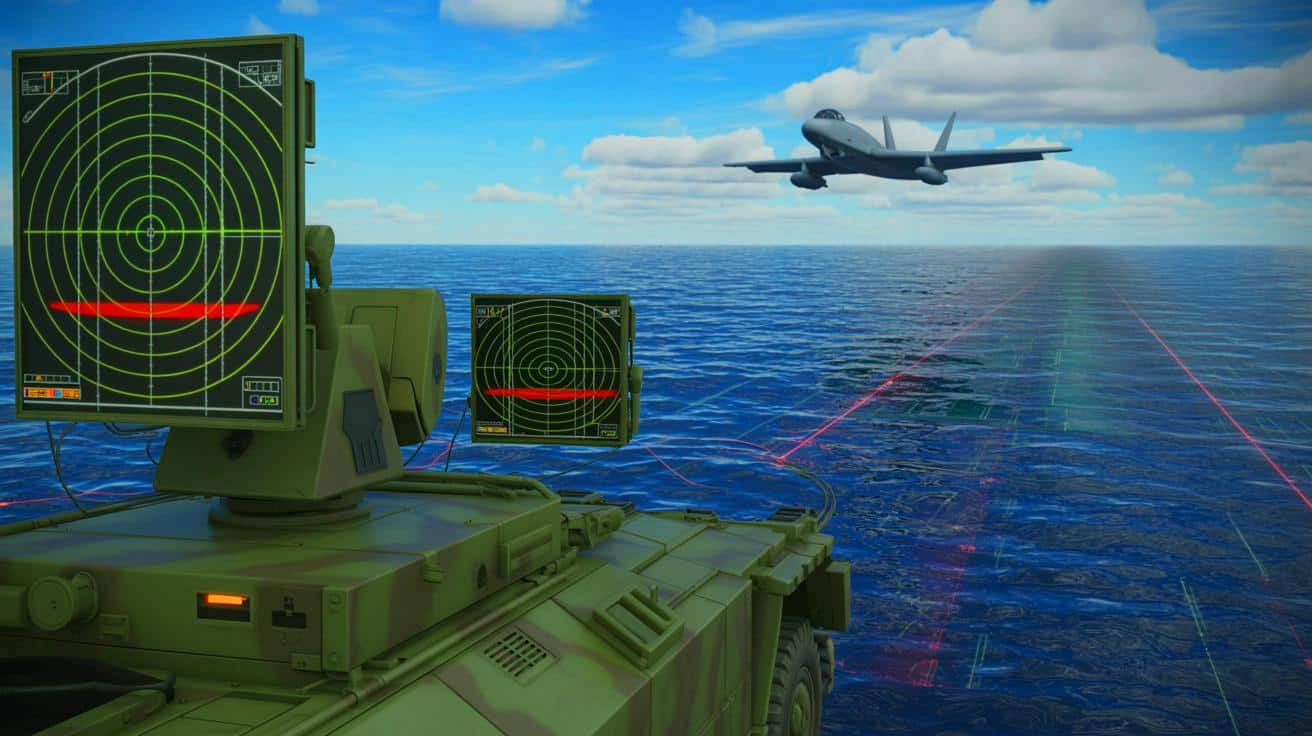
Recent developments in electronic warfare (EW) technology have shed light on the sophisticated methods employed by China to deceive foreign surveillance aircraft. According to reports, a Chinese EW system managed to mislead a foreign spy plane over the South China Sea. The incident underscores the potential for electronic deception in geopolitical conflicts, particularly in strategically sensitive regions. Though the nationality of the aircraft remains unspecified, it is widely presumed to be American or allied. This event highlights the growing complexity of electronic warfare, where adversaries employ advanced technologies to gain strategic advantages without direct confrontation.
Understanding China’s Advanced Electronic Warfare System
China’s electronic warfare system is designed to manipulate radar signals, creating false targets that mimic actual naval or aerial assets. This capability is achieved through sophisticated radar signature simulation, allowing the system to project echoes that resemble the characteristics of ships and planes. By doing so, the system effectively “paints” an electromagnetic picture of non-existent warships, confusing enemy sensors.
Beyond mere jamming, the system incorporates jamming deception integration, a more advanced technique that injects false, yet coherent, data into enemy radars. This method doesn’t just obscure the radar; it actively deceives it by providing believable false information. Such capabilities are bolstered by a comprehensive database of adversary radar frequencies, enabling the system to respond with tailored signals that mimic real reflections.
The rapidity of this system is a key factor in its effectiveness. Reports suggest it can intercept and counter radar signals in seconds, likely due to AI-assisted pattern recognition and real-time frequency analysis. Despite its compact size, comparable to a jeep, the system boasts jamming coverage equivalent to 50 older systems, capable of deploying swiftly across regions. This enhances China’s ability to establish a widespread electromagnetic defense network.
Geopolitical Implications in the South China Sea
The deployment of such advanced EW systems has significant geopolitical implications, particularly in regions like the South China Sea and the Taiwan Strait. These areas are critical for U.S. and allied military operations, where surveillance flights are a common occurrence. The ability of China’s EW systems to generate false targets complicates the task of distinguishing real from fake, leading to potential confusion or misallocation of resources during reconnaissance missions.
Moreover, by masking its assets with “ghost” targets, China can protect its forces while simultaneously challenging the situational awareness of opponents. This forces adversaries to question the validity of their radar data, which can be detrimental in a conflict scenario. If these systems are integrated across China’s southern theater, they could significantly delay allied response times, offering China a strategic edge in information warfare.
Such advancements are not just technological achievements but also powerful signals of China’s growing capabilities in electronic warfare. The ability to create “electromagnetic deceptions” represents a leap beyond traditional jamming techniques, akin to creating deepfakes in the realm of radar technology.
Technological Advancements and Strategic Messaging
The technological prowess demonstrated by China’s EW systems is a testament to the country’s advancements in military technology. The system’s ability to project credible false radar signals represents a significant leap in electronic warfare capabilities. This development is not only a demonstration of technical skill but also serves as a strategic message to potential adversaries in the region.
The rapid deployment capability of these systems poses a challenge to traditional military strategies, which rely heavily on radar and electronic surveillance. By creating a dense network of electromagnetic defenses, China can effectively shield its assets while disrupting the operations of opposing forces. This capability is particularly relevant in contested areas, where the balance of power is often delicate and subject to rapid shifts.
The integration of AI and real-time analysis further enhances the system’s effectiveness, allowing it to adapt swiftly to changing conditions. This adaptability is crucial in modern warfare, where information dominance can dictate the outcome of conflicts. The ability to deceive enemy sensors with precision underscores the importance of technological innovation in maintaining strategic advantages.
The Future of Electronic Warfare
As electronic warfare becomes increasingly sophisticated, it raises questions about the future of military engagements and the role of technology in shaping geopolitical dynamics. China’s advancements in EW technologies highlight the shifting nature of warfare, where information and deception play pivotal roles. The ability to manipulate electronic signals and create false narratives poses challenges to traditional military doctrines.
These developments prompt a reevaluation of strategic approaches and defense mechanisms. As nations invest in technology to counteract such advancements, the arms race in electronic warfare is likely to intensify. This evolution in warfare underscores the need for international dialogue and cooperation to prevent escalations that could arise from misunderstandings or misinterpretations of electronic signals.
The incident over the South China Sea serves as a reminder of the complexities involved in modern warfare and the importance of staying ahead in technological capabilities. As nations grapple with these challenges, the question arises: How will the balance of power shift as electronic warfare continues to evolve, and what measures can be taken to ensure stability in this rapidly changing landscape?