



“Game-Changer on the Battlefield”: U.S. Veteran Unveils Ralar System That Launches Drones From Moving Vehicles-No Landing Zone Needed
 By
Adam Kovács
By
Adam Kovács
| IN A NUTSHELL |
|
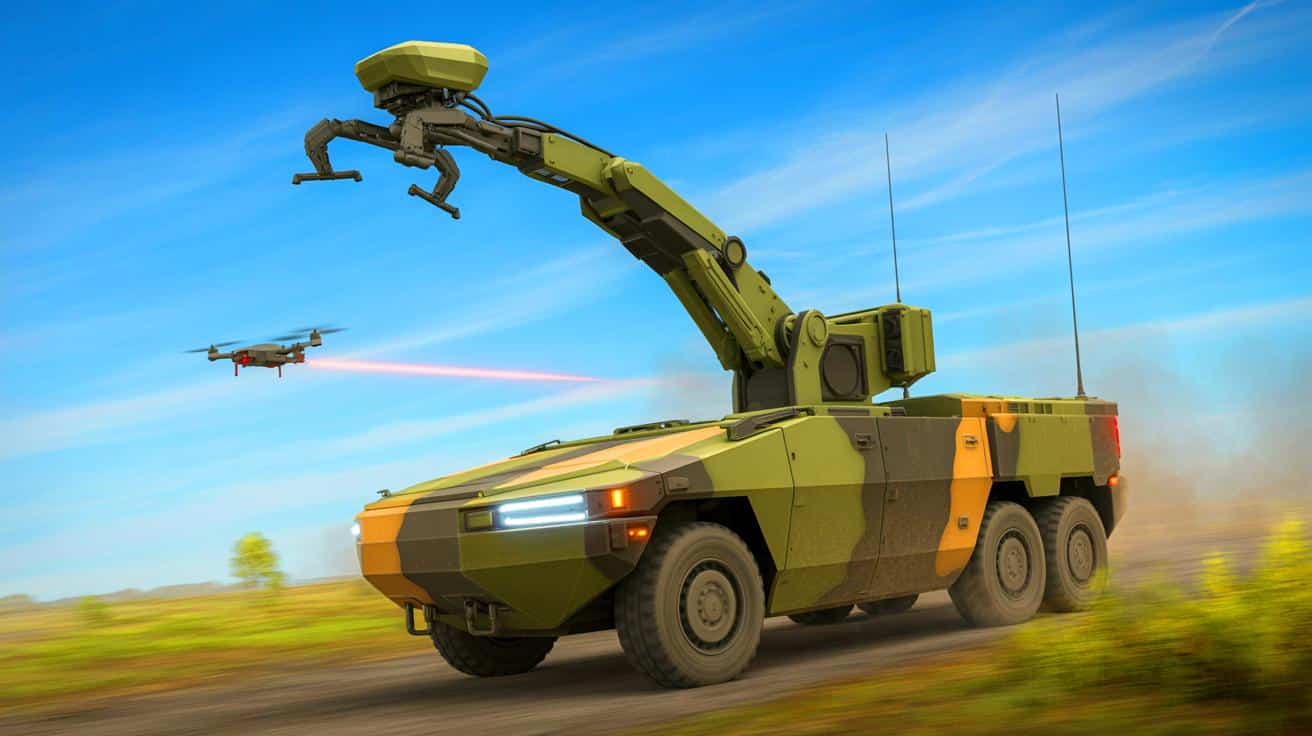
The evolution of drone technology has taken a significant leap forward with the introduction of a groundbreaking system developed by a service-disabled U.S. veteran. The Ralar Modular Mission Payload (MMP) drone system, showcased at the 2025 Association of the United States Army (AUSA) expo, offers a novel solution for drone deployment and recovery. This innovation promises to transform military operations by allowing drones to be launched and retrieved midair from moving vehicles, eliminating the need for stationary launch or landing zones. This system not only enhances the agility of military units but also significantly boosts operational safety by reducing exposure to enemy fire.
Revolutionizing Military Operations
The Ralar system, developed by Target Arm, was introduced to the public during the AUSA exposition, integrated onto GM Defense’s Infantry Squad Vehicle, Utility (ISV-U). This debut marks a significant milestone in the evolution of tactical ground forces, providing them with a dynamic tool for operations near contested frontlines. The system’s ability to launch and capture drones while on the move reduces the need for troops to stop and manually handle drones, which traditionally exposes them to significant risks.
This innovation represents a paradigm shift in mobile reconnaissance and strike missions, particularly in environments where situational awareness and adaptability are critical. The system’s integration with GM Defense highlights its potential role in future battlefield strategies where mobility and rapid response are paramount. By allowing drones to be deployed and retrieved without halting vehicle movement, Ralar significantly enhances both the safety and effectiveness of military operations.
Precision and Adaptability
The Ralar system’s core strength lies in its precision and platform flexibility. Utilizing advanced positioning technology from Trimble Inc., the system ensures accurate synchronization between the drone’s flight path and the vehicle’s movement. This precision enables smooth and repeatable capture sequences, even under challenging conditions such as high speeds or rugged terrains.
Moreover, the system is designed to be platform-agnostic, meaning it can be installed on various tactical vehicles, ground robots, or aircraft with minimal modifications. This flexibility extends the system’s applicability beyond military use, opening the door for potential commercial applications. The modular architecture also supports future enhancements, such as integration with autonomous control software or AI-enabled drone swarms, paving the way for coordinated, multi-domain operations.
Implications for Future Warfare
As militaries around the world continue to integrate manned and unmanned assets, systems like Ralar are becoming increasingly crucial. The ability to seamlessly pair human and machine operations is a foundational element of next-generation warfare concepts. The debut of Ralar at AUSA 2025 underscores this trend, highlighting the growing importance of mobility, autonomy, and modularity in future battlefield systems.
“Ralar’s debut underscores the growing importance of mobility, autonomy, and modularity in future battlefield systems.”
https://visegradpost.com/en/2025/10/14/theyre-changing-the-mission-again-this-sudden-air-force-shift-to-homeland-defense-sparks-chaos-over-funding-and-leadership-and-no-one-knows-the-plan/
The U.S. Army’s emphasis on networked, distributed operations aligns with the capabilities offered by the Ralar system, which enhances situational awareness and accelerates decision-making at the tactical edge. As these concepts become more integrated into military strategies, innovations like Ralar will likely play a pivotal role in defining the future landscape of warfare.
Challenges and Opportunities
While Ralar represents a significant advancement in drone technology, it also presents new challenges and opportunities. The integration of such systems into existing military protocols requires careful consideration of logistics, training, and maintenance. However, the potential benefits, such as enhanced operational efficiency and reduced risk to personnel, make it a worthwhile investment.
As the technology matures, its adaptability across various platforms could lead to widespread adoption, not only in military applications but also in sectors like disaster response and environmental monitoring. The ongoing development and refinement of Ralar will undoubtedly influence its future applications and effectiveness.
The introduction of the Ralar Modular Mission Payload system marks an exciting development in drone technology, with implications that extend beyond military use. As this technology continues to evolve, it raises important questions about the future of unmanned systems in various fields. How will these advancements shape the landscape of global operations, and what new possibilities will they unlock?
Continue reading