


F-14 Tomcat’s Secret Tank-Busting Role: How the Navy’s Iconic Jet Quietly Reshaped Modern Warfare Strategies
 By
Adam Kovács
By
Adam Kovács
| IN A NUTSHELL |
|
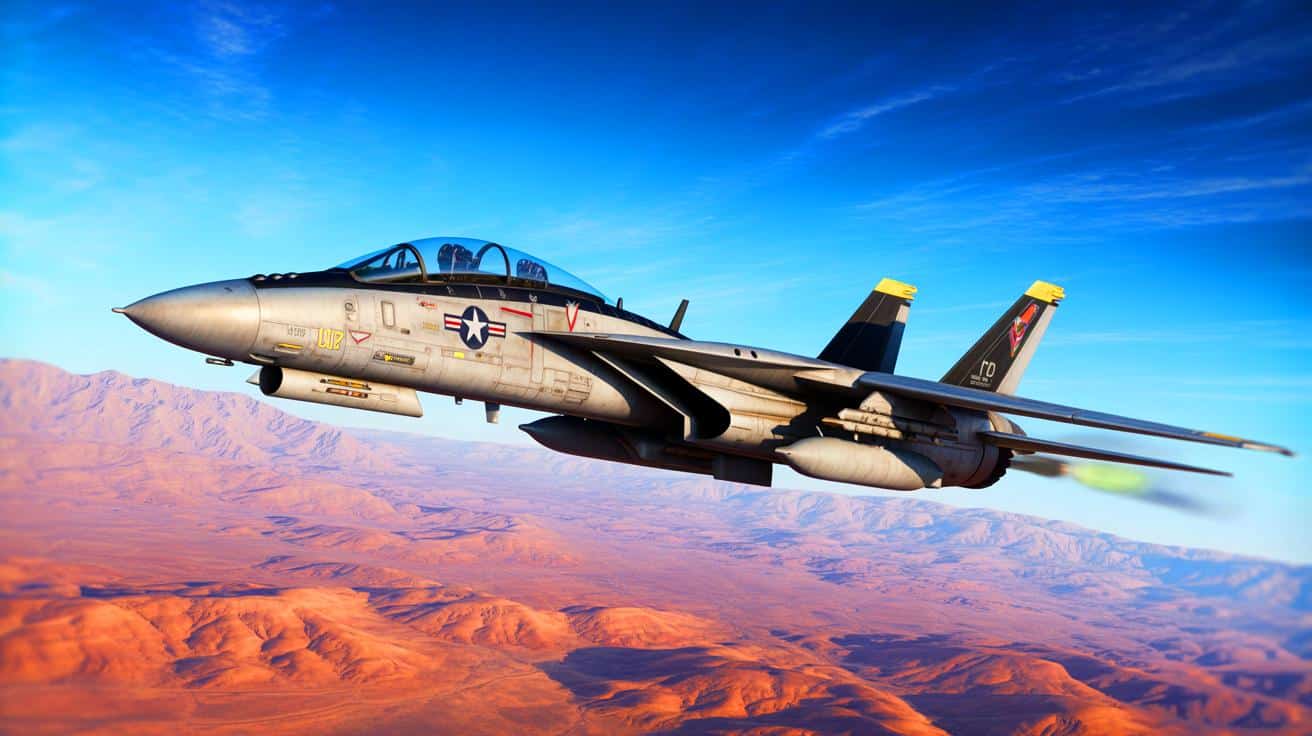
The F-14 Tomcat, once a symbol of American air superiority, played a surprisingly versatile role in the early days of the Afghanistan war. Known primarily as a fighter jet, the Tomcat demonstrated its adaptability by providing crucial close air support in challenging conditions. During a pivotal moment in November 2001, the F-14 showcased its potential as a multi-role aircraft, engaging in ground attacks to aid Special Forces. This event underscored the evolution of the Tomcat from an air superiority fighter to the “Bombcat,” leaving a lasting legacy in military aviation history.
The Battle of Tarin Kowt: A Turning Point
In the early weeks of the Afghanistan war, the F-14 Tomcat was at the forefront of air operations. On November 17, 2001, during the Battle of Tarin Kowt, the Tomcat played a crucial role in defending the city from Taliban forces. The situation was dire, with Taliban tanks advancing rapidly. Fighter Squadron 102, also known as the “Diamondbacks,” was tasked with providing air support. These missions often involved long hours, as the F-14s launched from aircraft carriers in the Northern Arabian Sea.
As the battle intensified, the Tomcats, alongside Hornets, attempted to halt the Taliban’s advance with precision-guided munitions. However, the situation became critical when one F-14B ran out of its guided munitions. With only the 20mm M61 Vulcan cannon remaining, the pilot was forced to use it as a last resort. This decision proved decisive, as the strafing run stopped the advancing tank, demonstrating the Tomcat’s versatility in combat.
The Weapon of Last Resort
During the Battle of Tarin Kowt, the F-14’s 20mm M61 Vulcan cannon became the “weapon of last resort.” The crew of BuNo 163225, having exhausted their guided munitions, faced a challenging decision. With no immediate reinforcements available, the pilot executed a daring strafing run. The cannon, typically reserved for air-to-air combat, was now used to engage ground targets.
The crew’s actions were both bold and necessary. As the Taliban moved closer, the pilot and his Radar Intercept Officer (RIO) engaged the tank with precision. Although it remains uncertain if the tank was destroyed, the maneuver successfully halted its progress. This act of bravery earned both the maintenance officer and the RIO the Distinguished Flying Cross, highlighting the F-14’s adaptability and the crew’s courage under pressure.
The Evolution of the “Bombcat”
The F-14’s transformation from a fleet air defense aircraft to a multi-role strike platform was a testament to its engineering and adaptability. Initially designed for air superiority and long-range interception, the Tomcat’s potential as a strike aircraft became evident during the Afghanistan conflict. With modifications, the F-14 was equipped to carry a variety of ordnance, including precision-guided bombs.
This evolution was part of a broader strategy to enhance the Tomcat’s capabilities. As the war in Afghanistan progressed, the F-14 became known as the “Bombcat,” engaging in some of the longest carrier-launched strikes in history. These missions, often lasting six to ten hours, demonstrated the aircraft’s endurance and flexibility. The Tomcat’s ability to carry out these missions effectively changed the perception of its role in modern warfare.
Retirement of a Legend
The F-14 Tomcat was officially retired in September 2006, marking the end of an era in naval aviation. Over its 36-year service, the Tomcat earned a reputation as a formidable fighter and a versatile strike aircraft. Its role in military conflicts, particularly in Afghanistan, solidified its legacy as an adaptable and reliable platform. The Tomcat’s retirement was met with both celebration and nostalgia, reflecting its impact on military aviation and popular culture.
Despite its retirement, the F-14 remains iconic, partly due to its portrayal in the 1986 film “Top Gun.” Its legacy continues to influence modern aircraft and military strategies. As aviation technology advances, the lessons learned from the Tomcat’s service will undoubtedly shape the future of air combat. What can modern military aircraft learn from the F-14’s legacy of versatility and adaptability in challenging combat scenarios?
Continue reading