

“Poland Builds Europe’s First Small Reactor”: BWRX-300 Nuclear Plant Uses American Technology While That 300-Megawatt System Replaces Coal Power
 By
Adam Kovács
By
Adam Kovács
| IN A NUTSHELL |
|
Poland is stepping into a new era of energy production, marking a significant shift in its energy strategy. The country is set to build Europe’s first advanced small modular nuclear reactor, utilizing cutting-edge technology developed in the United States. This initiative is spearheaded by a joint venture between Orlen and Synthos Green Energy, named Orlen Synthos Green Energy (OSGE). The project is a crucial step in Poland’s efforts to diversify its energy sources and reduce its reliance on coal. As this development unfolds, it promises to set a precedent for nuclear technology deployment in Europe, potentially influencing energy policies across the continent.
A Joint Venture to Bring US Technology to Poland
The formation of Orlen Synthos Green Energy (OSGE) marks a pivotal collaboration between Poland’s leading energy companies to introduce U.S.-developed nuclear technology to Europe. This joint venture has been structured to ensure balanced control between Orlen and Synthos, with both entities holding equal stakes. A steering committee has been established to oversee the implementation and operational decisions, ensuring the project aligns with strategic objectives. The partnership grants OSGE full access to the BWRX-300 reactor technology, which is considered one of the most advanced small modular reactor designs available. This access includes the Standard Design package necessary for licensing and deployment.
The strategic importance of this project is underscored by its location in Włocławek, a site of significance for Orlen. The decision to base the reactor here reflects a broader strategy to leverage existing infrastructure and resources. Orlen, through a special purpose vehicle, will lead the project delivery, ensuring that the development progresses smoothly. This venture not only strengthens Poland’s energy independence but also positions it as a leader in the adoption of next-generation nuclear technology in Europe.
Amazon Faces Backlash: “Nuclear Reactors Threaten Safety” in the US AI Data Centers Plan
Poland’s Plan to Move Away From Coal
For decades, coal has been the backbone of Poland’s energy sector, providing the majority of the country’s electricity. However, environmental concerns and European Union regulations have prompted a reevaluation of this dependency. In pursuing a sustainable future, Poland has set ambitious goals to transition towards low-carbon energy sources. This includes the construction of 24 small modular nuclear reactors across six strategic locations, including Włocławek. These sites have been selected following extensive geological surveys to ensure feasibility and safety.
The Ministry of Climate and Environment has played a key role in advancing this initiative by issuing decisions-in-principle for all proposed reactor sites. These decisions reflect a commitment to reducing carbon emissions while ensuring energy security. As detailed environmental studies progress, Orlen and Synthos Green Energy are poised to begin the construction phase. This shift from coal to nuclear power is not just an environmental necessity but also an economic opportunity, potentially leading to job creation and technological innovation.
The BWRX-300: A New Generation of Nuclear Technology
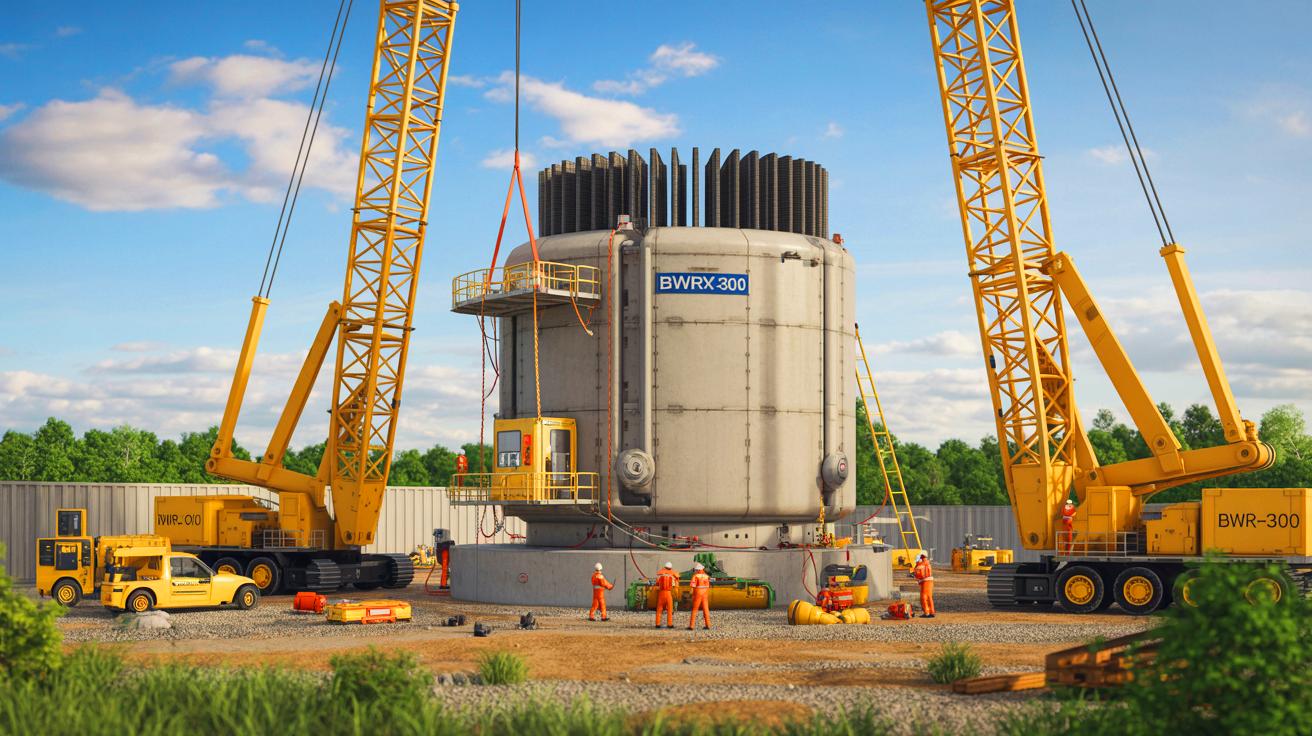
The BWRX-300 represents a significant advancement in nuclear technology. It is a 300 MWe water-cooled reactor designed with passive safety systems, offering a high level of safety and efficiency. Based on the established ESBWR boiling water reactor design, the BWRX-300 benefits from U.S. Nuclear Regulatory Commission certification. Its use of GNF2 nuclear fuel, which is already licensed, further streamlines the deployment process.
GE Vernova Hitachi Nuclear Energy highlights the BWRX-300’s ability to deliver reliable, carbon-free power at a lower cost and faster rate compared to traditional nuclear reactors. This technology’s deployment in Poland not only underscores the country’s commitment to clean energy but also enhances its stature as a leader in adopting innovative nuclear solutions. The project in Włocławek serves as a reference point for similar initiatives globally, including Canada’s recent approval of a BWRX-300 reactor at the Darlington site.
“Doctors Warn of Chaos”: China’s Pig Lung Transplant Stirs Global Medical Tensions
Strategic Implications and Future Prospects
Orlen’s ambitious plan to operationalize at least two small modular reactors with a combined capacity of 0.6 gigawatts by 2035 is a testament to Poland’s forward-thinking energy strategy. The Włocławek project is the first step in this journey, establishing a benchmark for future developments. As Poland reduces its coal dependency, the successful implementation of the BWRX-300 will be critical in meeting its energy needs sustainably.
Moreover, the project’s success could influence other European nations contemplating similar transitions. It demonstrates how countries can leverage advanced nuclear technology to enhance energy security while mitigating climate impact. As global energy dynamics evolve, Poland’s pioneering efforts could serve as a model for integrating nuclear technology into national energy grids.
Poland’s bold move to embrace small modular nuclear reactors is a significant development in the global energy landscape. As the country builds its first BWRX-300 reactor, it faces both opportunities and challenges. The outcomes of this initiative will likely resonate beyond Poland’s borders, influencing energy policies and technological adoption across Europe. How will other nations respond to this shift towards nuclear technology, and what implications will it have for global energy sustainability?
Continue reading