


“UK Must Choose Between Jobs And Victory”: Britain Faces Pivotal Fighter Jet Decision As Eurofighter Supports 26,000 Jobs While F-35 Offers Superior Combat Technology
 By
Adam Kovács
By
Adam Kovács
| IN A NUTSHELL |
|
The United Kingdom finds itself at a crossroads in determining the future of its military aviation strategy. As the government deliberates over whether to invest in the Eurofighter Typhoon or the F-35 fighter jets, the decision carries significant economic and geopolitical weight. Each aircraft offers distinct advantages, yet also presents unique challenges. The final decision will not only impact the UK’s defense capabilities but also its industrial landscape and international relationships. This complex choice highlights the balancing act between maintaining technological superiority and safeguarding domestic industry and employment.
Eurofighter Typhoon’s Role in the UK Defense Industry
The Eurofighter Typhoon plays a crucial role in the UK’s defense manufacturing sector. As a collaborative European project, it symbolizes industrial unity and contributes significantly to the British economy. With substantial involvement from companies like BAE Systems and Rolls-Royce, the Eurofighter supports approximately 26,000 jobs across the UK for every 24 aircraft ordered. This makes it a vital component of the British defense supply chain.
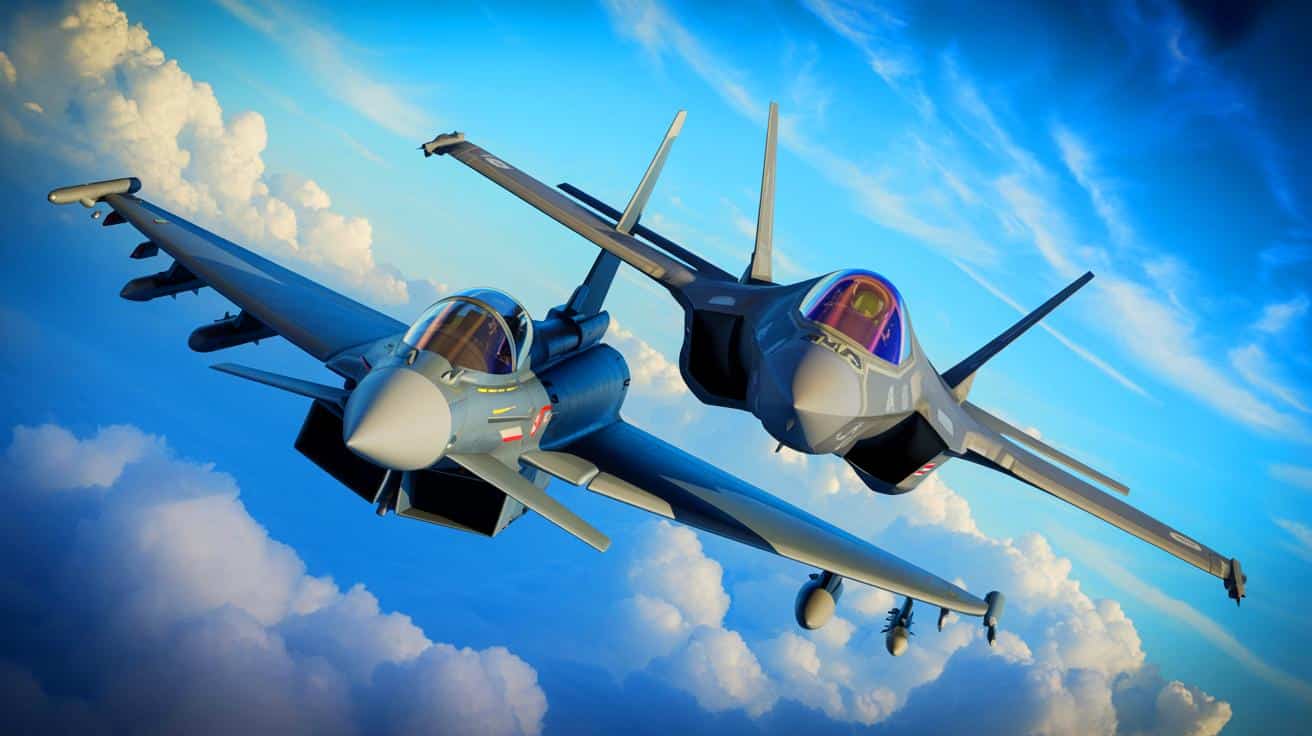
Investing in the Eurofighter could help preserve the UK’s engineering expertise and industrial autonomy, especially as the nation transitions to next-generation programs like the Tempest fighter project. Unions, such as Unite, have highlighted the importance of sustaining local employment and mitigating economic uncertainty. The Eurofighter offers a pathway to maintain existing infrastructure and generate economic growth. However, its fourth-generation design is technologically surpassed by newer fifth-generation fighters, which may limit its appeal in modern combat scenarios.
F-35: A Strategic and Technological Investment
The F-35 offers advanced combat capabilities that are appealing to nations seeking air dominance. With its fifth-generation stealth design, the F-35 enhances survivability in hostile environments and can carry more weapons, including 50% more air-to-air missiles than the Eurofighter. Its superior range and maneuverability provide an operational advantage in modern warfare. Procuring the F-35 would also strengthen the UK’s integration with NATO partners and global allies.
Countries such as the United States, Israel, and Japan already rely on the F-35, enabling enhanced interoperability. Shared technology and training platforms ensure seamless coordination during joint operations. However, the F-35 program offers limited local industrial contributions, particularly regarding the F-35A variant, which could impact job creation in the UK. This presents a challenge in balancing technological needs with domestic economic priorities.
Balancing Technological Needs With Domestic Priorities
The decision to choose between the Eurofighter and the F-35 is not merely about selecting a fighter jet. It represents a broader struggle to reconcile technological advancements with domestic priorities. On one hand, the Royal Air Force must be equipped to face modern threats. On the other hand, maintaining industrial stability and supporting national employment remain critical. This balance between defense readiness and sustaining local capabilities underscores the complexity of the procurement process.
The decision also reflects broader priorities beyond defense, including national politics and international relations. Opting for the Eurofighter aligns with European defense collaboration and showcases post-Brexit industrial resilience. Conversely, choosing the F-35 could underscore the UK’s commitment to NATO and transatlantic partnerships. Environmental sustainability is another factor, as military aviation must adapt to demands for lower carbon emissions and energy efficiency. Investing in cleaner propulsion systems and sustainable materials could define future fighter designs.
Implications for Economic Resilience and Geopolitical Alliances
The British government must weigh its options carefully, as the decision will impact more than military capabilities, it will shape the nation’s economic resilience, industrial strategy, and geopolitical alliances. Whether opting for the Eurofighter’s local benefits or the F-35’s technological superiority, the UK is navigating a choice that carries long-term significance for its defense ambitions.
The decision has sparked debates among government officials, defense experts, and industry leaders, highlighting its potential to impact the UK’s defense posture and economy for years to come. The choice is not just a matter of immediate military needs but involves the broader consideration of future readiness and international collaborations. As the UK faces this critical decision, the question remains: how will the choice between the Eurofighter and the F-35 shape the nation’s defense landscape and global standing in the years to come?
Continue reading