



“We’re Putting Weapons In Space And Breaking Every Rule”: Trump Administration Shatters Decades-Old Military Taboo With Orbital Missile Defense System Against Hypersonic Threats
 By
Adam Kovács
By
Adam Kovács
| IN A NUTSHELL |
|
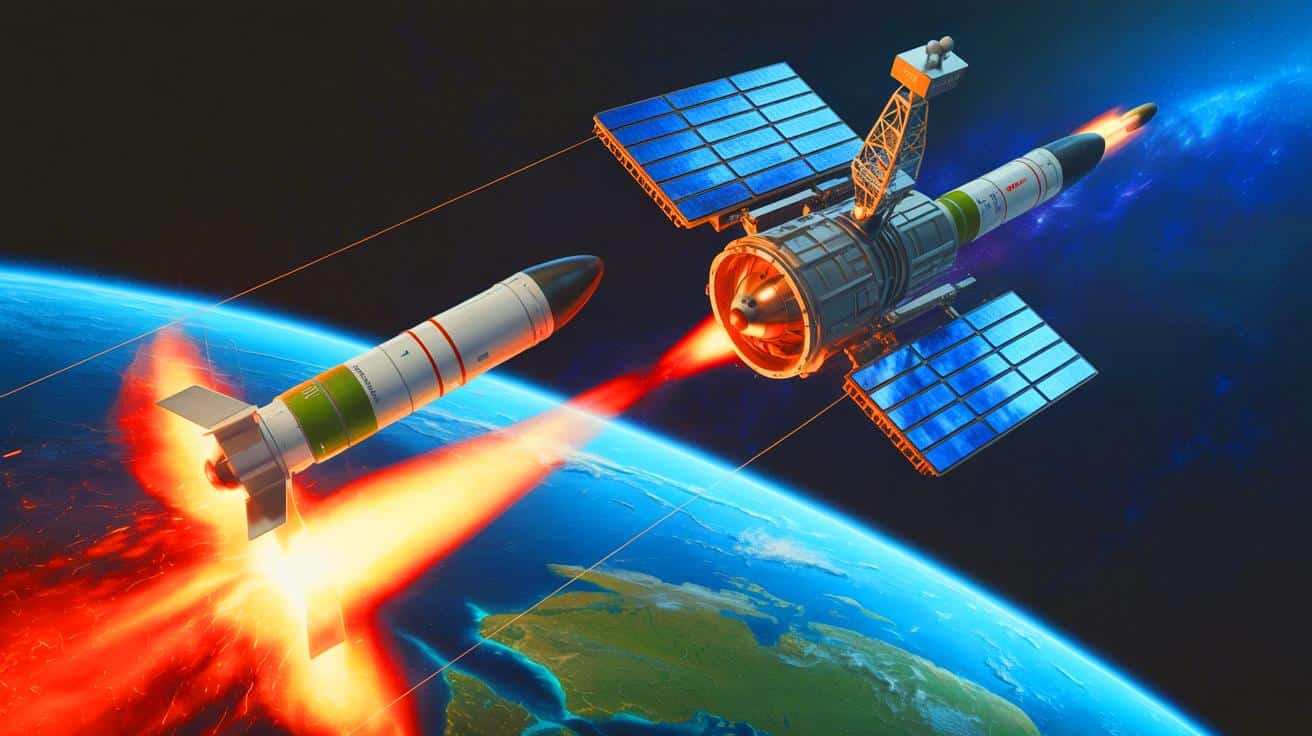
In a strategic move that could redefine modern warfare, the Trump administration has announced plans for a revolutionary space-based missile defense system. As global tensions rise and technological advancements in missile capabilities threaten national security, this bold initiative aims to provide the United States with a formidable shield against airborne threats. The executive order directs the Pentagon to focus on space as the new frontier for defense, reminiscent of the Cold War-era “Star Wars” initiative. However, this ambitious plan raises questions about feasibility, cost, and international implications, as it challenges long-standing norms on militarizing space.
America’s “Iron Dome” in Space?
The Trump administration’s proposal for a space-based missile defense system draws parallels with Israel’s Iron Dome, but with a broader scope. While the Iron Dome focuses on intercepting short-range rockets, the U.S. version aims to counter a diverse array of threats. These include ballistic missiles, cruise missiles, and the increasingly sophisticated hypersonic weapons. Hypersonic missiles, capable of traveling over 3,800 miles per hour, pose a unique challenge by flying at low altitudes and evading traditional detection systems.
The cornerstone of this defense strategy is the Hypersonic and Ballistic Tracking Space Sensor (HBTSS) layer. This network of advanced satellites is designed to detect and track enemy missiles in real-time, providing the crucial seconds needed to neutralize potential threats. By enhancing the existing missile defense infrastructure with these cutting-edge technologies, the U.S. hopes to maintain its strategic advantage and protect its territories from emerging aerial threats.
Weapons in Space? The U.S. Breaks a Decades-Old Taboo
The decision to pursue space-based weapons marks a significant departure from previous U.S. military policy. For decades, placing weapons in orbit was considered a provocative act, potentially triggering a new arms race in space. However, the rise of potential adversaries like China and Russia, who are actively testing space-capable weapons, has prompted a reevaluation of this stance. Trump’s directive seeks to deploy space-based interceptors, a move that could alter the dynamics of global military power.
With reports of Russia developing nuclear anti-satellite weapons and China’s testing of a Fractional Orbital Bombardment System, the U.S. faces a rapidly evolving threat landscape. The administration views the militarization of space as an inevitable step to counter these advancements. Yet, this approach could have far-reaching consequences, potentially leading to an escalation of tensions and a militarized space environment.
The Cost of an Unfinished Star Wars Sequel
One of the critical challenges facing Trump’s space defense initiative is the financial burden it imposes. The Strategic Defense Initiative (SDI) of the 1980s, also known as “Star Wars,” serves as a cautionary tale. Despite significant investment, the program failed to deliver a viable defense system and was eventually abandoned. Critics worry that the new plan might suffer a similar fate, with no clear budget and uncertain technological feasibility.
The Trump administration has tasked the Secretary of Defense and the White House budget office with developing a funding strategy by October. However, the ultimate decision rests with Congress, which must weigh the potential benefits against the fiscal implications. The outcome of this debate will determine whether the space-based missile shield becomes a reality or remains an ambitious yet unrealized vision.
A New Space Arms Race?
The prospect of deploying weapons in space raises the specter of a new arms race, extending beyond Earth’s atmosphere. If implemented, the initiative could lead to a proliferation of military satellites and missile interceptors, fundamentally changing the nature of global conflict. The implications of such a development are profound, potentially altering the balance of power and reshaping international relations.
The question remains: does this strategy enhance U.S. security, or does it make the nation a larger target for adversaries? As the boundaries of warfare expand into space, the global community must grapple with the ethical and strategic consequences of this shift. The Trump administration’s directive has set the stage for a contentious debate, one that could define the future of international security and space exploration.
The Trump administration’s bold plan for a space-based missile defense system is a watershed moment in military strategy. By embracing space as a new frontier for defense, the U.S. seeks to maintain its technological edge in an era of rapid advancements in missile capabilities. However, the initiative raises significant questions about cost, feasibility, and the potential for a new arms race. As the world watches these developments unfold, how will global powers respond to the militarization of space, and what impact will it have on future international relations?