



“Scientists Turn Deadly Bacteria Into Cancer Killers”: Modified Salmonella Infiltrates Tumors While Researchers Hide The Living Medicine Revolution From Patients
 By
Adam Kovács
By
Adam Kovács
| IN A NUTSHELL |
|
Recent advancements in cancer treatment research have spotlighted a groundbreaking approach that could revolutionize how we tackle this pervasive disease. Scientists from the Yong Loo Lin School of Medicine at the National University of Singapore and Central South University in China have engineered a modified strain of Salmonella to attack cancerous tumors directly. This innovative method, tested on mice, promises to stimulate the immune system in ways previously unseen, offering hope for more effective therapies against colorectal cancer, one of the deadliest forms of the disease globally.
Revolutionizing Cancer Treatment With Bacteria
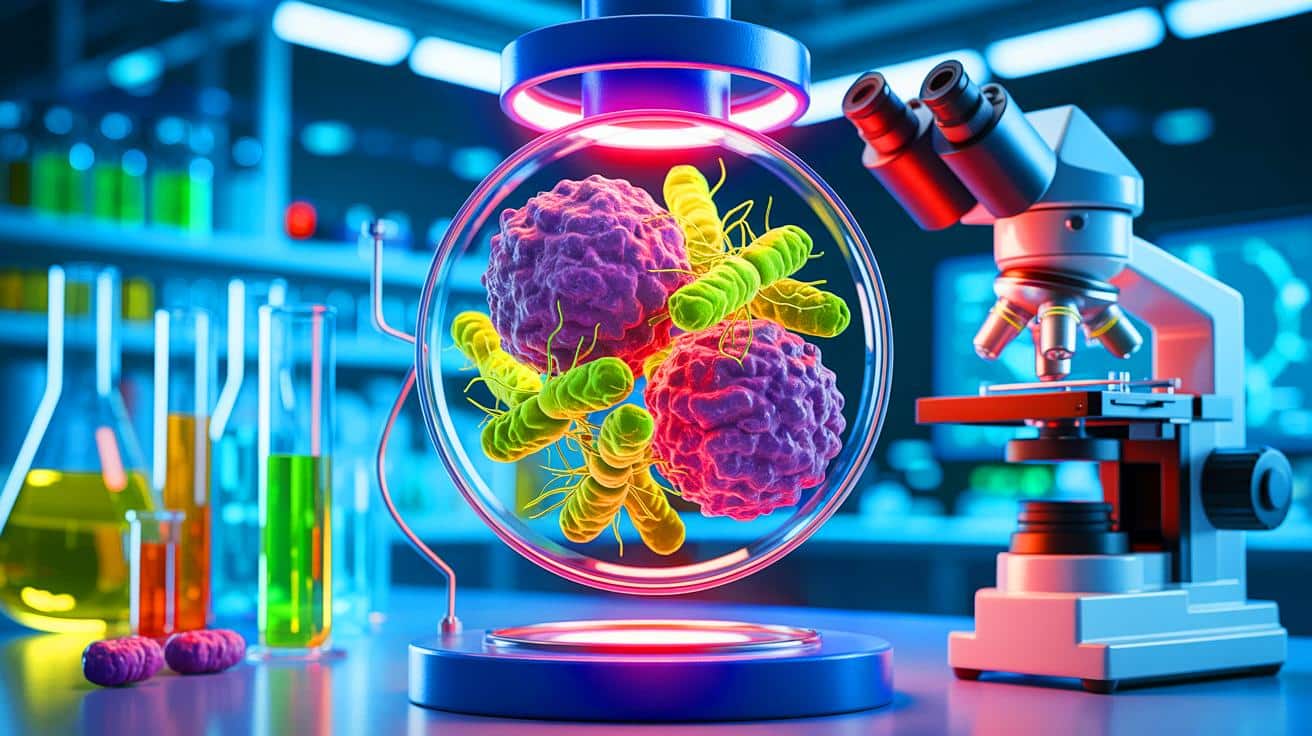
The researchers embarked on an ambitious project to employ genetically modified bacteria as a form of “living medicine.” They focused on Salmonella Typhimurium, a strain typically associated with foodborne illness, which they modified to become a potential cancer-fighting ally. This modified bacterium is designed to infiltrate tumors and self-destruct once it reaches a high density, releasing immune-stimulating proteins.
Central to this method is the release of a protein called LIGHT, known to provoke a robust immune response. The concept is that these proteins can trigger the body’s natural defense mechanisms to attack cancer cells more effectively. The initial trials on mice, specifically those predisposed to colorectal cancer, have shown promising results, with significant reductions in tumor size observed.
These findings could pave the way for new treatments that surpass the efficacy of existing immunotherapies, which often fall short in treating aggressive cancers like colorectal cancer. The prospect of utilizing bacteria to both infiltrate and activate the immune system directly within tumors is an exciting frontier in medical research.
Understanding the Mechanism Behind the Therapy
The engineered bacteria target specific immune cell structures known as mature tertiary lymphoid structures (mTLS), which form near tumors. These structures are crucial in coordinating the immune response to cancer, and the modified bacteria aim to enhance their activity. By doing so, the therapy not only attacks the tumor directly but also strengthens the body's ability to fight cancer independently.
Two different mouse models were used in testing: one that develops intestinal tumors naturally and another where cancer was chemically induced. This dual approach allowed researchers to observe the therapy's effects across different cancer progressions, providing a comprehensive understanding of its potential impact.
While promising, this approach is not without challenges. The complexity of the human immune system and the unique nature of intestinal bacteria mean that the therapy's success in mice may not directly translate to humans. Nonetheless, the method represents a significant step forward in the quest to develop more effective cancer treatments.
Challenges and Ethical Considerations
Despite its promise, the therapy faces several hurdles before it can be considered for human trials. One major concern is the potential for unintended infections or inflammatory responses, a risk inherent in introducing live bacteria into the body. Additionally, the interaction between these genetically modified organisms and the patient's natural microbiota remains largely unpredictable.
Another ethical consideration is the potential long-term effects of releasing genetically modified bacteria into patients. The possibility of environmental impact or unforeseen mutations leading to new health issues cannot be overlooked. Rigorous testing and regulatory scrutiny will be essential to ensure the safety and efficacy of this innovative treatment.
These challenges highlight the need for a careful balance between innovation and safety in developing new medical therapies. The scientific community must address these issues head-on to pave the way for bacteria-based treatments that could offer new hope to cancer patients worldwide.
The Road Ahead: From Mice to Human Trials
As researchers continue to refine this novel approach, the focus will inevitably shift toward adapting the therapy for human use. This process involves extensive clinical trials to ascertain not only the treatment's effectiveness in humans but also its safety profile. The transition from animal models to human trials is a critical phase in medical research, fraught with both challenges and opportunities.
With colorectal cancer being a leading cause of cancer-related deaths, the potential impact of a successful therapy could be profound. It may offer a new avenue for those who have exhausted conventional treatment options, providing a lifeline where none existed before. The prospect of harnessing bacteria to orchestrate a sophisticated attack on cancer cells is an exciting development in the ongoing battle against cancer.
The journey from laboratory to clinic is long and arduous, yet the promise of this therapy has invigorated the scientific community. As researchers work tirelessly to overcome the hurdles, the question remains: Could this be the breakthrough that changes the future of cancer treatment?
Continue reading