

“Navy Veterans Build Robot Warships”: Boston Startup Partners With Shipyard While Pentagon Rushes Autonomous Fleet Production For Pacific War
 By
Adam Kovács
By
Adam Kovács
| IN A NUTSHELL |
|
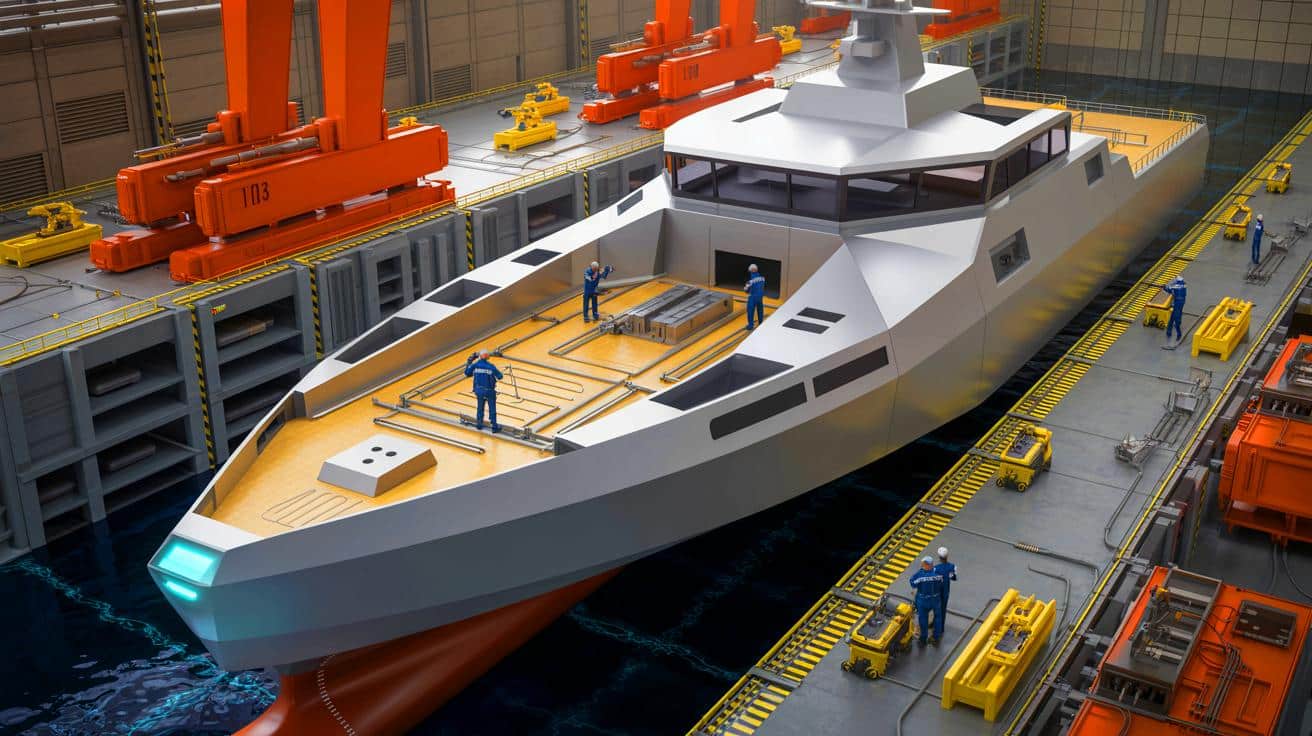
In a significant development for naval technology, Blue Water Autonomy, a Boston-based maritime startup, has partnered with Conrad Shipyard to accelerate the production of autonomous surface vessels (ASVs). Founded by Navy veterans in 2024, Blue Water is pushing the boundaries of unmanned maritime systems, focusing on modularity, speed, and flexibility. This collaboration aims to address the U.S. Navy’s evolving needs, aligning with its Modular Attack Surface Craft (MASC) program. As the industry shifts toward automation, Blue Water’s innovative approach seeks to revolutionize naval operations, offering potentially game-changing capabilities for the U.S. defense sector.
Blue Water’s Vision for Autonomous Vessels
Blue Water Autonomy has emerged as a leader in the development of autonomous surface vessels, focusing on creating highly adaptable and modular platforms. This approach contrasts sharply with traditional shipbuilding, which often involves lengthy and complex construction processes. By prioritizing modularity and speed, Blue Water aims to produce vessels that can be swiftly adapted to various naval missions. This flexibility is crucial as the U.S. Navy seeks to modernize its fleet to address new and evolving threats.
The startup’s vessels, projected to displace up to 100 tons, are designed to meet the Navy’s requirements for easily producible unmanned platforms. These vessels can accommodate a range of payloads, from logistics transfers to intelligence, surveillance, and reconnaissance (ISR) operations. By advancing unmanned technologies, Blue Water is setting the stage for a new era of naval operations, enhancing the Navy’s ability to conduct missions with reduced manpower and increased efficiency.
Strategic Partnership with Conrad Shipyard
Conrad Shipyard, a seasoned shipbuilding firm based in Louisiana, will play a pivotal role in bringing Blue Water's vision to life. With a robust network of five shipyards along the Gulf Coast, Conrad is well-equipped to handle the production of Blue Water's autonomous vessels. The shipyard's advanced manufacturing capabilities, including automated panel lines and welding techniques, will facilitate rapid production timelines, a critical factor in meeting defense operational demands.
The partnership between Blue Water and Conrad Shipyard is a strategic move designed to leverage existing American shipbuilding capacity. By activating underutilized resources, the collaboration aims to deliver ships quickly while demonstrating the expertise and scalability of U.S. shipbuilding. As Rylan Hamilton, co-founder and CEO of Blue Water Autonomy, noted, this partnership enables the rapid production of ships, positioning the U.S. defense sector to respond swiftly to emerging challenges.
Expanding Capabilities with Experienced Leadership
To bolster its efforts, Blue Water has recruited senior executives with extensive experience in shipbuilding and maritime defense. Notable hires include Tim Glinatsis, a 25-year veteran from General Dynamics, and Ryan Maatta, a marine engineering lead with expertise in autonomous ship initiatives. These appointments bring critical know-how to Blue Water, enhancing its ability to streamline production and operationalize its ASV platforms effectively.
The timing of these developments coincides with the U.S. Navy's intensified push for autonomous surface vessels under its MASC program. As the Navy seeks to integrate unmanned platforms capable of diverse missions, Blue Water's vessels align perfectly with these goals. The company's focus on long-endurance deployments and thousands of nautical miles of range underscores its commitment to democratizing access to naval capabilities, enabling missions previously reliant on manned platforms.
Shaping the Future of Naval Operations
The partnership between Blue Water and Conrad Shipyard is emblematic of a broader trend toward revitalizing American shipyards to adapt to new naval platforms. By demonstrating the feasibility of large-scale autonomy in U.S. shipbuilding, Blue Water aims to support the country's technological advancement and preparedness. As the unmanned surface vessel industry evolves, other major players are also vying for a role in the Navy's expanding autonomous fleet architecture.
This moment of rapid evolution in maritime autonomy marks a transformative period for the U.S. defense industrial base. As Blue Water and its partners continue to innovate, the implications for naval operations are profound. The ability to conduct diverse missions with reduced human involvement and enhanced efficiency could redefine the future of naval warfare. As these developments unfold, the critical question remains: How will the integration of autonomous technologies reshape global naval strategies in the years to come?
Continue reading