



“China Targets British Ships”: Simulated Attacks In South China Sea Raise Alarms As 4,500 Troops Test Freedom Of Navigation Resolve
 By
Adam Kovács
By
Adam Kovács
| IN A NUTSHELL |
|
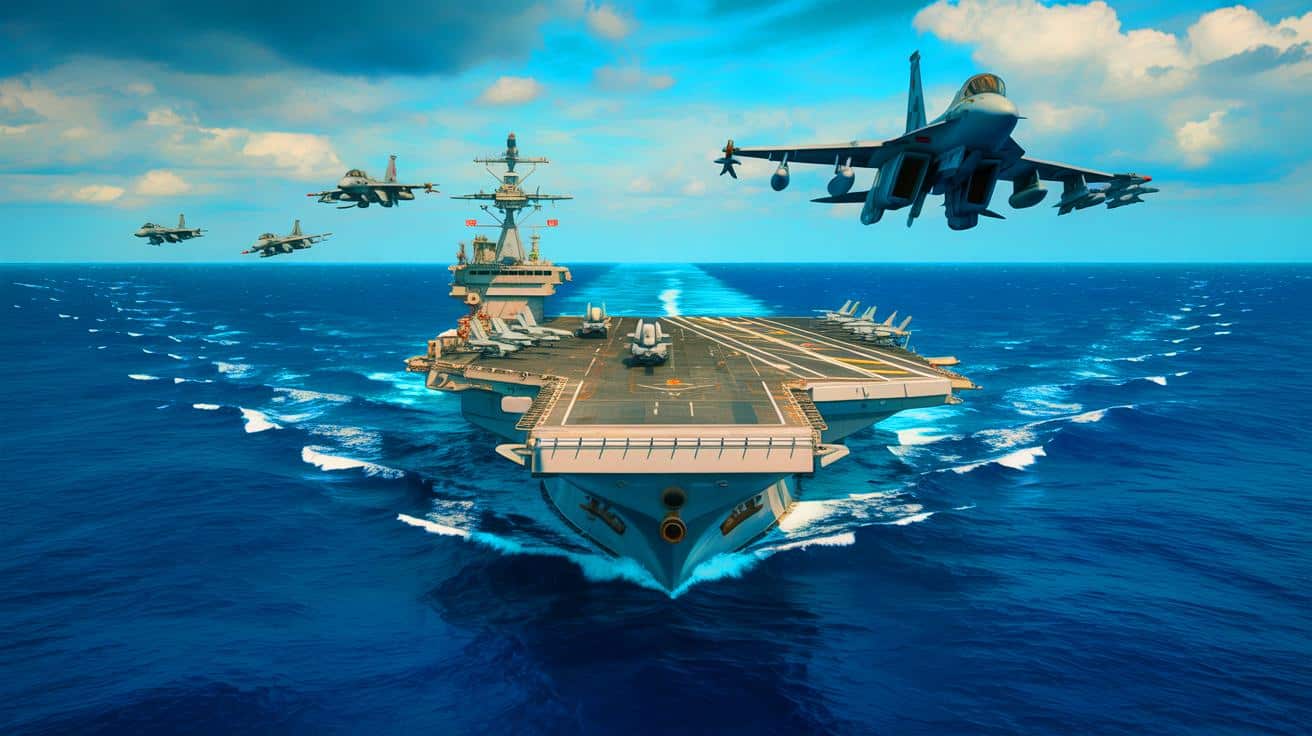
In a recent display of military prowess, China has conducted maneuvers termed ‘constructive kills’ in the contentious South China Sea, close to British Royal Navy vessels. These actions, which involved simulated attack tactics carried out by Chinese fighter jets, have heightened the ongoing tensions in the region. The exercise was part of a broader pattern of Chinese military activity aimed at asserting dominance over disputed waters. The British fleet, led by the aircraft carrier HMS Prince of Wales, faced harassment as they navigated these waters, highlighting the strategic importance and volatility of the area.
Simulated Attacks and Strategic Encounters
The British Royal Navy’s frigate HMS Richmond recently sailed through the Taiwan Strait, a key maritime route in the South China Sea. During this passage, Chinese fighter jets engaged in maneuvers that mimicked attack scenarios, although no missiles were launched. This development underscores the complex nature of military interactions in the region. An officer aboard the HMS Prince of Wales noted that these actions were intended to convey a message: the British ships were being targeted, even if no actual attack took place.
Such encounters are not without precedent but are becoming increasingly common as China continues to assert its claims over the South China Sea. The presence of British ships in these waters as part of Operation Highmast, which involves over 4,500 British and international military personnel, serves to challenge China’s expansive territorial claims. The operation underscores the importance of freedom of navigation in international waters, a principle that the United Kingdom and its allies are keen to uphold.
Operation Highmast and International Alliances
The deployment of the UK Carrier Strike Group, including the HMS Prince of Wales, is a significant element of Operation Highmast. This initiative emphasizes the United Kingdom's commitment to maintaining open sea lanes in the face of territorial disputes. The group's journey through strategic global chokepoints like the Red Sea and the Mediterranean underscores the interconnected nature of maritime security.
As part of their mission, these ships have participated in naval exercises with key allies, including South Korea, the United States, and Canada. These exercises are more than symbolic; they are a practical demonstration of military readiness and international cooperation. An officer aboard the Prince of Wales remarked that the Chinese actions, while provocative, provided valuable insights into their tactical approaches and enhanced the readiness of the British fleet.
Complex Claims Over the South China Sea
The South China Sea remains one of the world's most disputed regions, with overlapping territorial claims from China, Malaysia, Brunei, and the Philippines. China has fortified its claims by transforming several islands into military bases, a move that has not been recognized by its neighbors. This militarization has led to increased tensions and a heightened military presence from other nations.
The freedom of navigation exercises conducted by the British fleet are part of a broader effort to counter China's territorial ambitions. These operations are crucial in demonstrating international resolve against unilateral claims. By sailing through these contested waters, the UK, alongside its allies, continues to promote the principle of free passage, a cornerstone of international maritime law.
Looking Forward: The Future of Maritime Security
The British fleet is set to return to Portsmouth in December after an eight-month deployment. This mission has provided invaluable experience in navigating contested waters and engaging in multinational exercises. As geopolitical tensions persist in the South China Sea, the importance of maintaining a stable and secure maritime environment cannot be overstated.
The question remains: how will nations navigate the complexities of maritime security in an era marked by increasing territorial assertions and military posturing? The future of the South China Sea and global maritime security will depend on diplomatic engagements and strategic collaborations aimed at upholding international maritime norms.
Continue reading