


“China Tests Fujian, Warns Rivals”: The 80,000-Ton Carrier Sparks Tension As Regional Navies Race To Counter Escalating Power Projection
 By
Adam Kovács
By
Adam Kovács
| IN A NUTSHELL |
|
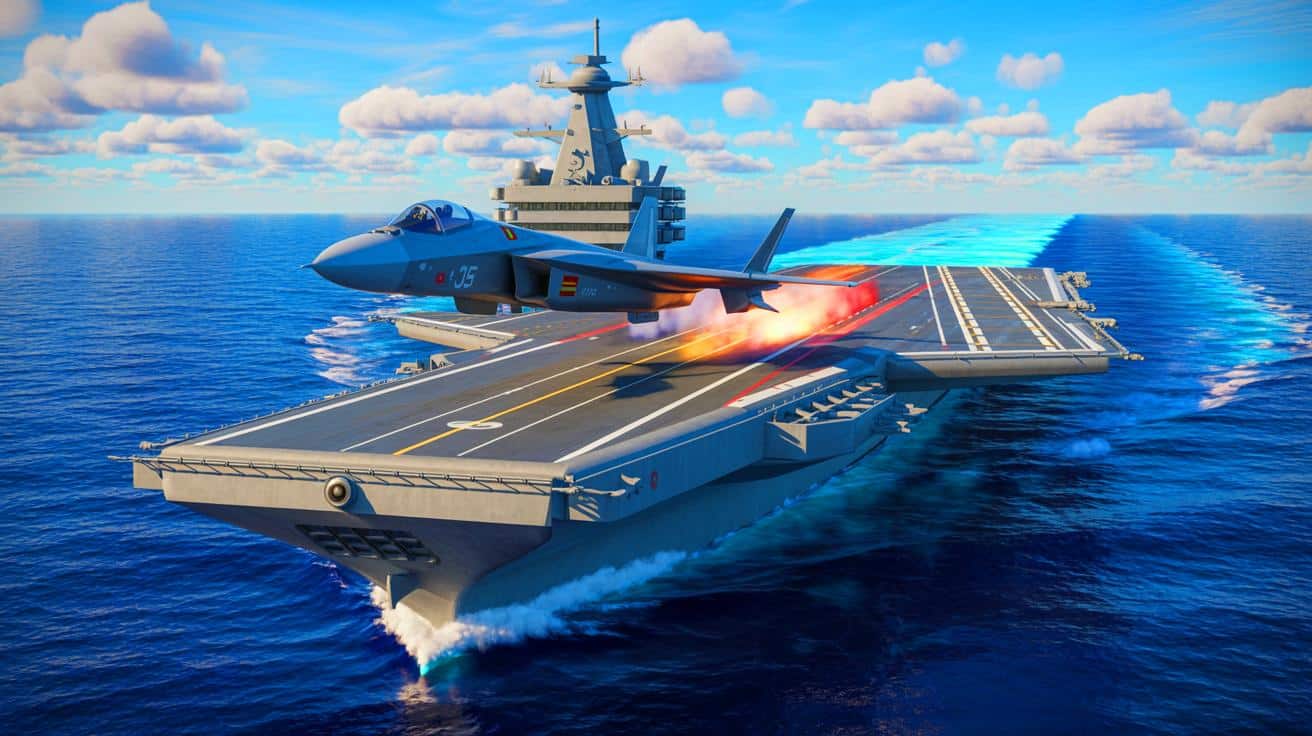
As China continues to enhance its military capabilities, the launch of its latest aircraft carrier, the Fujian, marks a significant milestone. The People’s Liberation Army Navy (PLAN) showcased the Fujian’s capabilities with a series of tests involving advanced aircraft, such as the J-35 fifth-generation stealth fighter and the KJ-600 airborne early warning aircraft. These developments are part of China’s broader efforts to modernize its naval forces and assert its presence on the global stage. The Fujian, with its cutting-edge technology and substantial air wing capacity, represents Beijing’s ambition to expand its influence, particularly in the contested waters of the South China Sea.
The Launch of Fujian: A New Era in Naval Power
The Fujian, named after a southeastern Chinese province, is the latest addition to China’s rapidly evolving naval fleet. Launched in the summer of 2022, this 80,000-ton vessel is the largest warship built in Asia since World War II. Its introduction marks a significant leap in capability for the Chinese Navy, as it moves away from the Russian-derived short take-off but arrested recovery (STOBAR) systems of its predecessors, Liaoning and Shandong. The Fujian employs a catapult-assisted take-off but arrested recovery (CATOBAR) system, allowing for more effective and flexible operations.
Equipped with an electromagnetic catapult, the Fujian stands out as the only vessel outside the U.S. Navy to possess such advanced aircraft launching technology. This capability enables the carrier to launch a wider variety of aircraft with greater payloads and operational range. The vessel’s ability to support an air wing of 40 aircraft further solidifies China’s growing naval aviation prowess, allowing for enhanced power projection in the region.
Strategic Implications of the Fujian's Capabilities
The operational capabilities demonstrated by the Fujian have significant strategic implications for regional and global power dynamics. By equipping the Fujian with state-of-the-art technology, China is poised to enhance its military presence across the Western Pacific Ocean and beyond. The carrier's advanced fighter jets, including the J-35, along with its early warning and control aircraft, provide a formidable tool for power projection, especially in contested areas such as the South China Sea.
This development comes at a time when regional powers are also enhancing their naval capabilities. India, for instance, is upgrading its carrier fleet with French Rafale fighter jets, while Japan is converting helicopter destroyers to support F-35B operations. These advancements highlight a growing trend of carrier modernization in the region, which could lead to increased competition and tensions among neighboring countries.
The Role of Advanced Aircraft in China's Naval Strategy
The integration of advanced aircraft, such as the J-35 stealth fighter and the KJ-600 early warning aircraft, into the Fujian's operations is a testament to China's commitment to developing a sophisticated naval air force. These aircraft play a crucial role in enhancing the PLAN's operational flexibility, allowing for more effective surveillance, reconnaissance, and combat missions. The J-35, with its stealth capabilities, provides a significant advantage in contested airspace, while the KJ-600 offers critical airborne early warning and control functions.
As part of its broader naval strategy, China aims to field fifth-generation stealth carrier aircraft across the first island chain, extending its reach into the Western Pacific Ocean. This capability not only bolsters China's defensive posture but also serves as a deterrent to potential adversaries. By investing in cutting-edge technology and expanding its naval aviation capabilities, China is positioning itself as a dominant maritime power in the region.
Global Reactions and Future Prospects
The unveiling of the Fujian and its advanced capabilities has elicited varied reactions from the international community. While some view it as a natural progression of China's military modernization efforts, others express concern over the potential implications for regional stability. The carrier's recent passage through the Taiwan Strait, en route to the South China Sea for testing, underscores the strategic importance of these waters and the potential for heightened tensions with neighboring countries.
As countries in the region continue to bolster their own naval forces, the question remains: how will these developments shape the future of maritime security in the Asia-Pacific? Will the presence of advanced carriers like the Fujian lead to increased cooperation or further competition among regional powers? These questions highlight the complexity of contemporary naval dynamics and the need for ongoing dialogue and diplomatic engagement.
The launch of the Fujian marks a pivotal moment in China's naval history, signaling the country's growing maritime ambitions. With advanced technology and a powerful air wing, the carrier enhances China's ability to project power and influence in the region. As regional powers respond with their own advancements, the future of maritime security in the Asia-Pacific remains uncertain. How will these developments affect the balance of power, and what measures will be taken to ensure stability in these contested waters?