


“They Can Build Faster Than We Can React”: China’s Explosive Submarine Expansion Now Threatens America’s Naval Dominance on the High Seas
 By
Adam Kovács
By
Adam Kovács
| IN A NUTSHELL |
|
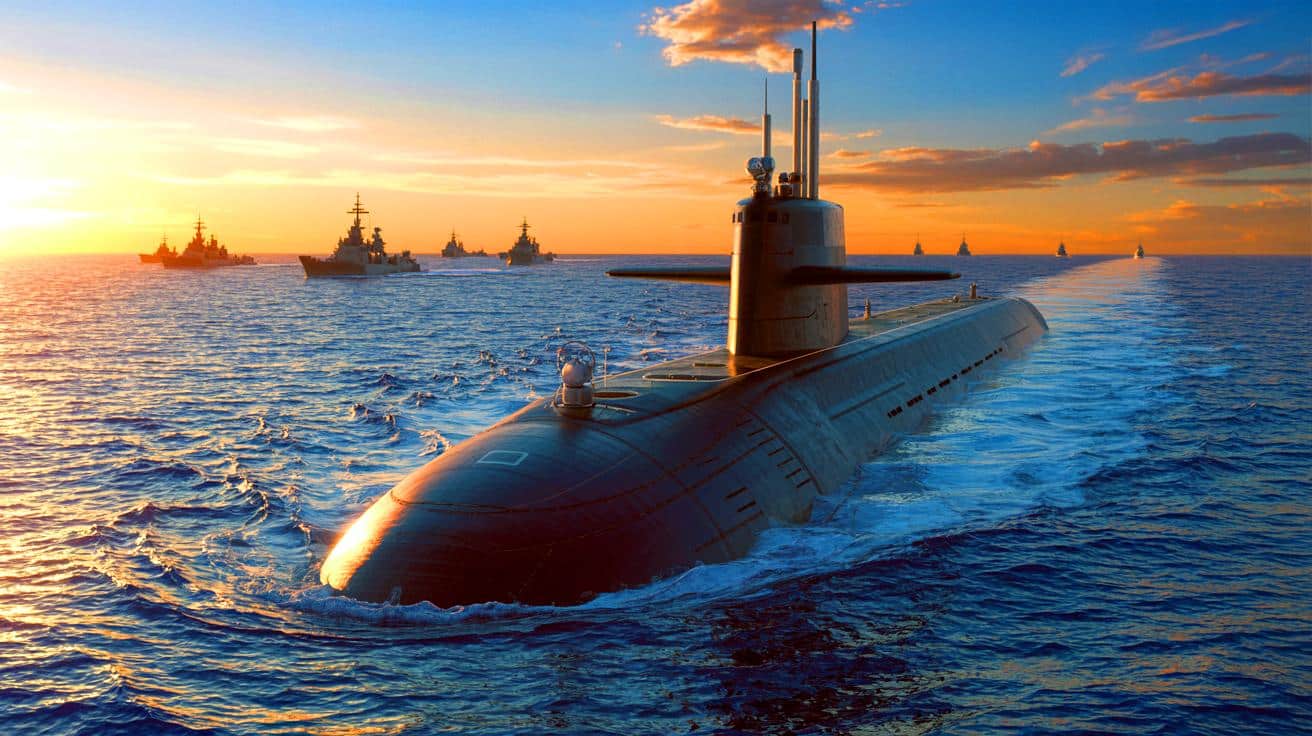
The naval balance of power is undergoing a significant shift as China’s maritime ambitions take center stage. With a growing fleet that now surpasses the United States in sheer numbers, China is aiming to challenge American naval supremacy. Although the U.S. Navy maintains an edge in terms of tonnage and global reach, thanks to its eleven aircraft carriers, China’s focus on expanding its submarine capabilities poses a new, formidable challenge. This article delves into the factors reshaping naval dynamics and the implications for global security.
Challenges in U.S. Submarine Production
The United States has long relied on its advanced submarine fleet to maintain a strategic advantage. However, recent years have seen a slowdown in the production of Virginia-class attack submarines, a key component of this strategy. Originally launched in 2004, these submarines are meant to be produced at a rate of two per year. Yet, a 2024 Congressional report revealed production had dwindled to between 1.2 and 1.4 submarines annually since 2022.
Rear Admiral Jonathan E. Rucker highlighted this issue in April 2025, noting that the production rate had fallen to just 1.13 submarines per year, far below the required two. This shortfall is attributed to labor shortages and supply chain issues affecting shipyards and suppliers. The consequences are both military and political, as the U.S. must also fulfill commitments to sell three to five Virginia-class submarines to Australia under the AUKUS agreement.
Defense policy experts, including Elbridge Colby, have expressed concerns over these delays. Colby emphasized the strategic risk, stating, “If we cannot produce attack submarines in sufficient numbers and speed, it places our military in a vulnerable position.” This production lag not only impacts U.S. military readiness but also strains international alliances dependent on American naval strength.
China's Rapid Naval Expansion
For years, China's submarine fleet was not considered a significant threat to U.S. naval dominance. It primarily consisted of diesel-electric submarines with limited range. However, recent investments have transformed this landscape. China is developing nuclear-powered submarines, like the Type 095, which promise greater range and speed.
Retired Navy Reserve Captain Christopher Carlson notes that the Type 095 will be "very quiet," complicating detection efforts. In addition, conventional submarines like the Type 039A are incorporating technologies that enhance stealth and underwater endurance.
While the U.S. still holds a technological edge, with quieter and more modern submarines, China's overwhelming shipbuilding capacity poses a serious challenge. This ability to produce naval vessels at a rapid pace threatens to erode the U.S.'s long-held maritime dominance, a position maintained since World War II.
Technological Edge Versus Production Capacity
The U.S. Navy prides itself on its technological superiority, particularly in submarine acoustics and payload capabilities. The latest Virginia-class models continue to integrate advanced technologies that enhance stealth and operational effectiveness. However, these advancements are not enough to counterbalance China's burgeoning production capabilities.
As China invests in modernizing its fleet, the United States faces the dual challenge of maintaining technological superiority while addressing production bottlenecks. The question remains whether the U.S. can sustain its technological lead in the face of a rapidly expanding Chinese fleet.
The strategic implications are profound. A diminished American naval presence could alter the balance of power in critical regions, affecting everything from trade routes to security alliances. The U.S. must navigate these challenges carefully to maintain its position as a dominant maritime force.
Global Implications of a Shifting Naval Balance
The evolving dynamics between the U.S. and Chinese navies have far-reaching implications for global security. As China expands its naval reach, regional actors and global powers must reassess their strategies. The South China Sea, a vital maritime corridor, becomes a focal point of tension, with China asserting more control over these waters.
Allied nations, particularly in the Asia-Pacific region, are closely watching these developments. The AUKUS agreement, which includes Australia and the United Kingdom, reflects a strategic effort to counterbalance China's influence. However, the success of such initiatives depends on the U.S.'s ability to meet its commitments and maintain a robust naval presence.
This shifting balance raises critical questions about future maritime governance and the role of international law in maintaining peace and stability. As nations navigate these uncharted waters, the world watches closely to see how these naval powers will shape the future maritime order.
As the naval arms race intensifies, the stakes for global security have never been higher. The U.S. faces the challenge of addressing production shortfalls while maintaining its technological edge. Meanwhile, China's rapid naval expansion continues to reshape the strategic landscape. With these developments in mind, one must ask: How will the international community respond to this evolving balance of power on the high seas?
Continue reading