



“France Just Scored Its First Aerial Kill Since WWII”: This Mirage Fighter Shot Down Houthi Drones Over the Red Sea (and Changed Modern Warfare)
 By
Adam Kovács
By
Adam Kovács
| IN A NUTSHELL |
|
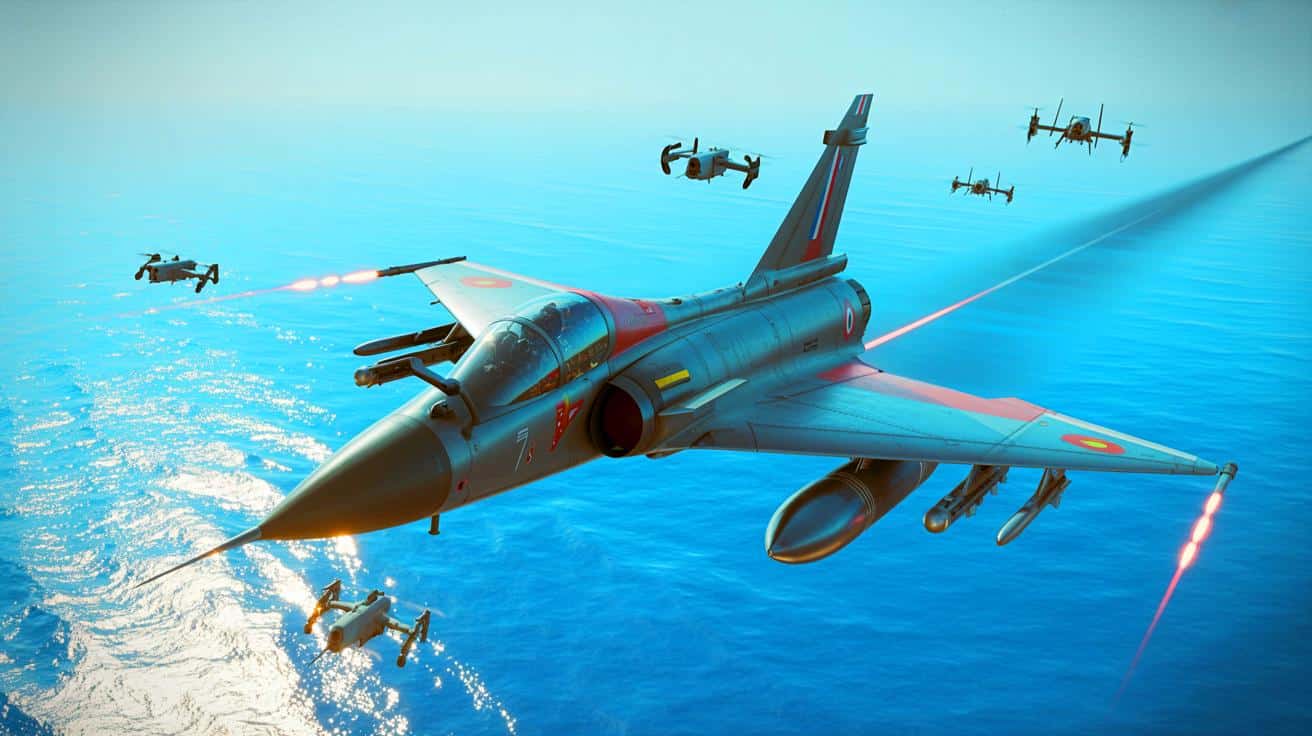
A recent revelation has uncovered a significant aerial victory by the French Air Force, marking the first confirmed win for French fighter jets since World War II. In a tense and strategic encounter over the Red Sea, a Mirage 2000-5F fighter successfully intercepted and destroyed hostile Houthi drones. This event, part of a broader military operation, shines a light on the evolving nature of aerial combat and the capabilities of modern military aircraft. As details emerge, the implications for international military strategies and drone warfare are becoming more apparent.
The Engagement Over the Red Sea
On March 9, 2024, French military forces participating in Operation Aspides, under the European Union’s command, achieved a notable success. The operation saw the successful interception of four suicide drones launched by Houthi rebels from Yemen. These drones were targeting the FREMM DA frigate Alsace, a French warship with specialized air defense capabilities. The French Armed Forces General Staff announced that the combined efforts of the Alsace and French fighter jets led to the neutralization of these threats. However, at the time, the focus remained primarily on the French Navy’s defensive actions.
Almost a year later, it has been revealed that Mirage 2000-5F fighters played a crucial role in this operation. French Air and Space Force Chief of Staff General Jérôme Bellanger highlighted the importance of these jets in achieving this aerial victory. The Mirage 2000-5F’s involvement marks a historic moment for France, reviving its legacy of aerial victories, the last of which occurred during the final months of World War II.
A Historic Victory for France
The significance of this event cannot be understated, as it represents the first confirmed aerial victory for France in nearly 80 years. The last such victory was recorded in April 1945 by Sub-Lieutenant Henri Suisse. Since then, French fighter pilots have not been officially credited with shooting down enemy aircraft, despite decades of air operations. The Mirage 2000-5F jets, assigned to Djibouti’s 3/11 “Corse” Squadron, were called upon to intercept and destroy the incoming suicide drones.
The quality of our weapon systems and the expertise of our crews have once again proven their full operational effectiveness,
https://visegradpost.com/en/2025/10/08/they-call-it-ninth-heaven-chinas-massive-drone-mothership-could-unleash-100-kamikaze-drones-at-once-but-it-might-self-destruct-first/
Bellanger stated in a recent announcement. This milestone highlights the capabilities of the Mirage 2000-5F in Surface Close Air Protection (SUCAP) missions, showcasing its role in modern air defense strategies.
The Mirage 2000-5F: A Versatile Fighter
The Mirage 2000-5F, originally designed as an air superiority fighter, has adapted to the evolving challenges of drone warfare. Armed with two DEFA 554 30mm cannons and MICA air-to-air missiles, the jet remains a formidable force. Its effectiveness is evident in its recent engagements, including the interception of Houthi drones in the Red Sea. The same MICA missile system that equips the Mirage 2000-5F is also utilized by the Rafale, another key player in France’s aerial arsenal.
In April 2024, French Rafale B fighters deployed in Jordan used this missile system to shoot down an Iranian Shahed drone during an attack against Israel. This experience in real-world conditions has proven invaluable, as modified Mirage 2000-5F fighters are now being provided to Ukraine. These aircraft, capable of carrying air-to-ground weapons, offer combat-proven capabilities that are expected to play a crucial role in ongoing conflicts.
Implications for Drone Warfare
The recent aerial victory by the Mirage 2000-5F highlights the increasing importance of drone warfare in modern military strategy. As technology evolves, so too do the tactics and capabilities of armed forces worldwide. The ability to effectively intercept and destroy hostile drones is becoming an essential component of national defense strategies. The French Air Force’s success in this area underscores the need for continued innovation and adaptation to emerging threats.
As nations invest in developing more advanced UAVs, the challenge will be to maintain a balance between offensive capabilities and defensive countermeasures. The lessons learned from this engagement over the Red Sea will likely influence future military operations and the development of air defense systems. How will global military powers continue to adapt to the growing threat of drone warfare?
Continue reading