



“No Cockpit. No Pilot. No Limits.”: Sikorsky’s U-Hawk Turns the Black Hawk Into a Fully Autonomous Cargo Beast (and It’s Flying Soon)
 By
Adam Kovács
By
Adam Kovács
| IN A NUTSHELL |
|
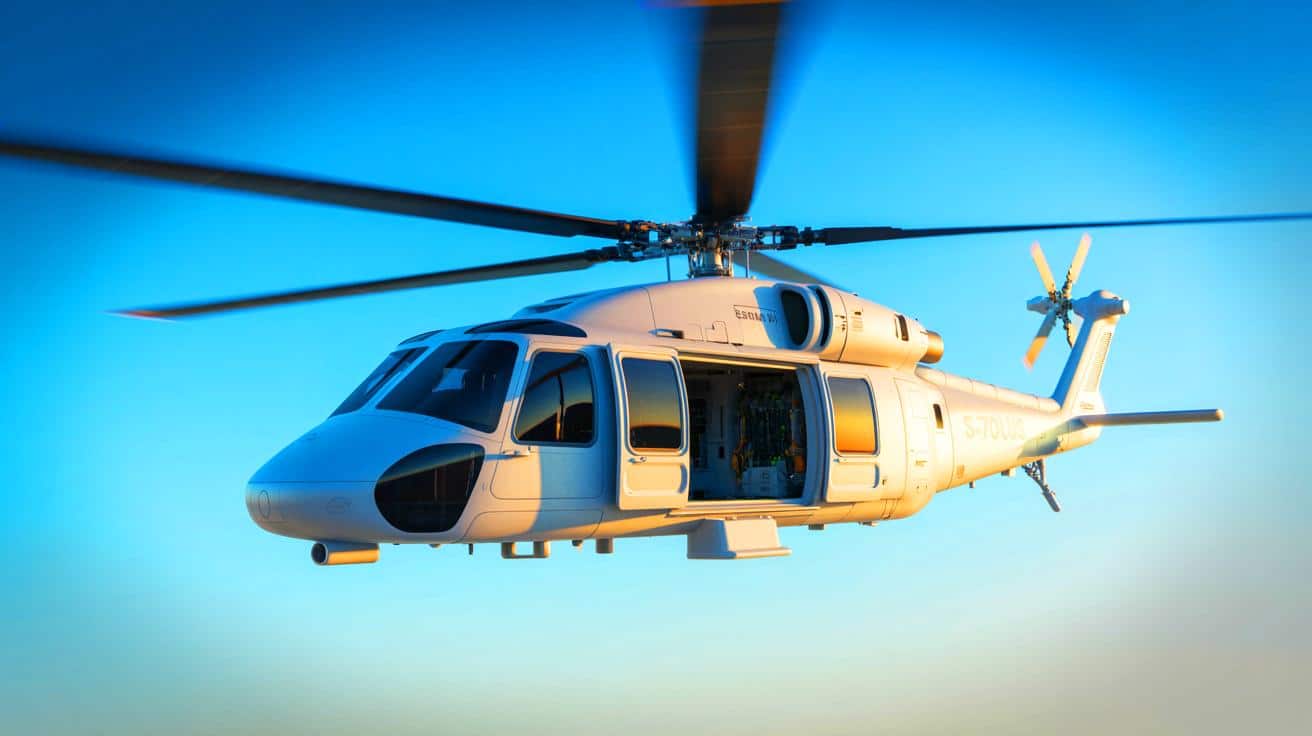
In a significant leap forward for autonomous military technology, Sikorsky, a subsidiary of Lockheed Martin, has unveiled the S-70UAS U-Hawk, a Black Hawk helicopter designed to operate without a human pilot or cockpit. The transformation of the traditional Black Hawk into an uncrewed aerial system (UAS) marks a pivotal shift in military logistics and air assault capabilities. By eliminating the cockpit, the U-Hawk maximizes cargo space and introduces innovative operational possibilities. This groundbreaking development was revealed at the Association of the United States Army (AUSA) exposition and is poised to redefine the future of military aviation, with its first flight anticipated in 2026.
Transforming the Black Hawk
The S-70UAS U-Hawk represents a radical departure from the conventional Black Hawk design. The absence of a cockpit signifies a bold step towards fully autonomous military aircraft. By removing seats, windows, and the traditional pilot’s station, Sikorsky has reimagined the helicopter as a cargo-centric platform. The idea is to enhance logistical flexibility and air assault capabilities, addressing the increasing demand for efficient and versatile military transport solutions.
Sikorsky’s Matrix autonomy technology is at the heart of this transformation. The system acts as a digital co-pilot, capable of generating flight plans, navigating complex environments, and avoiding obstacles autonomously. This technology allows the U-Hawk to execute missions from takeoff to shutdown without human intervention. The operator, using a ruggedized tablet, inputs high-level mission objectives, and the helicopter’s autonomy system takes over the intricate details of the flight.
Enhanced Cargo and Operational Capabilities
The most noticeable change in the U-Hawk’s design is the replacement of the cockpit with clamshell doors and a loading ramp. This modification increases the helicopter’s cargo capacity by 25%, enabling it to transport oversized items such as HIMARS pods and Naval Strike Missiles. The roll-on roll-off capability further enhances its utility by facilitating the transport of uncrewed ground vehicles and drone swarms. Additionally, internal fuel tanks can be added to extend the helicopter’s operational range.
Technical upgrades complement the U-Hawk’s physical reconfiguration. Enhanced T700-GE-701C engines, an upgraded gearbox, and increased external lift capacity from 8,000 pounds to 9,000 pounds contribute to its superior performance. These improvements ensure the U-Hawk maintains the Black Hawk’s legacy as a premier utility aircraft while expanding its role as a versatile uncrewed aerial system.
The Rapid Development Process
The development of the U-Hawk from concept to reality occurred in an impressively short timeframe. Sikorsky took only 10 months to bring the project from the drawing board to rollout. This rapid development underscores the company’s commitment to innovation and its ability to adapt quickly to evolving military needs. The modifications made to transform the traditional Black Hawk into a multi-mission payload UAS can be replicated at scale, offering a cost-effective solution for military operations.
Rich Benton, Sikorsky vice president and general manager, emphasized the significance of this achievement.
“We developed this prototype from concept to reality in under a year, and the modifications made to transform this crewed Black Hawk into a multi-mission payload UAS can be replicated at scale quickly and affordably,” Benton stated.
The U-Hawk’s introduction is a testament to Sikorsky’s innovative approach to modernizing military aviation.
Implications for Military Strategy
The U-Hawk’s introduction raises important questions about the future of military strategy and logistics. As autonomous technology becomes more prevalent, traditional roles and tactics may need to be re-evaluated. The ability to deploy aircraft without risking human life offers significant strategic advantages. Furthermore, the enhanced cargo capacity and operational flexibility of the U-Hawk could influence how military missions are planned and executed.
Lockheed Martin and Sikorsky’s commitment to advancing autonomous technology reflects a broader trend in military innovation. By embracing cutting-edge solutions, these companies are helping to shape the future of defense. The U-Hawk’s development is not just a technological achievement; it represents a shift in how military operations are conceived and carried out.
As the U-Hawk prepares for its inaugural flight in 2026, the implications of its development continue to unfold. This autonomous helicopter challenges conventional military practices and introduces new possibilities for logistics and air assault missions. As military forces worldwide consider the integration of autonomous systems into their operations, one question remains: How will this technological evolution reshape the future of military strategy and capability?