


“They Drive Themselves Into War Zones”: Oshkosh Unveils Self-Driving Military Trucks That Load, Haul, and Survive Without Soldiers Behind the Wheel
 By
Adam Kovács
By
Adam Kovács
| IN A NUTSHELL |
|
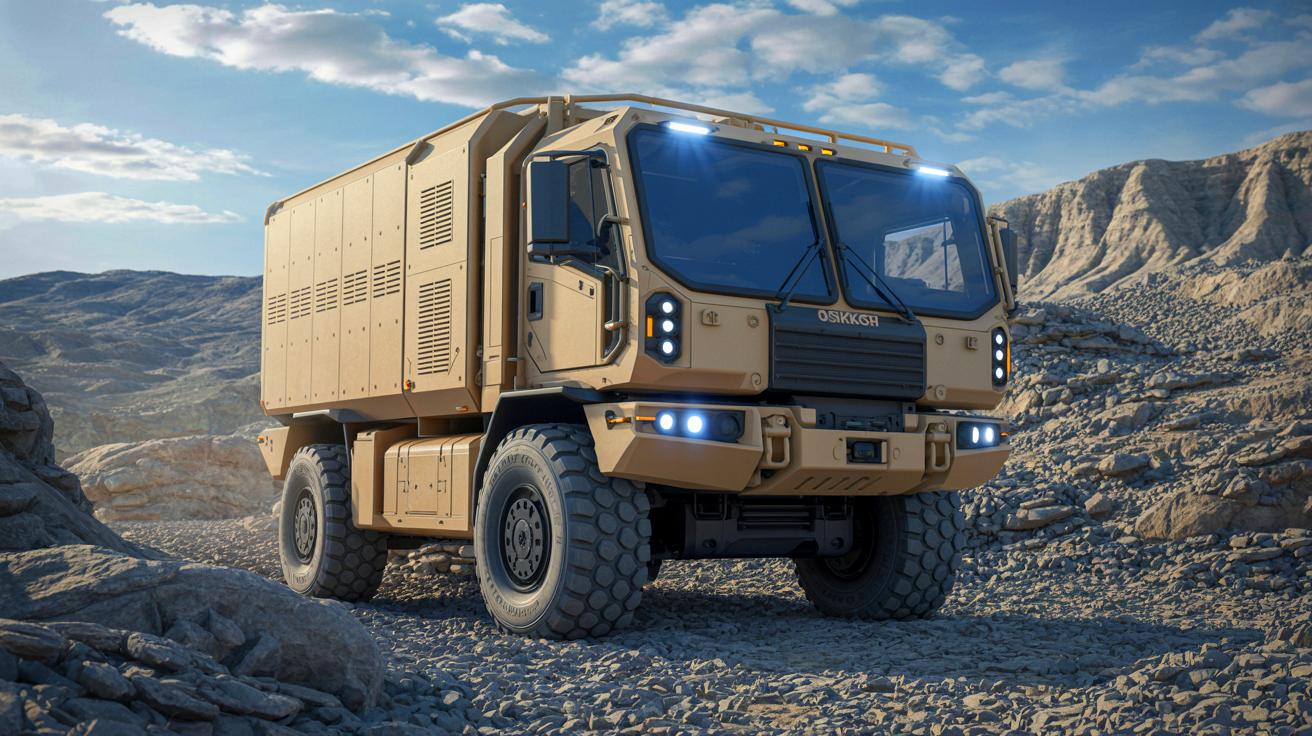
Oshkosh Defense, based in Wisconsin, is set to redefine battlefield logistics with its latest innovation: self-driving military trucks. By upgrading its Palletized Load System (PLS) vehicles, Oshkosh aims to improve efficiency and safety in transporting essential cargo across challenging terrains. These advancements promise to reduce the risk to soldiers by minimizing their presence in high-threat areas. As technology continues to shape modern warfare, the introduction of autonomous vehicles marks a significant milestone in military transport.
Revolutionizing Battlefield Logistics
The Palletized Load System (PLS) has long been a staple in military logistics, known for its ability to transport heavy payloads across diverse and often hostile environments. The new iteration of these vehicles incorporates cutting-edge technology that enables them to drive autonomously, providing a strategic advantage in warfare scenarios. This development is crucial for the efficient movement of supplies, ensuring that troops receive the necessary resources without unnecessary delays or risks.
The PLS trucks are equipped with advanced driving assistance features, such as automatic emergency braking and adaptive cruise control. These features enhance the vehicle’s ability to operate independently, reducing the need for human intervention. The capability to drive in convoy formations further minimizes the risk to soldiers, as fewer personnel are required to accompany the vehicles on their missions.
The PLS A2’s ability to operate without a driver not only enhances safety but also increases operational efficiency in complex environments.
Technical Specifications and Capabilities
At the heart of the PLS A2 is a powerful 600-horsepower diesel engine, which ensures that the vehicle can maneuver through challenging terrains with ease. The hydraulic load-handling system is another critical feature, allowing for rapid loading and unloading of 20-foot containers and flat-rack modules. Importantly, these operations can be conducted without the driver leaving the cab, reducing exposure to potential threats.
The PLS can support a three-axle trailer, amplifying its payload capacity and versatility. This flexibility is essential for military operations that require quick adaptation to changing logistical needs. The truck’s ability to handle a wide range of engineering mission modules, such as those used for bridge construction or repair, further underscores its utility on the battlefield.
The PLS can load or unload a truck and trailer in under five minutes, showcasing its efficiency and speed.
https://visegradpost.com/en/2025/10/13/theyre-scrambling-every-hour-inside-japans-fierce-aerial-standoff-with-china-from-a-tiny-okinawan-base-and-its-getting-worse/
Financial and Strategic Implications
Oshkosh Defense recently secured an $89 million contract with the U.S. Army to deliver a new batch of PLS trucks, equipped with the latest autonomous technology. While the exact cost of each vehicle remains undisclosed, estimates suggest a price tag of approximately $650,000 per truck. The inclusion of advanced driving assistance systems is likely to increase this figure, reflecting the premium on cutting-edge technology.
The strategic implications of deploying autonomous military vehicles are significant. By reducing the number of soldiers required to operate these trucks, the military can allocate personnel to other critical tasks. Additionally, the reduction in human presence in high-risk zones decreases the potential for casualties, aligning with broader military goals of preserving life while maintaining operational effectiveness.
Future Prospects in Military Automation
The PLS A2 is part of a broader trend towards automation in military operations. Future developments, such as the autonomous Armored Multi-Purpose Vehicle (AMPV) prototype by BAE Systems, indicate a growing emphasis on driverless technology. These vehicles are designed to navigate challenging terrains even when traditional navigation systems fail, showcasing the potential for innovation in military transport.
The introduction of autonomous vehicles in the military marks a shift towards more technologically driven strategies. As these technologies evolve, the military will need to address challenges related to cybersecurity, reliability, and integration with existing systems. However, the potential for increased efficiency and safety makes the pursuit of automation an attractive prospect for military strategists.
The advancements in self-driving military trucks by Oshkosh Defense herald a new era in battlefield logistics. As the military continues to integrate autonomous technologies, the implications for operational strategy and safety are profound. How will these innovations shape the future of military operations, and what challenges will they present in terms of ethical and practical considerations?
Continue reading