

Europe’s Bold Move: Unified Stance to Combat Russian Drone Threats Sparks New Wave of Security Collaboration
 By
Adam Kovács
By
Adam Kovács
| IN A NUTSHELL |
|
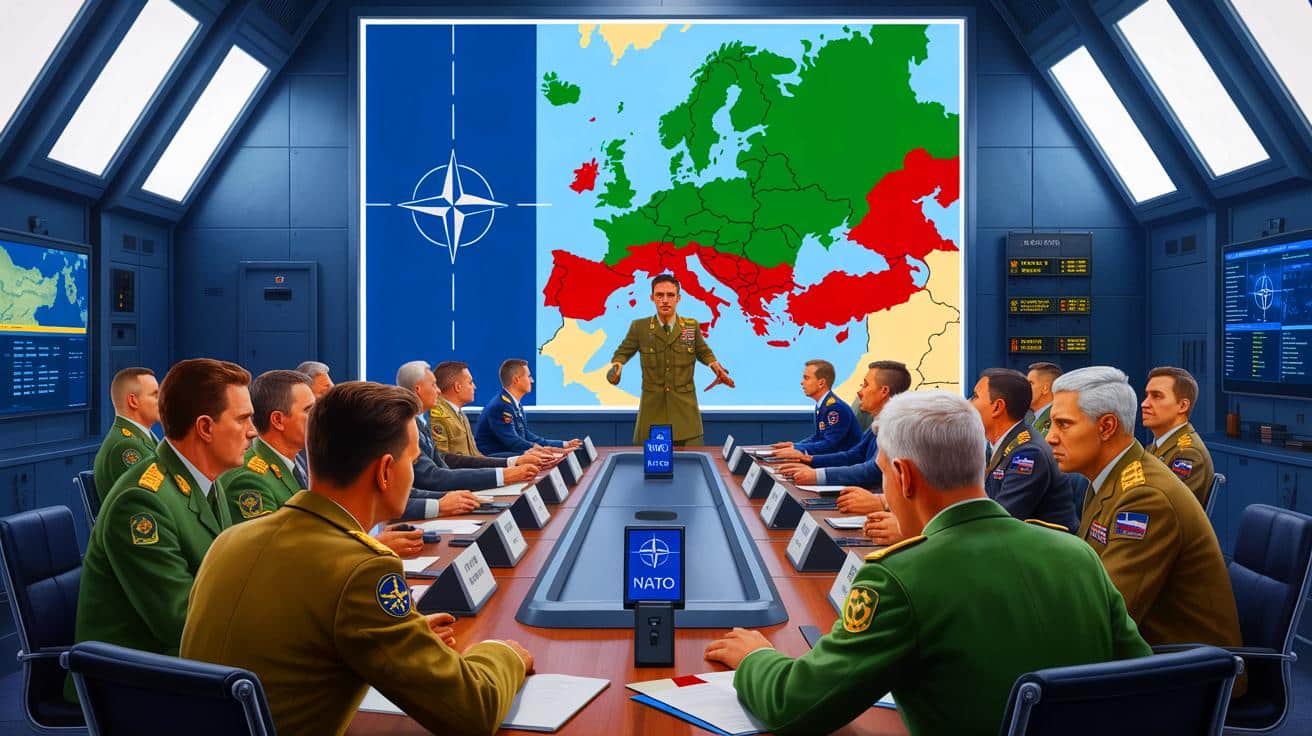
As tensions simmer between Russia and NATO allies, recent incursions into European airspace have sparked contentious debates among member states. The incidents highlight stark differences in strategic approaches, as allies grapple with whether to take aggressive actions, such as shooting down Russian aircraft and drones, or to bolster defenses. These disagreements raise questions about NATO’s unity and effectiveness in countering Russian provocations. With no standard policy in place, each nation is left to navigate these complex situations independently, balancing the risks of escalation against the need to maintain a strong collective defense posture.
Discord Among NATO Allies
The incursions by Russian aircraft have exposed underlying tensions within NATO. While the alliance is united under a common defense treaty, the response to these Russian maneuvers has been anything but uniform. For instance, during a meeting in Brussels, Secretary-General Mark Rutte argued against shooting down Russian crewed aircraft, suggesting it would demonstrate weakness. In contrast, Danish Army chief Maj. Gen. Peter Harling Boysen urged allies to adopt a more assertive stance, advocating for the downing of Russian drones without hesitation.
This divergence reflects deeper, more complex disagreements within NATO. At recent consultations in Tallinn and a ministers’ meeting in Riga, the discord became evident. Some nations called for robust responses to Russian incursions, while others preferred to strengthen defenses before escalating to direct confrontations. These discussions underscore the challenge of crafting a cohesive strategy that satisfies all member states while effectively countering Russian provocations.
Case-by-Case Responses
With no standardized policy for dealing with Russian incursions, NATO members have been left to respond on a case-by-case basis. This approach has led to varied actions across the alliance. For instance, when Russia sent unarmed drones into Polish airspace, Poland responded by shooting down several of them. However, when Russian fighter jets crossed into Estonian territory, Estonia opted for a more measured response by escorting the jets back out.
These differing responses have sparked criticism and debate among NATO members. Czech President Petr Pavel has called for a more assertive stance, advocating for the downing of both drones and planes. This sentiment, however, is not universally shared. Estonian Defense Minister Hanno Pevkur, for example, expressed visible discomfort when questioned about Pavel’s comments. The lack of a unified policy complicates the alliance’s ability to present a coordinated front against Russian aggression.
Debate Over Drone Defenses
Another point of contention within NATO is the development and deployment of counter-drone defenses. The European Union has shown support for a “drone wall” concept, which involves creating an impenetrable network to detect and neutralize drones. However, opinions differ on whether resources should prioritize drone defenses over traditional military capabilities such as tanks.
Germany, in particular, has expressed concerns about the feasibility and cost-effectiveness of building such a network. However, recent events have prompted a shift in German thinking, as some military officials have indicated. This debate highlights the broader challenge of balancing innovation in defense technology with the need to maintain conventional military strength. The outcome of this debate will have significant implications for the alliance’s ability to defend against and deter future incursions.
Implications of U.S. Policy Shifts
The uncertainty surrounding U.S. military policy has added another layer of complexity to NATO’s dynamics. The Pentagon’s upcoming national defense strategy reportedly shifts focus toward the Western Hemisphere, prompting concerns among European allies. The potential withdrawal of U.S. troops from Europe has led to calls for increased European defense spending and cohesion on policy.
Despite assurances from the Trump administration to protect certain allies like Poland from troop reductions, the unpredictability of U.S. support has heightened European urgency to strengthen their own defenses. This situation serves as a wake-up call for European nations to assume greater responsibility for their security. As NATO navigates these challenges, the alliance’s ability to adapt and respond effectively to Russian provocations remains a critical question.
The ongoing debates within NATO regarding the response to Russian incursions reveal the complexities of maintaining unity in the face of external threats. As member states navigate differing strategic priorities and the shifting landscape of U.S. military policy, the alliance must find a balance between assertiveness and caution. Moving forward, the key question remains: How can NATO effectively counter Russian provocations while maintaining a unified and cohesive defense strategy?
Continue reading