



Defense Firms Bet on Prototypes to Spark Demand, Revealing New Strategies in Military Innovation and Market Growth
 By
Adam Kovács
By
Adam Kovács
| IN A NUTSHELL |
|
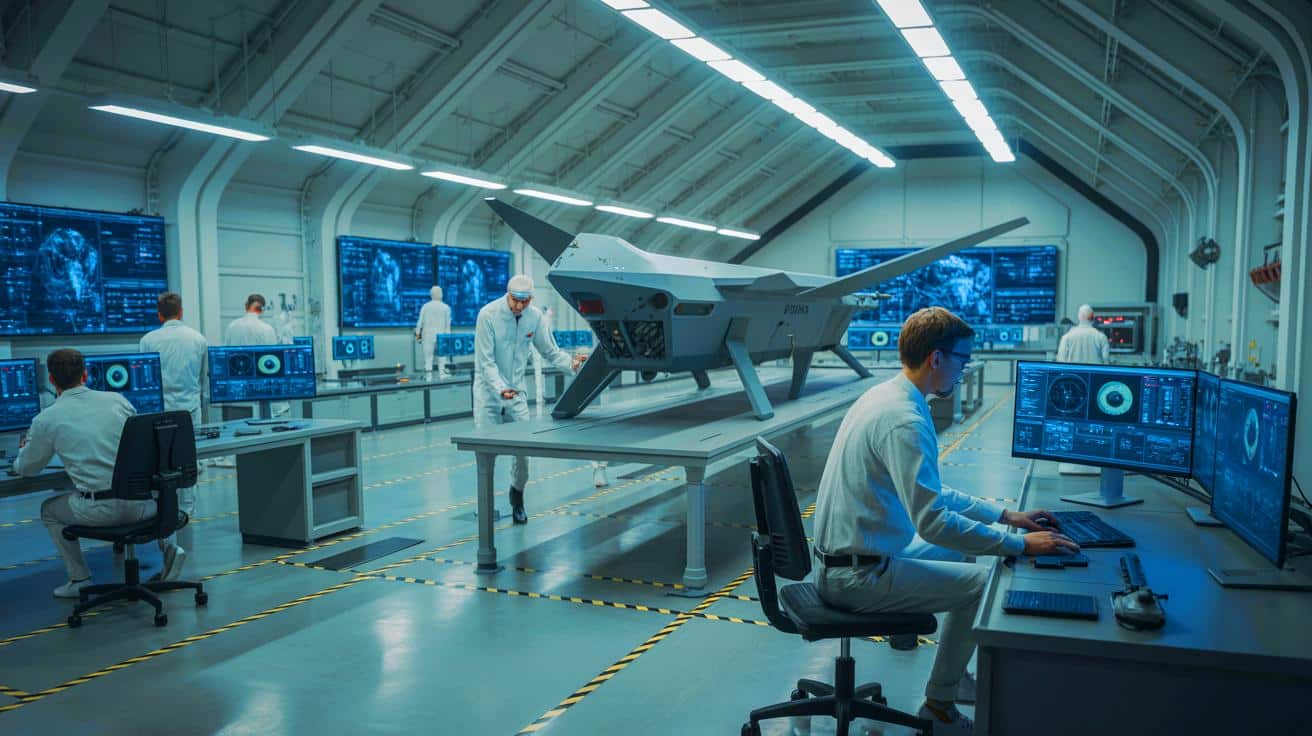
As defense spending ramps up both in the United States and globally, an intriguing trend is emerging among defense firms: the strategic development of self-funded prototypes. This approach, while not entirely new, signals a shift in how companies aim to demonstrate their capabilities and secure future contracts. Firms such as Lockheed Martin and Northrop Grumman are investing heavily in their own research and development, creating operational prototypes that aim to leapfrog traditional government-funded processes. This article delves into the motivations and implications behind this trend, highlighting how it could reshape defense innovation and procurement in the years to come.
Lockheed Martin’s Strategic Shift
Lockheed Martin, a leader in defense technology, is at the forefront of this emerging trend. CEO James Taiclet has articulated a clear vision for the company’s future, focusing on building full-scale operational prototypes. These are not merely experimental devices but are intended to be fully functional and scalable. The company has been working on ambitious projects like autonomous Black Hawks and space-based interceptors that could play a significant role in national defense initiatives.
According to Taiclet, Lockheed Martin is investing in prototypes that can be demonstrated to the government as capable and reliable. This approach marks a pivot in the company’s strategy, emphasizing the creation of real devices that could potentially be produced en masse. The goal is to have a demonstration of a space-based interceptor by 2028, which would showcase the firm’s capability to deliver cutting-edge technology quickly and efficiently.
Northrop Grumman’s Investment in Innovation
Northrop Grumman is another major player investing heavily in independent research and development. Over the past two years, the company has poured over $2 billion into its IRAD program. This investment aims to accelerate the time to market for new technologies, especially as international demand increases. CEO Kathy Warden has highlighted areas of focus, including multi-function sensors and AI integration, which are crucial for maintaining battlefield superiority.
The company’s efforts are aligned with the growing global emphasis on defense technologies, such as air and missile defense systems. This alignment presents substantial opportunities for Northrop Grumman as international sales continue to grow. The firm’s strategy reflects a broader industry consensus on the need for closer integration of defense R&D with the Pentagon’s efforts, aiming to fill funding gaps and adapt swiftly to evolving threats.
China Accuses NSA of Long-Term Hacking, Revealing Years of Targeted Attacks on National Time Systems
Challenges and Opportunities for New Entrants
While established firms are leading the charge, new entrants are also making significant strides. Apex, a Los Angeles-based startup, is developing a prototype for a platform that could be crucial for space-based interceptors. Their “orbital magazine” aims to deploy multiple prototype missile interceptors in orbit. Apex CEO Ian Cinnamon has emphasized the importance of private funding to accelerate development timelines, citing the urgency of fielding these capabilities to protect national security.
However, this rapid pace comes with risks, particularly concerning the substantial financial investments and the short timeline for technology maturation. New companies face the challenge of proving their technologies without the backing of traditional government contracts. Yet, the potential rewards are significant, offering the opportunity to disrupt conventional defense procurement processes and establish themselves as key players in the industry.
The Pentagon’s Role and the Path Forward
The Pentagon has increased its R&D funding, yet it struggles with transitioning prototypes into fully realized programs. The traditional defense acquisition process can take over a decade, creating a bottleneck between research and procurement. This has led to a discrepancy in spending, with many advanced capabilities remaining in developmental stages rather than reaching operational deployment.
To address this, some companies are collaborating directly with military operators, bypassing traditional bureaucratic hurdles. Textron, for instance, is pushing its unmanned systems directly to military brigades, responding to immediate operational needs. This approach reflects a broader industry shift towards agile development and deployment, aiming to meet the dynamic requirements of modern warfare efficiently.
The defense industry is at a pivotal moment, with companies increasingly taking the initiative in prototype development. This shift towards self-funded innovation could redefine the landscape of military procurement, offering faster and more flexible solutions to emerging threats. As these trends continue to unfold, a key question remains: how will the balance between government oversight and private sector innovation shape the future of defense technology?
Continue reading