



Senate’s Shutdown Deal Sparks Relief, Ensures Department of Defense Funding Until January 30 Amid Fiscal Uncertainty
 By
Adam Kovács
By
Adam Kovács
| IN A NUTSHELL |
|
The United States Senate has taken a significant step toward resolving an unprecedented 40-day government shutdown. By clearing a key procedural hurdle, the Senate is moving forward with a package aimed at funding federal agencies through January, while also addressing the layoffs affecting thousands of federal employees. This bipartisan move comes amid rising concerns over the shutdown’s impact on government services and the livelihoods of federal workers. The proposed deal includes appropriations for several key departments, while other agencies will operate under a continuing resolution until the end of January.
Senate Clears First Hurdle in Ending Shutdown
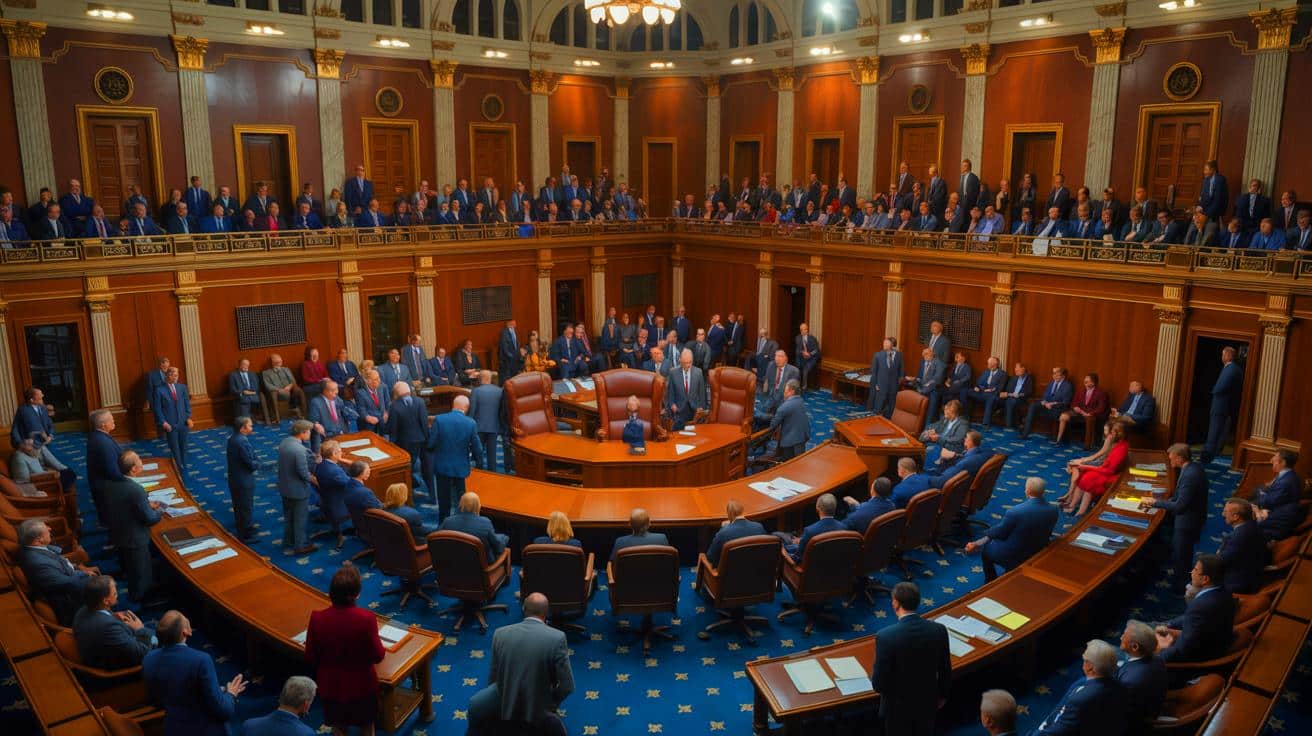
On Sunday, the Senate overcame a procedural obstacle to advance a legislative package that seeks to end the longest government shutdown in U.S. history. The package aims to provide full-year appropriations for the Veterans Affairs Department, the Agriculture Department, and the legislative branch, while other federal agencies will function under a continuing resolution through January 30. This development represents a compromise between the two parties, with enough Senate Democrats joining Republicans to push the bill forward.
The prolonged shutdown has had widespread effects, impacting both federal employees and the public. The Senate’s action marks a critical turning point, though further votes are required before the measure reaches President Trump’s desk. The shutdown, initially triggered by disputes over health care premium increases, has prompted lawmakers to seek solutions that would mitigate the economic and social repercussions experienced by many Americans.
Impact on Federal Employees
A key element of the proposed legislation is its provision to halt the layoffs of over 4,000 federal employees, which were initiated by the Trump administration during the shutdown. These layoffs have been temporarily paused by a federal court injunction, which remains in effect as long as the government remains shut down. The new legislation intends to protect federal employees by banning any reductions in force until January.
Senator Tim Kaine, D-Va., emphasized the importance of safeguarding federal workers, noting that the bill would reinstate those affected by the layoffs and guarantee back pay for all furloughed federal workers. This assurance of back pay is in accordance with a 2019 law, though the White House had previously suggested it might not comply. The Senate’s action aims to restore stability and fairness for federal employees, who have faced uncertainty and financial strain during the shutdown.
Democratic Concerns and Opposition
While the Senate’s bipartisan agreement has been met with some relief, not all Democrats are in favor of the current package. Many have expressed frustration that the bill does not address their primary demand: preventing health care premium increases for millions of Americans. This issue was a significant factor in the shutdown’s initiation and remains unresolved in the current legislation.
Senator Chris Van Hollen, D-Md., voiced his opposition to the measure, citing its inadequacy in meeting key priorities and its failure to prevent the Trump administration from potentially withholding funds for crucial programs. Despite these concerns, the Senate’s progression with the bill highlights the complex dynamics at play, as lawmakers balance immediate needs with long-term policy objectives.
Next Steps and Legislative Challenges
The Senate’s progress on the shutdown deal sets the stage for further negotiations and votes. Senator John Thune, R-S.D., has announced that a vote on continuing Affordable Care Act subsidies will be held in December as part of the deal. However, House Speaker Mike Johnson, R-La., has yet to commit to this arrangement, indicating that obstacles remain before a full resolution can be achieved.
The path forward involves navigating political differences and ensuring that the funding package can pass through both chambers of Congress. The urgency to resolve the shutdown is evident, as its effects continue to ripple across the nation. Lawmakers must work collaboratively to finalize a solution that addresses both immediate funding needs and broader policy concerns.
As the Senate advances this critical legislation, the focus now shifts to the House and the President. Will the proposed deal garner enough support to end the shutdown and restore normalcy to government operations? The unfolding situation presents an opportunity for bipartisan cooperation, but challenges remain as policymakers seek to balance competing priorities and public expectations.