



“Laser Destroys Drones At Speed Of Light”: U.S. Navy’s HELIOS Weapon System Neutralizes Aerial Threats For Fraction Of Traditional Missile Costs During Successful Combat Tests
 By
Adam Kovács
By
Adam Kovács
| IN A NUTSHELL |
|
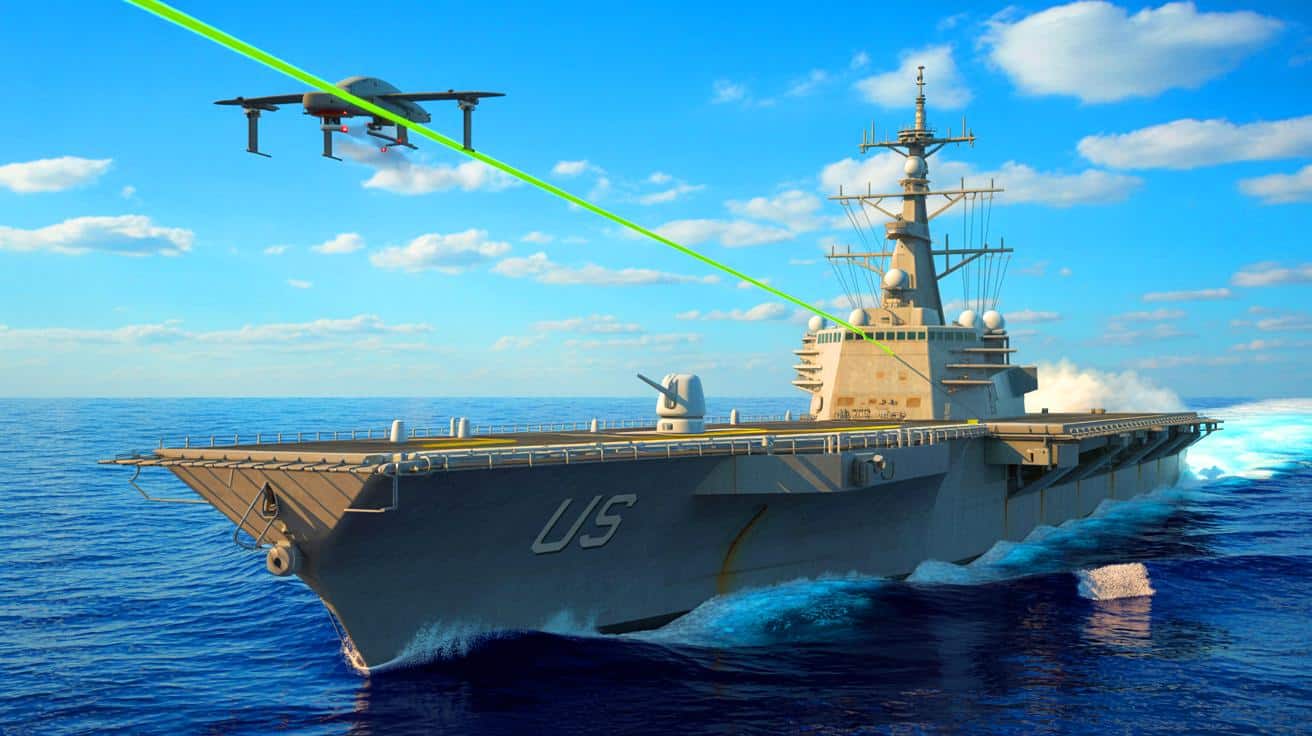
The U.S. Navy has made significant strides in advancing its defense capabilities with the successful testing of the HELIOS laser weapon system. Designed to neutralize aerial threats at the speed of light, HELIOS represents a new era in directed-energy weapons. Conducted aboard the USS Preble, these tests showcased the system’s proficiency in engaging unmanned aerial vehicles, marking a notable development in military technology. As global conflicts evolve, the need for efficient and cost-effective defense solutions becomes increasingly crucial. HELIOS not only promises enhanced operational capabilities but also signifies a shift toward energy-based defense systems over traditional munitions.
Functionality and Capabilities
The HELIOS system, an acronym for High-Energy Laser with Integrated Optical Dazzler and Surveillance, is developed by Lockheed Martin. Operating at 60 kilowatts, this laser weapon is designed to disable or destroy targets using thermal energy. Unlike conventional missile-based systems, HELIOS relies on electric power, significantly reducing operational costs and logistical challenges associated with munitions supply.
One of the innovative features of HELIOS is its optical dazzler, which interferes with enemy sensors and surveillance equipment. This capability is critical in modern warfare, where information and intelligence play pivotal roles. HELIOS is intended to integrate seamlessly with shipboard defense systems, complementing conventional missile-based countermeasures. This dual functionality enhances a vessel’s defensive posture, providing a versatile response to various threats.
Strategic Importance
The development of HELIOS aligns with the U.S. Navy’s broader strategic objectives to counter low-cost aerial threats. The proliferation of drone technology and anti-ship cruise missiles necessitates advanced defense systems that can efficiently neutralize these threats. With drone warfare becoming increasingly prevalent, naval forces must evolve to meet these challenges.
HELIOS offers a solution to this growing concern, providing a robust defense mechanism against emerging technologies. By incorporating directed-energy weapons into its arsenal, the U.S. Navy enhances its ability to protect assets and maintain strategic superiority. This shift is part of a larger effort to modernize and future-proof military capabilities in an era where technological advancements rapidly change the landscape of warfare.
Comparative Advantages Over Missile-Based Systems
The U.S. Navy’s pursuit of innovative interception methods is driven by the limitations of traditional missile systems. The rising cost and limited availability of conventional missile defense solutions have prompted a search for alternatives. HELIOS emerges as a favorable option, offering several operational advantages.
| Advantage | Description |
|---|---|
| Lower Cost Per Engagement | HELIOS operates on electricity, whereas traditional interceptors like the SM-6 missile cost approximately $4 million per shot. |
| Continuous Operation | Unlike missile systems, HELIOS does not require reloading and can engage multiple threats in rapid succession. |
| High-Speed Response | Laser beams travel at the speed of light, significantly reducing engagement time compared to missile interceptors. |
These advantages position HELIOS as a cost-effective and efficient defense solution, addressing the limitations of existing systems. By leveraging the speed and precision of laser technology, the U.S. Navy can enhance its operational readiness and strategic capabilities.
Key Figures in Laser Weapon Development
While HELIOS represents a significant achievement, the U.S. Department of Defense is actively pursuing more advanced laser systems. The High Energy Laser Scaling Initiative (HELSI) aims to develop lasers exceeding 300 kilowatts, pushing the boundaries of directed-energy technology.
Another notable project, the High Energy Laser Counter Anti-Ship Cruise Missile Project (HELCAP), focuses on testing lasers above 300 kilowatts for anti-missile defense. These initiatives underscore the commitment to advancing laser technology and expanding its applications in military operations. Earlier systems, such as the AN/SEQ-3 LaWS, operated at 30 kilowatts, highlighting the rapid progression in laser weapon capabilities.
The continuous development of these systems reflects a strategic vision for enhanced defense mechanisms. As technology evolves, so too does the need for innovative solutions to safeguard national security interests. These advancements in laser weaponry are indicative of a broader trend in military innovation, setting the stage for future capabilities.
The introduction of the HELIOS laser weapon system marks a pivotal moment in military technology and strategy. By integrating directed-energy capabilities into its defense arsenal, the U.S. Navy is taking a proactive approach to addressing modern threats. This shift towards energy-based solutions represents not only a technical advancement but also a strategic realignment in military doctrine. As the world continues to grapple with evolving security challenges, how will the integration of such technologies shape the future of global defense strategies?