

“These Jellyfish Shut Down Our Nuclear Plant”: Massive Swarm Clogs French Reactor Cooling System While Climate Change Creates Unprecedented Marine Threats To Critical Infrastructure
 By
Adam Kovács
By
Adam Kovács
| IN A NUTSHELL |
|
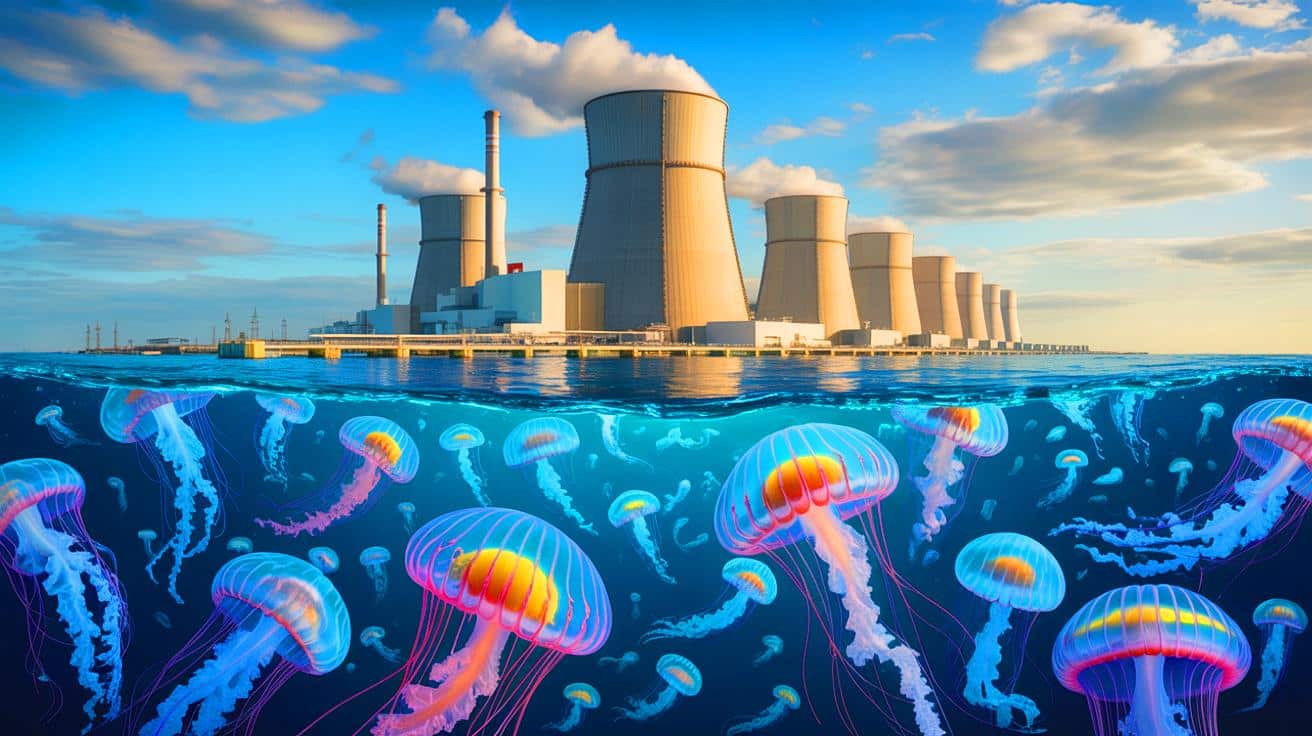
In a surprising turn of events, the Gravelines nuclear power plant in France was temporarily shut down, not due to technical faults or cyberattacks, but because of a swarm of jellyfish. This incident occurred in mid-August and highlighted a unique vulnerability in nuclear plant operations. The plant, which is the largest in France and the European Union, was forced to halt its operations when jellyfish clogged the filtration system used to cool its reactors. While this might sound like a plot for a sci-fi movie, it underscores the unexpected challenges posed by climate change, as warmer ocean temperatures may be contributing to the proliferation of jellyfish.
Jellyfish Jam at Gravelines
The incident at Gravelines was caused by the Rhizostoma octopus, commonly known as the cauliflower jellyfish. These gelatinous creatures, some measuring over two feet in diameter, were carried by ocean currents to the power plant. There, they clogged the intake filters, which are essential for drawing in seawater to cool the reactors. This blockage triggered an automatic shutdown of the reactors to prevent overheating. Fortunately, the shutdown did not affect the electrical grid, as it occurred during the summer when electricity demand is typically lower.
Such occurrences are not isolated to Gravelines. Similar incidents have been reported in Sweden and Scotland, where jellyfish swarms have also forced nuclear plants to halt operations. The increasing frequency of these events raises questions about the impact of climate change on marine life. Warmer ocean temperatures may be accelerating the jellyfish’s reproductive cycles, resulting in larger swarms that pose challenges to marine-based infrastructure.
Increasing Incidents Due to Climate Change?
The shutdown at Gravelines raises concerns about the future frequency of similar incidents. As global temperatures rise, marine environments are changing, and jellyfish populations are thriving in warmer waters. Researchers at the French Research Institute for Exploitation of the Sea (Ifremer) have noted this trend and are studying its implications. Jellyfish have few natural predators and can adapt quickly to changing conditions, making them well-suited to warmer oceans.
For energy providers like Electricité de France (EDF), the operator of Gravelines, this presents a significant challenge. While the company is considering enhancements to its filtration systems, the broader question remains how to adapt infrastructure to a changing climate. The Gravelines incident, now dubbed the “jellyfish jam,” will likely be a case study in how natural phenomena can impact critical infrastructure in unexpected ways.
The Unforeseen Threat of Jellyfish
Jellyfish, often seen as a nuisance at the beach, have now become a formidable adversary for nuclear power plants. Their ability to rapidly reproduce and form large swarms highlights their resilience and adaptability. While many people have personal anecdotes about jellyfish stings, few would have imagined them having the power to halt a nuclear plant. This incident may prompt a reevaluation of jellyfish’s role in marine ecosystems and their potential impact on human activities.
The Gravelines shutdown also serves as a reminder of the interconnectedness of natural and human systems. As we continue to grapple with the effects of climate change, incidents like these underscore the need for adaptive strategies that can mitigate unforeseen consequences. Whether it’s through technological innovation or environmental management, finding solutions will be critical to ensuring the reliability of essential infrastructure.
Technological and Environmental Adaptations
In response to the jellyfish incidents, nuclear operators are exploring various technological and environmental adaptations. Enhanced filtration systems that can better handle large volumes of marine organisms are one avenue. Additionally, monitoring systems that can predict jellyfish swarms and allow for preemptive action are being considered.
Environmental management strategies may also play a role. This could include efforts to control jellyfish populations through natural predators or changes in water management practices. Collaboration between marine biologists, engineers, and energy providers will be essential to develop effective solutions. As the impact of climate change continues to unfold, these efforts will be crucial in safeguarding infrastructure and maintaining energy security.
The unexpected shutdown of the Gravelines nuclear plant by jellyfish highlights the complex challenges posed by climate change. It raises important questions about our readiness to adapt to new environmental realities. As we move forward, how can we balance technological advancements with environmental stewardship to protect vital infrastructure? The answer may lie in innovative collaborations and a deeper understanding of the natural world around us.