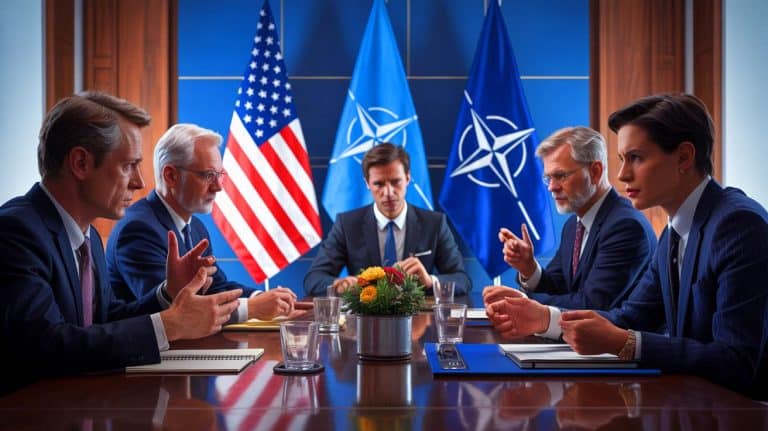



“Biden And Xi Ban AI From Nuclear Weapons”: US China Leaders Agree Artificial Intelligence Must Never Control Nuclear Arsenal While Russia Expands Deployment On Ukraine War’s 1,000th Day
 By
Adam Kovács
By
Adam Kovács
| IN A NUTSHELL |
|
In a world where nuclear capabilities are a constant global concern, recent events have highlighted the critical importance of maintaining human oversight over these powerful arsenals. On November 19, a significant milestone was reached as the conflict between Russia and Ukraine marked its 1,000th day. Amidst this backdrop, Russian President Vladimir Putin announced an expansion of nuclear deployment capabilities, raising international alarm. Meanwhile, in Lima, Peru, U.S. President Joe Biden and Chinese President Xi Jinping met to discuss a crucial agreement ensuring that artificial intelligence (AI) will never autonomously control nuclear weapons. This diplomatic effort underscores the ongoing importance of responsible nuclear governance amid escalating tensions.
The Complex Relationship Between China and the United States
The relationship between China and the United States has been complex and often strained. Historically, these two superpowers have had their share of disagreements, particularly regarding nuclear capabilities. In recent years, China’s economic surge has been paralleled by significant investments in its nuclear arsenal. According to the U.S. Department of Defense, China had over 500 nuclear warheads as of 2023, with expectations to double that number by 2030. Conversely, the U.S. is focused on modernizing its own arsenal.
The United States continues to emphasize the enhancement of advanced weapons systems, maintaining its nuclear triad of intercontinental ballistic missiles, strategic bombers, and nuclear submarines. However, the potential use of AI in nuclear decision-making has raised substantial concerns. The possibility of AI-induced miscalculations or unintended launches is widely regarded as a catastrophic risk. As such, both nations recognize the need for stringent control over nuclear capabilities.
Understanding Nuclear Weapons Doctrine
Traditionally, China has adhered to a no-first-use policy regarding nuclear weapons, committing to deploy them only in retaliation to a nuclear attack. This doctrine aligns with the broader principle that nuclear weapons serve as a deterrent rather than offensive tools. If adhered to, this policy theoretically reduces the likelihood of nuclear warfare. However, recent reports suggest China might be shifting towards a more aggressive stance, potentially responding to perceived threats rather than actual attacks. This doctrinal evolution seems influenced by the U.S.’s advancements in nuclear strategy.
On the other hand, the United States has not ruled out the possibility of a preemptive nuclear strike if faced with an existential threat. This posture adds a layer of complexity to the global nuclear landscape, where doctrines and policies must be carefully managed to prevent escalation. The balance of power and the interpretation of what constitutes a sufficient threat could redefine nuclear engagement rules.
Decisions Made by U.S. and Chinese Leaders
The geopolitical landscape is further complicated by the situation in Taiwan, which remains a flashpoint in U.S.-China relations. China views Taiwan as a breakaway province, with repeated threats to reclaim it, potentially by force. The United States, while supporting Taiwan militarily, officially upholds the island’s non-nuclear status. This delicate balance necessitates careful diplomacy to avoid military confrontation.
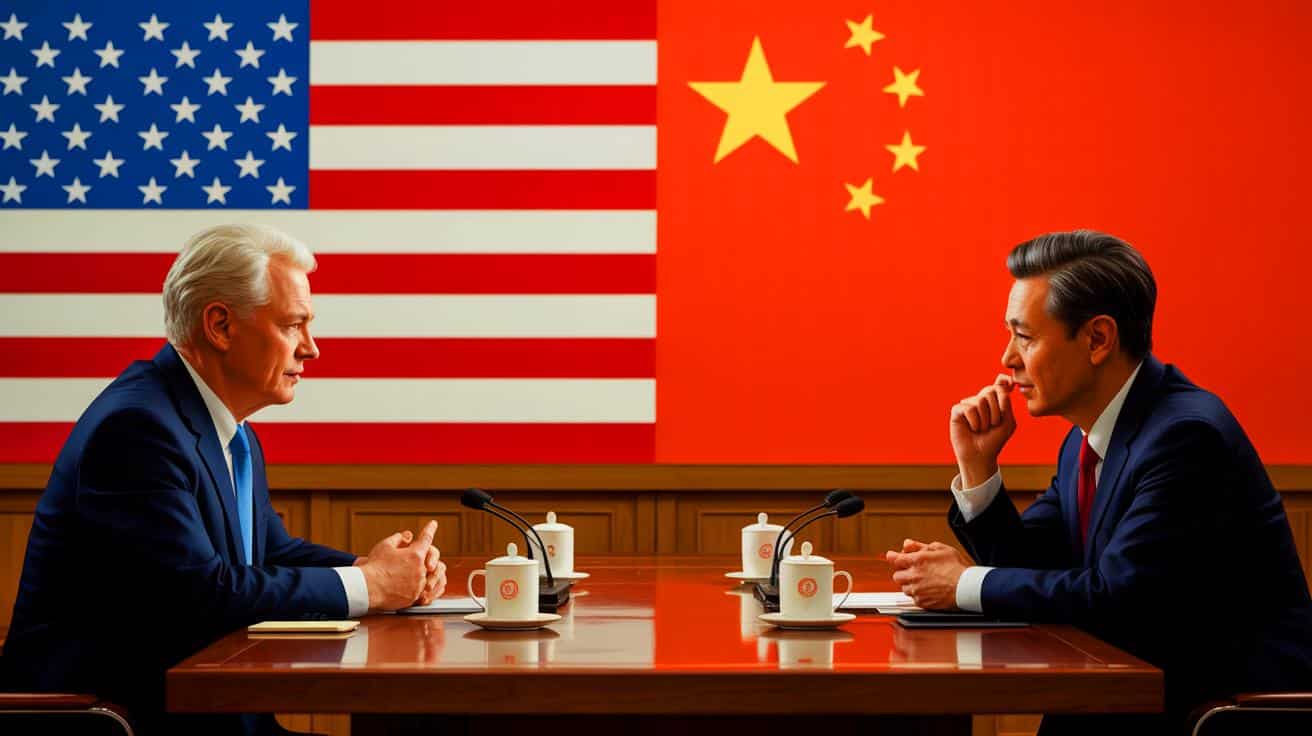
In their recent discussions, Presidents Biden and Xi reached a consensus on the critical issue of AI in nuclear decision-making. They agreed that decisions concerning nuclear weapons must remain under human control, excluding AI from these processes. This decision reflects a shared understanding of the potential risks AI poses if left unchecked in such high-stakes scenarios. The commitment to human oversight highlights a mutual recognition of the inherent dangers AI could introduce if allowed to autonomously manage nuclear arsenals.
The Future of Nuclear Governance and AI
The agreement between the U.S. and China to exclude AI from nuclear decision-making processes marks a significant step towards responsible governance. This decision reinforces the importance of human judgment in matters of global security. However, questions remain about the future role of AI in defense strategies. As technological advancements continue, the challenge will be to integrate these innovations without compromising safety and oversight.
Global leaders face the task of navigating an increasingly complex technological landscape while ensuring that human control remains paramount. The future hinges on their ability to balance advancements with prudence, maintaining peace and stability. As AI technology progresses, how will nations manage the delicate balance between innovation and safety, particularly in the realm of nuclear capabilities?
Continue reading