



“This Weapon Cost Billions And Failed”: Moscow Scientists Expose Military’s Secret Museum Display Shocking Officials
 By
Adam Kovács
By
Adam Kovács
| IN A NUTSHELL |
|
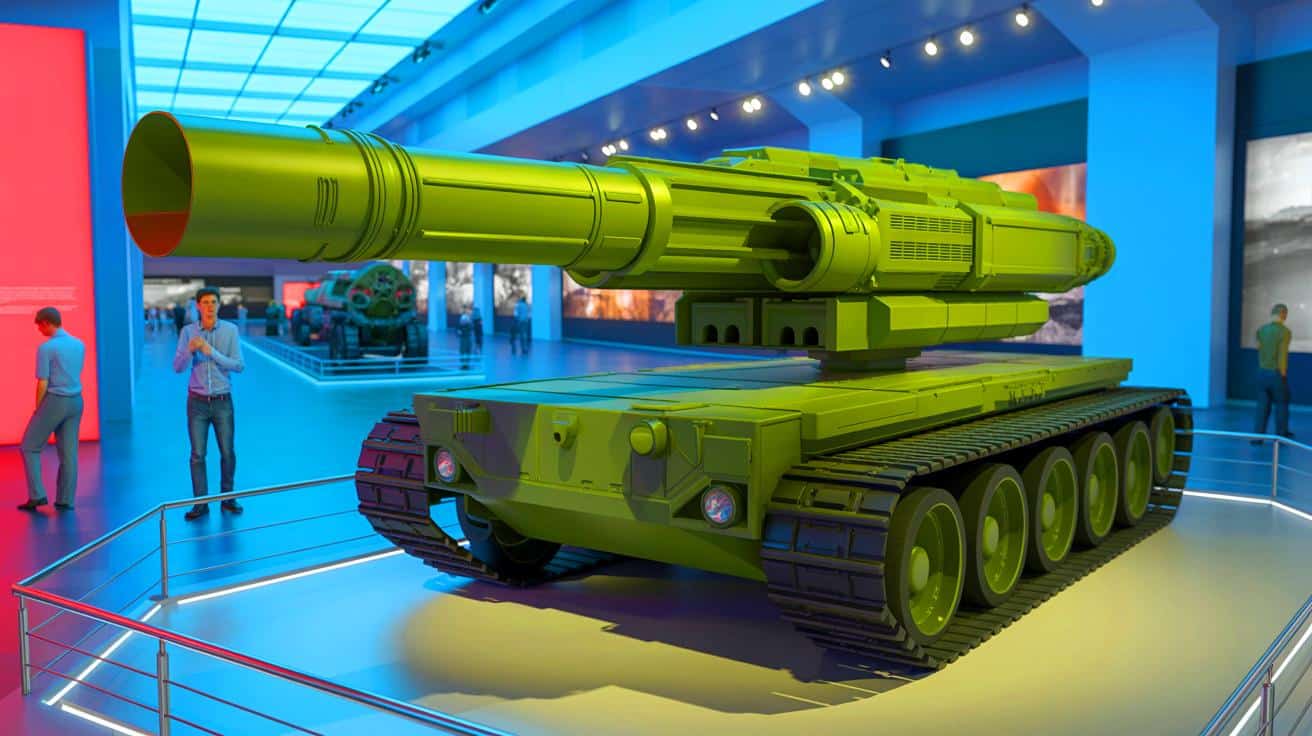
The recent unveiling of the Furor directed-energy weapon at the Kubinka military museum near Moscow has drawn significant attention. This system, which was initially presented with great fanfare, now appears to symbolize more of an anticlimax than a military breakthrough. Developed over a decade with substantial state funding, the Furor has yet to be deployed on the frontlines. Instead, it finds itself displayed as a technological curiosity for military enthusiasts. As tensions persist between Russia and Western nations, the Furor’s journey from a promising defense tool to a museum exhibit raises questions about its true value and the strategic decisions behind its development.
The Museum Display
The Furor’s presence in the museum was first highlighted by the website Btvt.info and further disseminated by Defense Express. Photographs from the event reveal that the Furor is still in its experimental stage, awaiting further refinement. A brochure accompanying the display claims the system is undergoing tests, a statement that seems counterintuitive given the public nature of the exhibition. Officially presented to the media in 2015, the Furor was introduced as a mobile system capable of neutralizing various unmanned aerial vehicles (UAVs) and precision-guided munitions within a 6-mile radius. The Russian media at the time described it as a “high-power relativistic generator” mounted on a tracked chassis.
This public showcase raises questions about the weapon’s readiness and effectiveness. If the Furor is indeed a cutting-edge technology, its placement in a museum rather than an active deployment raises skepticism about its actual capabilities. The exhibit could either signify a pause in its development or a strategic move by the Russian military to divert attention while continuing its refinement behind closed doors.
A Different Purpose?
Defense Express suggests that the Furor's primary role might not have been as an operational weapon but rather as a tool to secure substantial state funding for military projects. In the current climate of heightened military tensions with the West and ongoing conflict in Ukraine, advanced technologies like the Furor attract significant interest and investment. Drones have become pivotal in modern warfare, playing crucial roles for both Ukrainian and Russian forces. The promise of a novel weapon capable of countering these drones would naturally draw considerable financial and political support.
Developed by the Moscow Radio Engineering Institute, part of the Russian Vega group, the Furor's journey reflects broader military-industrial dynamics. Founded in 1944, Vega has been known for its radar systems, most notably the Ilyushin A-50. The Furor’s development timeline suggests it may have been more about securing funding and maintaining technological prestige than delivering an immediately deployable weapon.
An American Counterpart
While the Russian Furor remains a museum piece, directed-energy weapons designed to counter drones continue to be a focus of research and development elsewhere. The United States is advancing its own systems, with the Epirus Leonidas being a notable example. This American counterpart promises similar capabilities but operates within a 1.2-mile radius, significantly less than the Furor's advertised range. Despite the differences in range, the U.S. system reflects ongoing interest in energy-based defenses.
The pursuit of such technologies underscores their perceived strategic importance in modern warfare. As nations grapple with the challenges posed by UAVs, directed-energy solutions offer a promising avenue for defense. The development of these weapons indicates a broader trend in military innovation, focusing on versatile and scalable solutions to contemporary threats.
Implications of the Furor's Display
The decision to display the Furor in a museum rather than deploy it in active service reflects several underlying strategic considerations. It might indicate a reassessment of its effectiveness or a shift in focus towards newer, more promising technologies. Alternatively, the public exhibition could serve as a signal to international observers about Russia's technological capabilities, even if the system is not yet operationally ready. This move might also aim to maintain domestic and international interest in Russia's military prowess.
Ultimately, the Furor's story is one of ambition, investment, and strategic signaling. Whether it achieves its intended role or remains a symbolic artifact of military innovation, its journey offers insights into the complexities of modern defense technology development and deployment.
The Furor’s transition from a promising military asset to a museum exhibit raises intriguing questions about the future of directed-energy weapons. As nations continue to invest in advanced technologies to counter emerging threats, how will these developments shape the landscape of modern warfare? Will the emphasis on innovation lead to breakthroughs that redefine military strategy, or will it reveal the limits of technological ambition?
Continue reading