



“China Unleashes Invisible Threat”: The Mosquito-Sized Drone Sparks Fears Of Covert Espionage As Experts Warn Of Dangerous Surveillance Consequences
 By
Adam Kovács
By
Adam Kovács
| IN A NUTSHELL |
|
The technological advancements in military surveillance have taken a significant leap with China’s unveiling of a mosquito-sized drone. Developed for reconnaissance missions, this miniature marvel exemplifies the trend of miniaturization in military technology. The drone’s size and design make it nearly invisible to the naked eye, giving it a strategic advantage in covert operations. However, despite the excitement surrounding this innovation, there are concerns about its practical application and limitations on the battlefield. As military forces across the globe continue to explore such technologies, the implications of these developments raise questions about privacy, security, and the future of warfare.
The Rise of Miniaturized Surveillance Technology
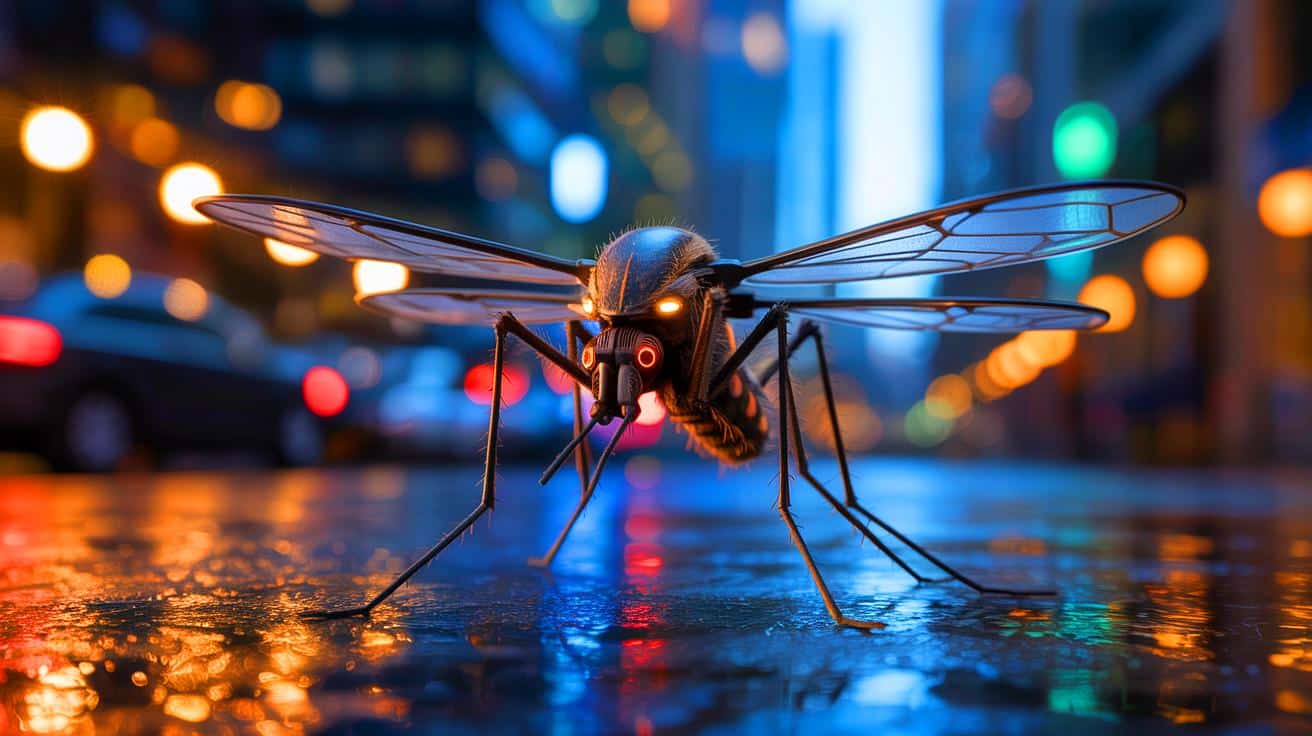
In recent years, the military sector has witnessed a significant shift towards the use of drones for various operations. These unmanned aerial vehicles have become integral for surveillance, reconnaissance, and even combat missions. However, China’s latest innovation, a drone resembling a mosquito, takes this trend to a new level. The Chinese military, with the help of researchers from the National University of Defence Technology (NUDT), has managed to miniaturize this technology, creating a device that is almost impossible to detect.
This mosquito-sized drone is equipped with “legs” and “wings” similar to the insect it mimics. Its design poses significant challenges to existing surveillance and detection systems, allowing it to operate undetected. Such a capability is invaluable for espionage and reconnaissance missions where stealth is paramount. The developers believe that this drone’s unique features make it an ideal tool for covert operations, controlled with a small portable device.
Despite these advancements, questions remain about when this technology will be fully operational and the extent of its current capabilities. The prospect of a nearly invisible surveillance tool is both fascinating and concerning, highlighting the dual-use nature of such technologies in modern warfare.
Challenges and Limitations of the Mosquito Drone
While the potential applications of a mosquito-sized drone are intriguing, there are significant limitations to its use on the battlefield. Experts argue that while its small size makes it difficult to detect, it also restricts its operational capabilities. The drone's limited battery life and payload capacity mean it cannot carry sophisticated equipment for extended missions.
Timothy Heath, a senior researcher and China expert at the Rand Corporation, points out that sustaining long-term surveillance with such drones would require continuous monitoring and recharging. He emphasizes that while these drones are valuable for espionage, they are less practical for traditional battlefield scenarios. The need for constant attention and maintenance limits their use to localized operations, where the operator can remain nearby to manage the drone.
These constraints mean that, at least for now, the mosquito drone's role will likely be confined to specific, short-term missions. Its effectiveness hinges on the ability to seamlessly integrate into existing military and intelligence frameworks, a challenge that will require further innovation and adaptation.
Implications for Privacy and Security
The development of such advanced surveillance technologies raises significant concerns about privacy and security. As drones become smaller and more difficult to detect, the potential for misuse increases. The mosquito drone, with its ability to infiltrate sensitive areas without detection, poses a unique challenge to personal and national security.
Privacy advocates argue that the proliferation of such technologies could lead to unprecedented levels of surveillance, both by state and non-state actors. The ability to gather information without consent or awareness raises ethical questions about the balance between security and individual rights. The international community must grapple with these issues to establish norms and regulations governing the use of miniaturized surveillance drones.
As the technology continues to evolve, it is crucial to consider the broader implications of its deployment. Policymakers and technologists must work together to ensure that advancements in surveillance technology do not compromise the fundamental rights and freedoms of individuals.
The Future of Miniaturized Military Technology
The introduction of the mosquito-sized drone by China signals a new era in military technology, characterized by increasing miniaturization and sophistication. This development has the potential to reshape military strategies and tactics, as countries adapt to the challenges and opportunities presented by such technologies.
As nations explore the capabilities of miniaturized drones, the focus will likely shift towards enhancing their operational efficiency and range. Innovations in power storage, data processing, and autonomous navigation could extend the utility of these devices for a broader range of applications. However, the ethical and strategic implications of these advancements must be carefully considered.
The future of warfare is likely to be heavily influenced by these technological trends, with miniaturized drones playing a pivotal role. The ongoing dialogue about the ethical use of such technologies will be crucial in shaping their development and integration into military operations worldwide.
The unveiling of China's mosquito-sized drone represents a significant step forward in the miniaturization of military technology. While its potential applications are vast, the challenges and ethical considerations it presents cannot be ignored. As technology continues to evolve at a rapid pace, how will the global community address the balance between innovation and security in the realm of military surveillance?
Continue reading