

“This Could Redefine Nuclear Power”: This New Fuel From GE and Hitachi Promises Safer Reactors and Cheaper Energy (and It’s Already Approved)
 By
Adam Kovács
By
Adam Kovács
| IN A NUTSHELL |
|
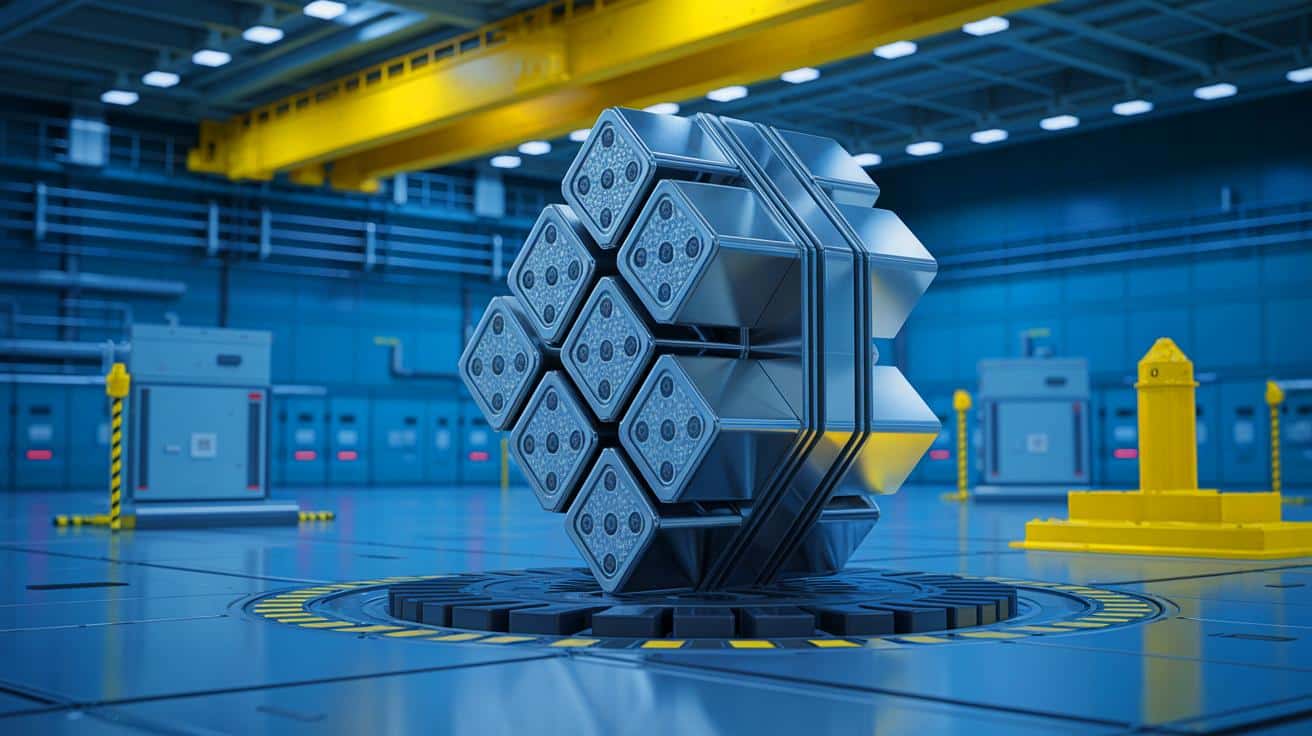
The nuclear energy industry is witnessing a significant shift with the introduction of GE Vernova’s latest innovation, the GNF4 fuel. Developed by Global Nuclear Fuel, a collaboration between GE Vernova and Hitachi, this new fuel is designed specifically for boiling water reactors (BWRs). With a focus on enhancing performance and reliability, GNF4 aims to reduce fuel costs per megawatt-hour for plant operators. The fuel features an advanced design built upon proven technologies and two newly licensed components by the U.S. Nuclear Regulatory Commission. This development represents a major leap forward in nuclear fuel technology, promising increased efficiency and safety in nuclear energy production.
Enhancing Heat Generation with Advanced Design
GNF4 is a product of extensive research and development, building on the success of its predecessors, GNF2 and GNF3. One of the most notable advancements in GNF4 is its 11×11 fuel matrix, which significantly increases the heat-generating surface area. This enhancement allows for more efficient use of uranium, leading to lower fuel costs and improved performance.
The new design incorporates two advanced components recently approved by the U.S. Nuclear Regulatory Commission. The first component is Ziron Cladding, developed to offer superior corrosion resistance compared to the widely used Zircaloy 2 cladding. This improvement enhances fuel safety and reliability by significantly reducing hydrogen pickup.
The second critical component is the use of Aluminosilicate Doped Uranium Dioxide Pellets. These pellets provide an additional layer of reliability and offer protection against pellet-clad interaction (PCI), further ensuring accident-tolerant fuel performance. Together, these innovations represent a significant leap forward in nuclear fuel design and functionality.
Leveraging Proven Technologies
In addition to its cutting-edge components, GNF4 leverages GNF’s proven technologies to ensure optimal performance. The fuel assembly utilizes NSF Channel Material, a distortion-resistant zirconium alloy designed to minimize fuel channel distortion in BWRs. This feature contributes to the overall stability and longevity of the fuel assemblies.
Another key feature is the Defender+ Debris Filter, which has been deployed in over 20,000 bundles across various reactor types. Known for its low frequency of debris-related incidents, this debris filter enhances the operational safety and reliability of the fuel assemblies.
Craig Ranson, installed base chief executive officer at GE Vernova Hitachi Nuclear Energy, emphasized the collaboration between engineering and supply chain teams in introducing this next-generation fuel. By evolving from the original 7×7 configuration to the current 11×11 matrix, GNF4 aims to deliver safety, reliability, and cost-effective uranium utilization for the nuclear power industry.
Global Efforts to Advance Nuclear Fuel Technology
The development of GNF4 is part of a broader global effort to advance nuclear fuel technology. Recently, Standard Nuclear Inc., based in the U.S., and French nuclear giant Framatome announced a partnership to supply commercial-scale quantities of Tri-structural Isotropic (TRISO) fuel for next-generation nuclear reactors.
In a separate development, Russia’s state nuclear corporation, Rosatom, through its Fuel Division, has manufactured a new type of nuclear fuel assembly known as OS-5. Designed for use in fourth-generation fast neutron reactors, the assembly features mixed nitride uranium-plutonium (SNUPP) fuel that incorporates a liquid metal sublayer.
These efforts highlight the global push towards more efficient and sustainable nuclear energy solutions, with various countries investing in advanced fuel technologies to meet the growing demand for clean energy.
The Future of Nuclear Fuel Design
As the energy sector evolves, innovations like GNF4 play a crucial role in shaping the future of nuclear power. With lead use assemblies planned for deployment in 2026 and full reload quantities expected by 2030, GNF4 is set to make a significant impact on the industry.
The development of GNF4 underscores the importance of continued investment in research and technology to address the challenges of energy production. By enhancing fuel efficiency and safety, GNF4 not only reduces operational costs but also contributes to the broader goal of sustainable energy production.
As the world seeks to balance energy demands with environmental concerns, how might these advancements in nuclear fuel technology influence future energy policies and strategies worldwide?
Continue reading