



“This Is the New Nuclear Reality”: These 5 Missiles Now Decide the Balance of Power (and One Can Strike Anywhere on Earth)
 By
Adam Kovács
By
Adam Kovács
| IN A NUTSHELL |
|
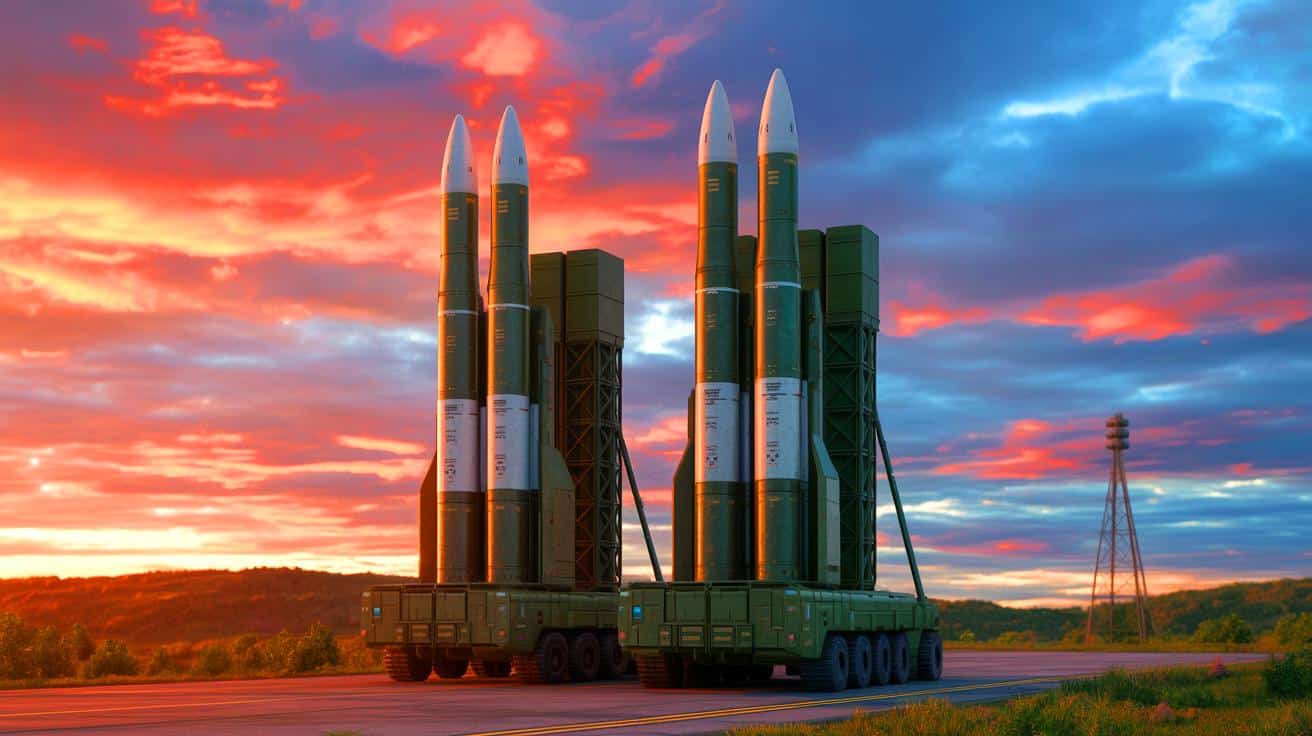
The global arms race has entered a new era, marked by the relentless pursuit of advanced missile technology. In 2025, the landscape of military strategy is defined by a handful of missiles that stand out for their unprecedented range, payload capacity, and the implications they hold for international security. These technological marvels are not just weapons but symbols of power and deterrence. As nations strive for military superiority, these missiles represent the pinnacle of technological innovation in warfare, with capabilities that challenge existing defense systems and redefine strategic dominance.
RS-28 Sarmat: Russia’s Strategic Titan
The RS-28 Sarmat, also known as the Satan II, is the cornerstone of Russia’s strategic missile forces. With a range of up to 11,185 miles, this missile can reach virtually any target across the globe. The RS-28 is designed to replace the aging R-36M Voyevoda and features advanced capabilities, including a short boost phase that significantly reduces the window for detection by infrared-tracking satellites.
Furthermore, the RS-28 boasts a payload capacity of 10,000 kilograms, allowing it to carry multiple warheads. It is equipped with a Fractional Orbital Bombardment System (FOBS), which enables warheads to be positioned in low-Earth orbit. This capability complicates detection and interception, making it a formidable component of Russia’s nuclear deterrent strategy.
China’s DF-41: A Mobile Powerhouse
China’s DF-41 missile is a testament to the country’s rapid advancements in missile technology. With a range between 7,500 and 9,350 miles, it is one of the most powerful intercontinental ballistic missiles (ICBMs) in existence. Capable of carrying up to ten nuclear warheads, the DF-41 is a significant element of China’s strategic deterrent.
The missile is launched from a road-mobile platform, enhancing its survivability by making it more difficult to detect and target. This mobility ensures that China can maintain a credible second-strike capability, a critical component of its nuclear strategy. Operated by the People’s Liberation Army Rocket Force, the DF-41 represents China’s commitment to maintaining a robust and flexible nuclear arsenal.
LGM-35 Sentinel: The Future of U.S. Deterrence
As the United States looks to modernize its nuclear forces, the LGM-35 Sentinel is poised to play a pivotal role. This next-generation ICBM is being developed to replace the aging Minuteman III missiles, with an emphasis on enhanced accuracy, flexibility, and resilience. With a range of approximately 8,000 miles, the Sentinel is designed to maintain the credibility of the U.S. nuclear deterrent well into the 21st century.
The Sentinel will feature modernized propulsion, guidance, and command systems, ensuring its effectiveness against evolving global threats. Set to enter service in the mid-2030s, this missile will serve as a crucial component of the U.S. nuclear triad under the Air Force Global Strike Command, reinforcing the nation’s strategic posture.
Trident II D5: A Pillar of Allied Defense
The Trident II, also known as the Trident D5, is a mainstay of the nuclear arsenals of both the United States and the United Kingdom. This submarine-launched ballistic missile (SLBM) is deployed on Ohio-class submarines and can deliver multiple nuclear warheads with precision. With a range of up to 7,456 miles, the Trident II remains a cornerstone of transatlantic defense.
Since its introduction in 1990, the missile has undergone numerous upgrades to enhance its range, accuracy, and reliability. It is considered one of the most precise strategic weapons ever developed, underpinning the credibility of the nuclear deterrents of both nations. The Trident II’s continued service highlights its vital role in maintaining global stability through deterrence.
Agni-V: India’s Strategic Leap
India’s Agni-V missile marks a significant advancement in the country’s strategic capabilities. With a range of over 4,350 miles, this surface-to-surface missile extends India’s reach across much of Asia, providing a credible deterrent against regional threats. The Agni-V incorporates cutting-edge technologies in navigation, guidance, and propulsion, ensuring exceptional accuracy.
The missile’s development reflects India’s strategic priorities and its commitment to maintaining a credible deterrent. The Agni-V’s ability to carry nuclear or conventional payloads enhances its versatility, serving as a powerful symbol of India’s growing military prowess. As geopolitical tensions evolve, how will the balance of power shift in response to advancements in missile technology?