

“They’re Scrambling Every Hour”: Inside Japan’s Fierce Aerial Standoff With China From a Tiny Okinawan Base (and It’s Getting Worse)
 By
Adam Kovács
By
Adam Kovács
| IN A NUTSHELL |
|
In the complex geopolitical landscape of East Asia, the role of Japan’s Air Self-Defense Force (JASDF) has become increasingly significant. Recent years have seen a dramatic rise in the frequency of scrambles, rapid deployments of fighter jets, in response to unidentified aircraft approaching Japan’s airspace. Situated on the island of Okinawa, the Naha Air Base has been at the forefront of these operations. Two squadrons at this base are primarily responsible for countering potential threats, particularly from Chinese military aircraft. This has led to an intense operational tempo, highlighting the strategic importance of Japan’s southwestern defense perimeter.
Okinawa’s Strategic Importance
Naha Air Base, located on Okinawa, serves as a critical hub for Japan’s air defense strategy. The island’s proximity to Taiwan and the contested Senkaku Islands places it on the frontline of regional security concerns. The JASDF’s Southwestern Air Defense Force operates from this location, tasked with safeguarding an expansive Air Defense Identification Zone (ADIZ) that overlaps with those of neighboring countries. This strategic position makes Okinawa a focal point for aerial defense and surveillance activities.
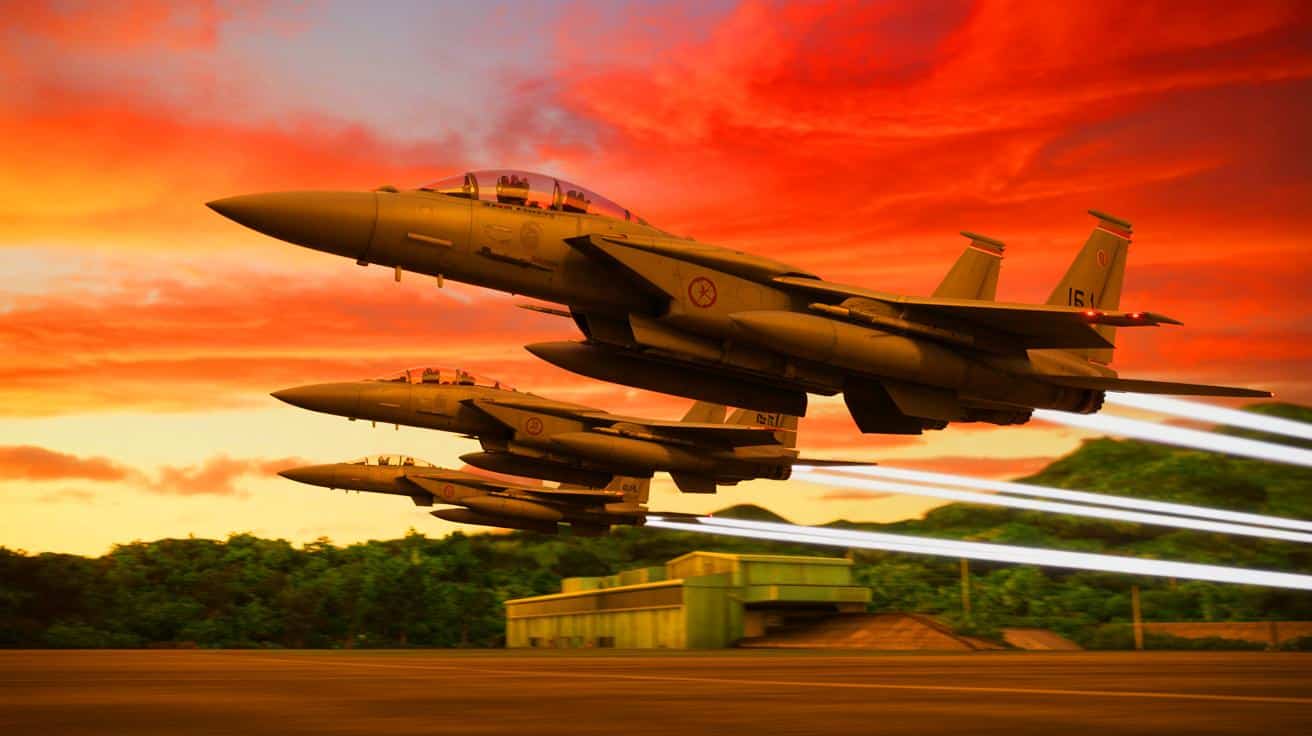
Two squadrons, the 204th and 304th Hikōtai, are stationed at Naha, flying the Mitsubishi F-15J Eagle interceptors. These aircraft are essential for quick reaction alerts, with the ability to intercept and identify unidentified aircraft within minutes. The squadrons maintain a high operational readiness level, crucial for responding to the increased air activity from China in recent years.
The significance of Okinawa’s location cannot be understated. It acts as a deterrent against potential incursions into Japanese airspace. The base’s F-15s have been scrambled numerous times in the past fiscal year, accounting for a substantial portion of the JASDF’s overall scramble activity. This highlights the ongoing tensions and the need for a robust air defense posture in the region.
The Burden of Increased Scramble Rates
The JASDF’s scramble rates have been on the rise, driven largely by Chinese military aircraft activities. Last fiscal year alone, Naha’s F-15s were scrambled 411 times, representing 58 percent of all JASDF scrambles. This level of activity underscores the operational burden placed on the squadrons and the necessity for constant vigilance.
Col. Hideo Kiyonaga, chief of staff of the Southwestern Air Defense Force, emphasizes the importance of air policing as the command’s fundamental mission. The requirement for quick reaction alerts ensures that fighter jets are airborne within five minutes of activation, a demanding standard that necessitates continuous readiness and coordination among personnel.
This heightened operational tempo has prompted adjustments in the JASDF’s protocols. To alleviate some of the strain, Japan revised its criteria for scrambling fighters, focusing more on monitoring unidentified aircraft unless they pose an immediate threat. Such measures aim to preserve resources and personnel while maintaining effective airspace control.
Modernization Challenges and Strategic Shifts
The JASDF’s fleet primarily consists of F-15s, a platform that has served reliably for decades. However, modernization efforts are underway to enhance capabilities and extend the aircraft’s service life. Japan plans to upgrade some F-15s with advanced avionics and electronic warfare systems, although cost overruns have curtailed the scope of these upgrades.
Additionally, Japan is transitioning to the fifth-generation F-35A Lightning II Joint Strike Fighter, reflecting a shift towards more advanced aviation technology. This transition is part of a broader strategic initiative to bolster Japan’s air defense capabilities in the face of evolving threats.
While modernization is essential, it is not without challenges. Budgetary constraints and technical hurdles have impacted the pace of upgrades and the procurement of new aircraft. Despite these obstacles, the JASDF remains committed to maintaining a credible and effective air defense posture.
Geopolitical Implications and Future Outlook
The increased scramble activities and ongoing modernization efforts reflect broader geopolitical tensions in East Asia. The overlapping ADIZs of Japan and China, especially over the Senkaku Islands, exacerbate these tensions. Both nations assert sovereignty over this airspace, raising the stakes for potential aerial confrontations.
Japan’s strategic response involves not only upgrading its air capabilities but also strengthening alliances with other nations. Collaborative defense initiatives with the United States and regional partners aim to enhance security and stability in the Indo-Pacific region.
Looking ahead, the JASDF’s role in safeguarding Japan’s airspace will likely expand. As technological advancements continue, the integration of cutting-edge systems will be pivotal in addressing future challenges. The balance between maintaining readiness and adapting to new security dynamics will define the trajectory of Japan’s air defense strategy.
As Japan navigates the complexities of regional security, the role of its air defense forces remains crucial. With ongoing modernization efforts and strategic alliances, Japan seeks to fortify its defense posture. Yet, the question remains: How will Japan balance the demands of immediate readiness with the long-term vision of a modernized air force? This question will shape the future of Japan’s defense strategy in an increasingly contested region.