


Caribbean Buildup Sparks Strategic Shifts Amid Carrier Aircraft Loss, China’s AI Ambitions, and Court’s Guard Decision Reversal
 By
Adam Kovács
By
Adam Kovács
| IN A NUTSHELL |
|
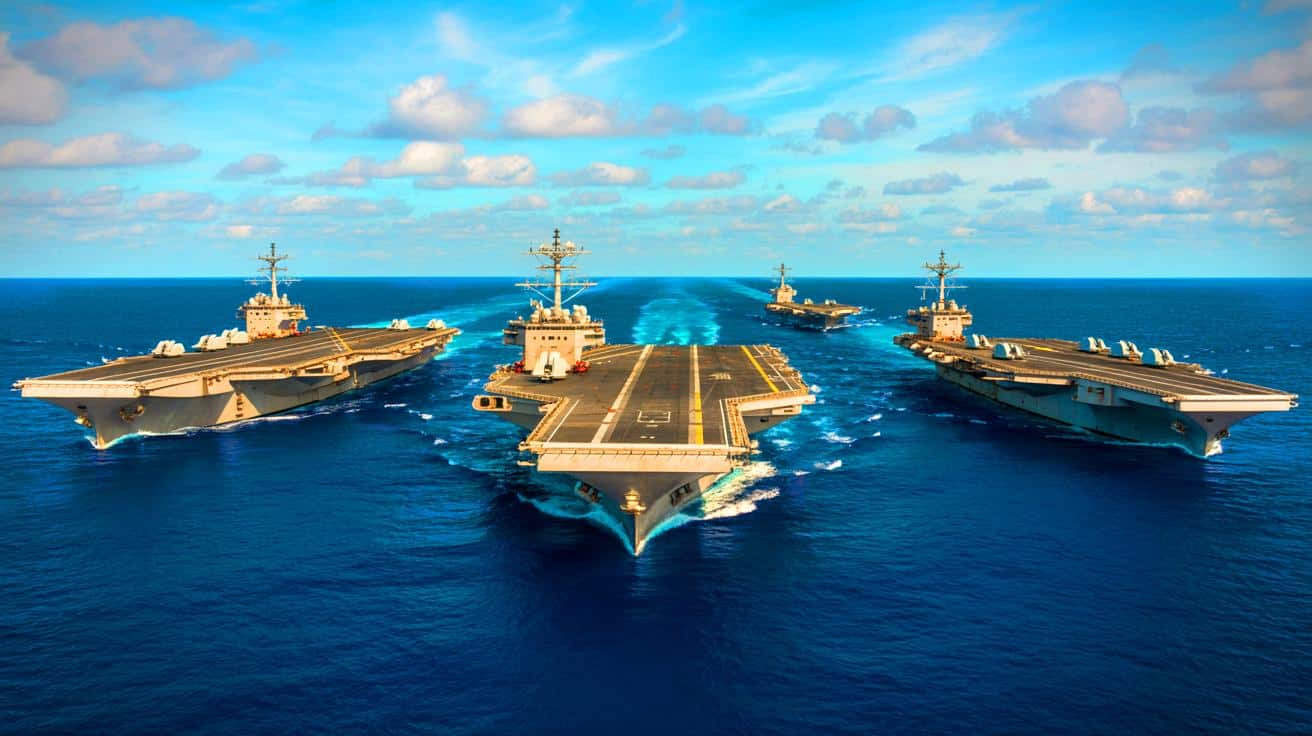
The United States has recently increased its naval presence near Venezuela, marking a significant military buildup in the Caribbean. This move has sparked concerns and criticism from Caracas, especially following joint exercises with Trinidad and Tobago. The deployment includes the USS Gerald R. Ford aircraft carrier strike group, redirected from the Mediterranean to the Caribbean. The Pentagon’s stated goal is to enhance the U.S. capacity to detect and disrupt illicit activities in the region. This strategic maneuver comes amidst heightened tensions and echoes of past military confrontations in the area.
U.S. Naval Build-Up in the Caribbean
The U.S. has significantly increased its naval presence in the Caribbean, a move reminiscent of the Cuban Missile Crisis. The deployment of the USS Gerald R. Ford aircraft carrier strike group to the region marks the first time such a large number of U.S. naval assets have been positioned there since that historic standoff. This decision has been justified by the Pentagon as a measure to combat illicit activities, such as drug trafficking, in the area. However, the presence of a carrier strike group, with its substantial firepower, suggests that the U.S. may have additional strategic objectives in mind.
Caracas has criticized this buildup, particularly in light of joint military exercises conducted with Trinidad and Tobago. The exercises, and the accompanying naval presence, have been viewed as provocative by the Venezuelan government. This tension underscores the complex geopolitical dynamics at play in the region, where U.S. interests often clash with those of neighboring countries. The situation remains fluid, with potential implications for regional stability and international relations.
China Accuses NSA of Long-Term Hacking, Revealing Years of Targeted Attacks on National Time Systems
Controversial Maritime Operations
The U.S. has reportedly conducted several military operations off the coast of Latin America since September, resulting in the destruction of at least 10 boats and the deaths of over three dozen individuals. The White House claims these individuals were involved in drug trafficking and terrorism, yet has provided limited evidence to substantiate these assertions. These actions have been criticized as extrajudicial killings, raising ethical and legal questions.
Retired Navy officer Bryan Clark has noted that the carrier strike group’s capabilities are more suited for land-based attacks than for targeting small vessels at sea. This observation suggests that the U.S. may be preparing for potential strikes within Venezuela, despite official statements focusing on maritime operations. The lack of transparency and accountability in these operations has fueled criticism and demands for further investigation into the U.S. military’s actions in the region.
Aircraft Incidents in the South China Sea
In a separate development, the U.S. Navy reported the loss of two aircraft in the South China Sea under unclear circumstances. The incidents involved a Navy MH-60R Sea Hawk helicopter and an F/A-18F Super Hornet fighter jet, both of which went down during routine operations. Fortunately, all crew members were safely recovered, but the cause of the accidents remains under investigation.
These events occurred while the USS Nimitz carrier strike group was operating in the region, having been deployed since March. Speculation has arisen regarding the cause of the accidents, with President Donald Trump suggesting “bad fuel” as a possible factor. However, no definitive conclusions have been reached, and the investigation continues. These incidents highlight the risks associated with military operations in contested areas like the South China Sea.
Legal Challenges and Controversies
In the legal arena, the 9th Circuit Court of Appeals recently reversed a victory for the White House in a National Guard case. The reversal followed revelations that Justice Department lawyers had misrepresented troop numbers during deployments in Portland, Oregon. This case is part of ongoing litigation concerning the federal government’s use of military forces in domestic settings.
Discovery processes revealed discrepancies in troop deployments, with numbers significantly lower than previously reported. As a result, the National Guard’s deployment to Portland has been halted pending further legal proceedings. This case underscores the challenges and controversies surrounding the use of federal forces in domestic law enforcement roles, raising questions about transparency, accountability, and the appropriate limits of executive power.
The geopolitical landscape continues to evolve, with the U.S. military’s actions in the Caribbean and beyond reflecting broader strategic interests and challenges. As tensions persist in areas like Venezuela and the South China Sea, how will these developments shape future diplomatic and military engagements? What measures can be taken to ensure accountability and transparency in military operations, both domestically and internationally?
Continue reading