

“Nuclear Subs Transport Gas Underwater”: Russia’s Arctic LNG Fleet Uses Three Rhythm-200 Reactors Cutting Transit From 20 to 12 Days
 By
Adam Kovács
By
Adam Kovács
| IN A NUTSHELL |
|
The exploration of nuclear-powered submarines for transporting liquefied natural gas (LNG) from the Arctic to Asia represents a significant shift in energy logistics. Russia, driven by recent geopolitical tensions and sanctions, is spearheading this innovative approach. The collaboration between the Kurchatov Institute and Gazprom aims to overcome the challenges posed by Arctic ice and improve year-round LNG transport. This groundbreaking project promises increased safety and efficiency compared to traditional methods, potentially revolutionizing global energy transportation. As this ambitious endeavor unfolds, it raises questions about its impact on the future of energy logistics.
Revolutionary Nuclear Underwater Gas Carrier Design
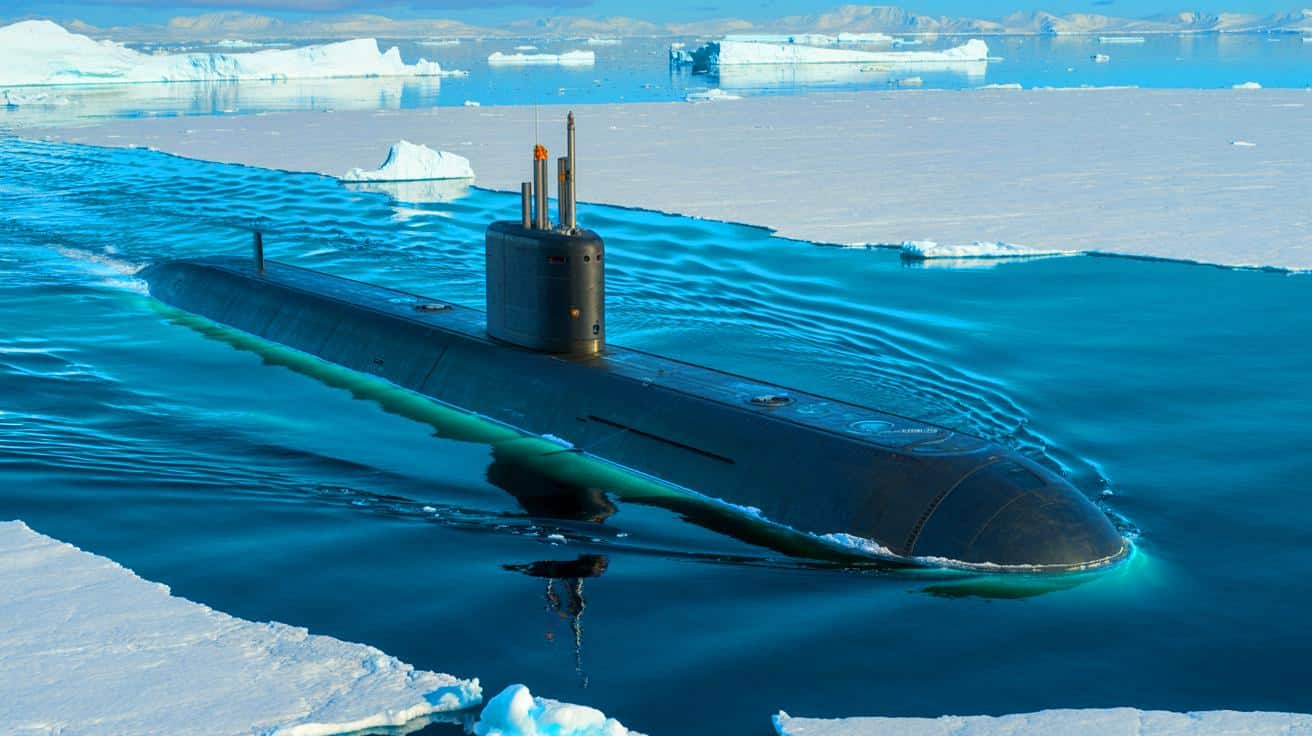
At the core of this initiative is the development of a nuclear-powered underwater gas carrier, designed to transform LNG transportation. Mikhail Kovalchuk, director of the Kurchatov Institute, presented a model showcasing the carrier’s capabilities. Equipped with three Rhythm-200 nuclear reactors, each powering a 30 MW propeller electric motor, the vessel is expected to achieve speeds of approximately 17 knots. This advancement could reduce the voyage along the Northern Sea Route from 20 days to just 12.
The vessel’s design is optimized for integration with existing infrastructure. It boasts a cargo capacity of approximately 200,000 tons, a length of about 1,180 feet, and a draft of 46 feet. This sizeable carrier is capable of handling substantial LNG volumes while navigating the challenging Arctic waters. The design minimizes ice contact, enhancing speed and ensuring safer transit. This project holds the potential to reshape energy logistics by providing a more efficient and secure mode of transport.
“Doctors Warn of Chaos”: China’s Pig Lung Transplant Stirs Global Medical Tensions
Kurchatov Institute’s Collaboration with Gazprom
The venture is a collaborative effort between the Kurchatov Institute and Gazprom, Russia’s leading energy company. The partnership seeks to address the obstacles posed by Arctic ice, which hinder traditional gas transport for part of the year. Discussions around nuclear-powered gas carriers have been ongoing since the early 2000s, but Gazprom’s involvement has accelerated the project’s development.
Challenges remain, particularly with the Ob Bay, which is too shallow for the submarines to navigate submerged. Icebreakers will continue to be necessary to guide the vessels from ports like Sabetta and Gydan to deeper waters. Despite these obstacles, the project is promising for year-round LNG transport, potentially revolutionizing Russia’s gas export capabilities.
Enhanced Safety and Efficiency Over Surface Carriers
Officials emphasize the increased safety of the submarine model compared to traditional surface carriers and pipelines. By transporting LNG underwater, the risk of environmental spills and surface disruptions is minimized. A few submarines could transport volumes of gas equivalent to subsea pipelines, providing a compact and efficient alternative.
This initiative is a response to a shortage of traditional ice-LNG tankers, worsened by international sanctions. Novatek, Russia’s largest LNG producer, had plans to expand its fleet, but these were halted due to geopolitical tensions. Consequently, the development of the Northern Sea Route has faced setbacks, with cargo transport projections not meeting initial expectations.
Challenges and Implications for Global Energy Transport
The project faces several hurdles, including technological and logistical challenges. The domestic production of these carriers at the Rosneft-controlled Zvezda shipyard has encountered difficulties, complicating timelines. The termination of contracts with international partners has further stalled progress. Despite these challenges, the potential benefits of nuclear-powered LNG transportation are significant.
By pioneering this technology, Russia positions itself as a leader in innovative energy transport solutions. The success of this endeavor could lead to a new era in LNG logistics, reducing reliance on traditional routes. However, the broader implications for global energy markets and environmental concerns remain uncertain. As nations navigate evolving energy demands, will this bold move set a precedent for future transport innovations?
This ambitious project by Russia highlights its drive to innovate in the face of geopolitical and logistical challenges. The use of nuclear-powered submarines for LNG transport could reshape the future of energy logistics. However, the project’s success depends on overcoming significant hurdles and addressing environmental concerns. As the world witnesses these developments, it raises the question: how will this impact the global landscape of energy transportation?