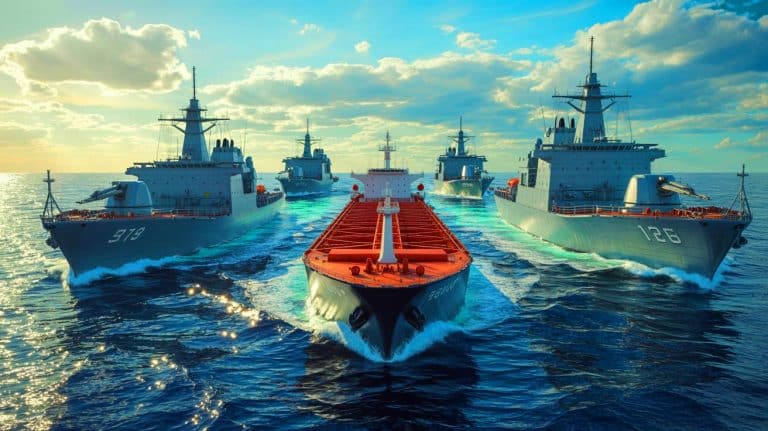



“Warship Drops Robot Into Ocean”: German Military Machine Swims To Shore Alone While NATO Tests Autonomous Beach Invasion
 By
Adam Kovács
By
Adam Kovács
| IN A NUTSHELL |
|
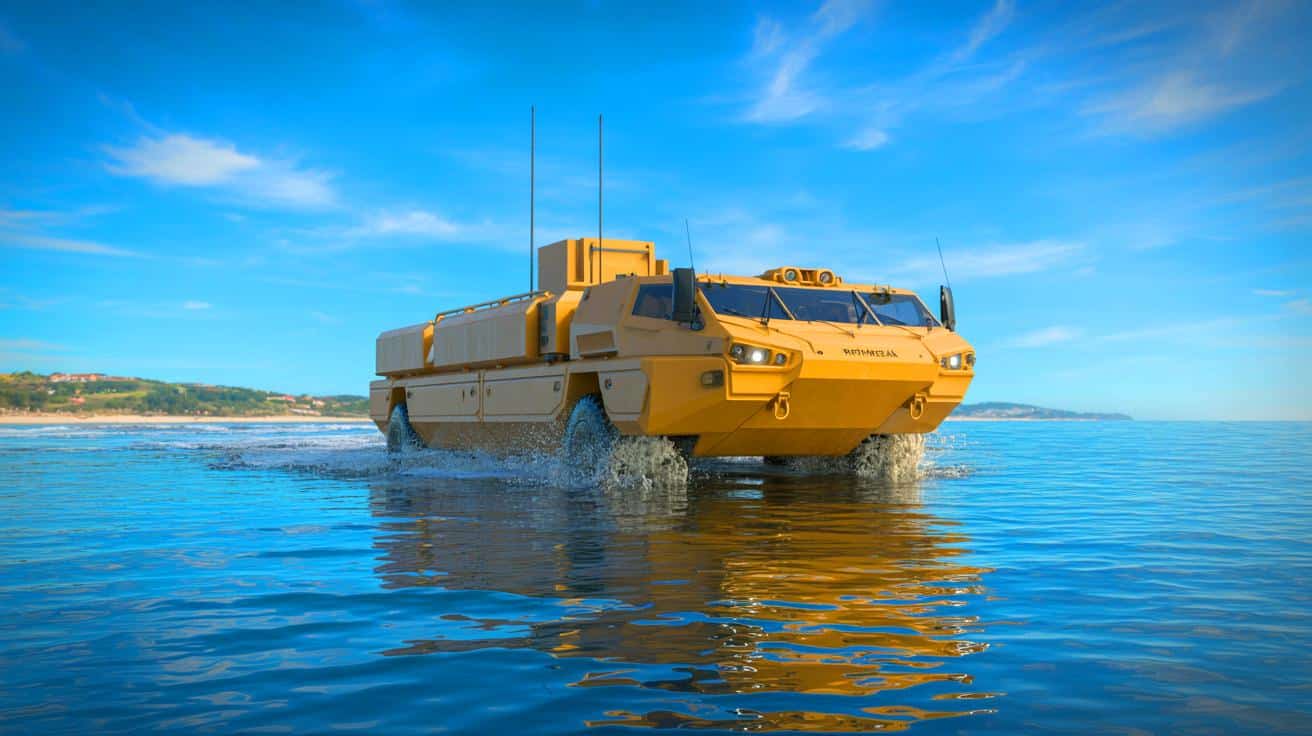
The recent advancements in military technology have been nothing short of remarkable, with autonomous systems taking center stage. One such notable innovation is the Rheinmetall Mission Master 2.0, an unmanned ground vehicle (UGV) that recently underwent a rigorous testing phase. Dropped from a warship into the unpredictable waters of the Atlantic Ocean, the Mission Master 2.0 successfully navigated back to a Portuguese beach without human intervention. This test was part of a NATO exercise aimed at evaluating the capabilities of unmanned systems for maritime operations. The trial’s success underscores the potential of UGVs in modern military strategies, particularly in sea-to-shore transitions.
Modular Kit for Maritime Tasks
The Mission Master 2.0 trial featured a robust configuration designed to support a range of maritime operations. The vehicle was equipped with a modular kit that included a tethered drone from France’s Elistair, an Echodyne radar from the United States, and Rheinmetall’s own mast and sensor package. This setup was tailored to enhance scouting, sensing, and communications, key roles that navies and marine units increasingly demand from unmanned systems.
According to Étienne Rancourt, Rheinmetall Canada’s Director of International Business Development, the vehicle incorporated upgrades based on operator feedback from countries like the U.S., Norway, and the UK. These enhancements were primarily focused on increasing the vehicle’s robustness and stability, particularly in challenging saltwater conditions and shoreline terrains. The trial demonstrated that the Mission Master 2.0 could operate effectively in these demanding environments, showcasing its potential as a versatile tool for maritime forces.
Mission Master Family and Autonomy
The Mission Master series by Rheinmetall includes a variety of UGVs designed for diverse mission sets, such as surveillance, logistics, casualty evacuation, communications relay, and fire support. Each model in the series is equipped with Rheinmetall’s Path autonomous kit, or A-kit. This technology allows the vehicles to operate in follow, convoy, and fully autonomous modes, thereby reducing the workload on military personnel.
An important aspect of the Mission Master’s design is the commitment to keeping a human in the loop during kinetic operations, ensuring that machines do not autonomously decide when to engage in combat. Rheinmetall emphasizes the importance of this human oversight, especially as artificial intelligence technologies continue to evolve. The Path A-kit’s open, flexible architecture allows for rapid integration of new innovations, enabling armed forces to easily update sensors and software without having to replace the entire vehicle.
Wider Trends and Partnered Systems
The recent NATO exercise in Portugal highlighted a growing trend in military strategies: the integration of unmanned systems capable of bridging sea and land operations. Militaries are increasingly interested in deploying robots that can scout ahead, gather intelligence on beaches and littoral zones, and transport supplies during complex amphibious maneuvers. These capabilities offer significant strategic advantages in modern combat scenarios.
During the exercise, Rheinmetall also showcased partnered weapons systems and rapid-response capabilities. Notably, a Hero-120 loitering munition from Uvision was displayed alongside the Mission Master, demonstrating its effectiveness in a mock quick-reaction scenario.
“We were shortly notified of our mission, and within two minutes of receiving the coordinates of the target, we were set up on the beach to launch and strike it,” a Uvision USA representative reported.
This demonstration underscored the potential for sensor-equipped ground robots to enhance targeting and launch operations during near-shore missions.
Implications for Future Military Operations
The successful trial of the Mission Master 2.0 and the broader interest in unmanned systems reflect a significant shift in military tactics. As technology continues to advance, the role of autonomous systems in military operations is expected to expand. These systems offer numerous advantages, including reduced risk to human life, increased operational efficiency, and the ability to conduct missions in harsh environments.
The NATO exercise served as a proving ground for the potential applications of these technologies in real-world scenarios. As countries continue to explore and develop unmanned systems, the question remains: How will these advancements redefine the future of warfare, and what ethical considerations will arise as a result?
Continue reading