


“The Fortress Built to Survive Nuclear War” Inside America’s Cheyenne Mountain Complex and the New Fears Rising Outside Its Gates
 By
Adam Kovács
By
Adam Kovács
| IN A NUTSHELL |
|
In the heart of Colorado, nestled beneath the rugged terrain of Cheyenne Mountain, lies a critical element of American military infrastructure. The Cheyenne Mountain Complex has stood as a testament to the United States’ military and technological prowess since its inception in 1966. Originally conceived during the Cold War, this facility has evolved into a vital component of national defense strategy, adapting to modern threats and challenges. As the geopolitical landscape continues to shift, Cheyenne Mountain remains a symbol of resilience and strategic foresight. Yet, recent developments around the area have sparked local concerns about safety and the impact of urban expansion.
The Fortress Beneath the Mountain
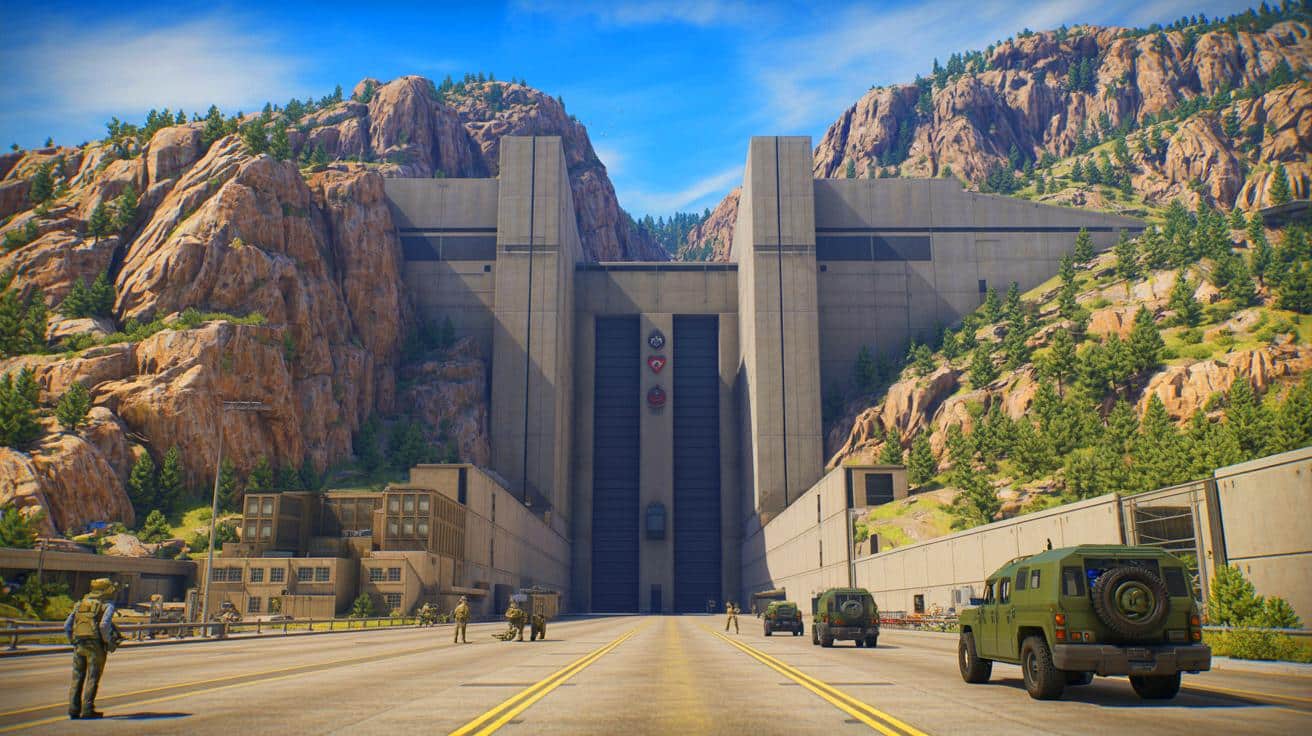
The Cheyenne Mountain Complex was constructed during the tense years of the Cold War, designed to provide unprecedented protection against the threat of nuclear attacks from the Soviet Union. Hidden beneath a massive layer of granite, the facility was engineered to withstand a nuclear explosion of up to 30 megatons. This made it one of the most fortified military installations in the world.
The construction involved excavating approximately 693,000 tons of granite, creating a subterranean fortress that could withstand even the most extreme war scenarios. Inside, the complex features 23-ton blast doors and a system of 15 buildings mounted on springs to mitigate the impacts of a nuclear detonation. These innovations ensured that military operations could continue unimpeded, even in the aftermath of a nuclear explosion.
The resilience of this complex highlights its importance in the broader defense strategy of the United States. The facility’s design reflects a commitment to maintaining operational continuity in the most dire of circumstances. In an era defined by uncertainty and the looming threat of global conflict, Cheyenne Mountain stood as a bastion of security for the nation.
A Pillar of American Defense
Today, the Cheyenne Mountain Complex continues to play a crucial role in U.S. defense operations. Managed by the Space Base Delta 1 of the U.S. Space Force, the facility hosts a wide range of military and civilian activities. Among its primary functions are airspace surveillance and missile defense, both critical for early detection and neutralization of potential threats.
The complex also serves as a hub for intelligence analysis, processing data from various sources to ensure informed and rapid responses to emerging situations. This capability is vital not only for U.S. national security but also for the safety of its allies worldwide. As a result, Cheyenne Mountain remains a cornerstone of global stability.
Despite its extensive capabilities, NORAD and USNORTHCOM currently utilize less than 30% of the available space within the complex. This underutilization offers potential for future expansion and adaptation to incorporate new technologies and address evolving threats. The flexibility of the complex is a testament to its enduring relevance in the landscape of American defense.
Local Concerns Over Urban Development
Recent developments in the vicinity of Cheyenne Mountain have raised significant concerns among local residents. Plans for a new housing project that would introduce 400 apartments to the area have sparked fears about emergency evacuation capabilities, especially in the event of natural disasters like wildfires.
The potential increase in population and traffic presents challenges for emergency management, particularly in a region prone to environmental hazards. The ability to evacuate quickly and efficiently is crucial, and existing infrastructure may struggle to support an influx of residents during a crisis.
This situation underscores the tension between urban growth and military strategic needs. While the demand for housing grows, it is imperative not to compromise on civilian safety and emergency preparedness.
Residents emphasize the need for thorough evaluation of how such developments could impact existing evacuation routes and infrastructure.
Balancing urban expansion with the imperatives of civil and environmental safety is a pressing concern for the Cheyenne Mountain community.
Summary and Future Considerations
The Cheyenne Mountain Complex, located in Colorado Springs, remains a vital component of the United States' military infrastructure. Originally built for nuclear protection, it now functions as an alternative command center for NORAD and USNORTHCOM. However, recent local development projects have highlighted concerns about emergency evacuation capabilities.
As urban areas continue to expand, the challenge lies in maintaining a balance between growth and safety. How can communities like Cheyenne Mountain ensure that urban development does not compromise their ability to respond to emergencies effectively? This question remains at the forefront as stakeholders navigate the complexities of growth and security in this strategically significant region.
Continue reading