


Russia’s MiG-35 Fighter Struggles: A Persistent Issue Impacting Defense Capabilities and Strategic Military Planning
 By
Adam Kovács
By
Adam Kovács
| IN A NUTSHELL |
|
The MiG-35, Russia’s latest addition to its fighter jet fleet, represents an ambitious attempt to bridge the gap between fourth-generation and fifth-generation combat aircraft. Featuring advanced avionics, radar systems, and a multirole capability, the MiG-35 promises a lot on paper. Yet, its real-world performance has fallen short of expectations. With limited production and minimal export success, the aircraft has failed to make a significant impact. As global military technology advances, the MiG-35’s lack of stealth and networking capabilities leaves it struggling to compete with rivals in the evolving landscape of modern warfare.
The Evolution of the MiG-35
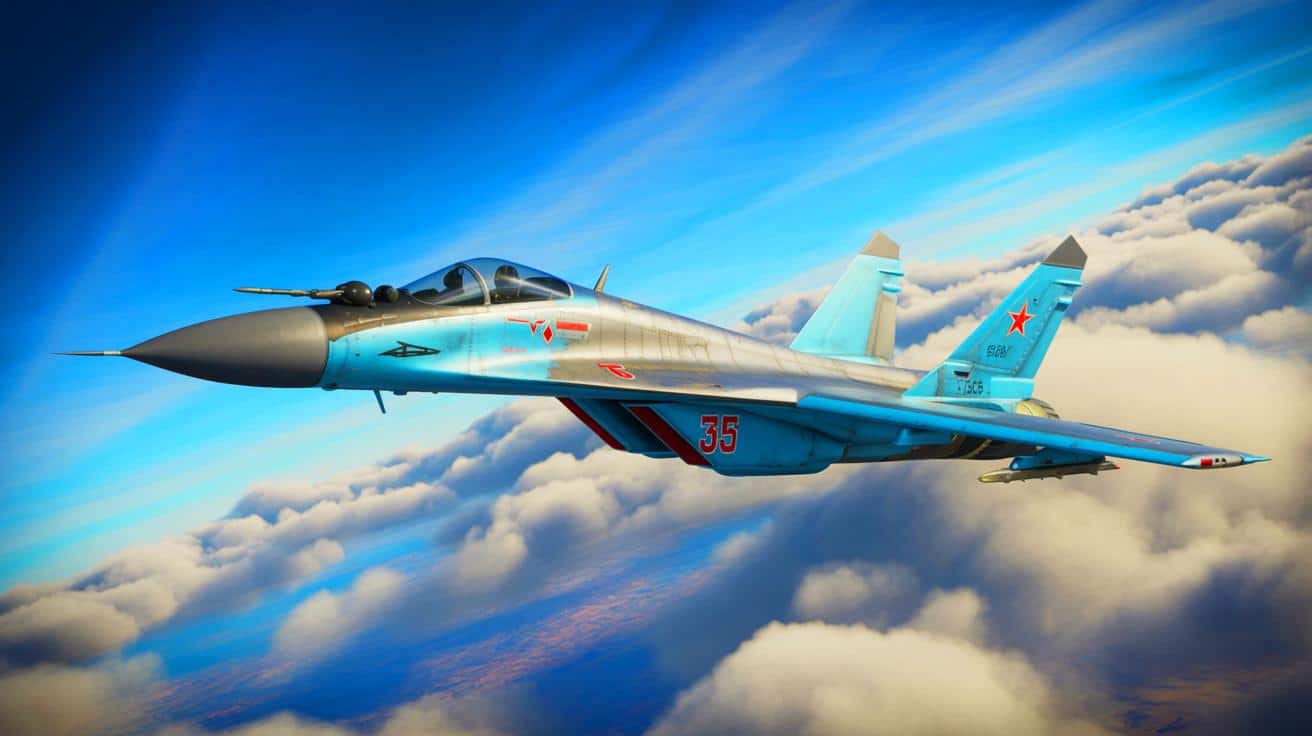
The MiG-35 was conceived as a significant evolutionary step from the earlier MiG-29. With its design focused on agility and cost-effectiveness, the MiG-35 incorporates advanced avionics and weaponry systems. The platform’s most notable upgrade is its active electronically scanned array (AESA) radar, which enhances target tracking and engagement range. However, the MiG-35 is not a stealth aircraft. Its design prioritizes affordability and incremental improvements over low observability, which is a defining feature of fifth-generation fighters.
Despite its enhancements over the MiG-29, the MiG-35 has not been warmly received in domestic or international markets. This lukewarm reception has raised questions about its viability in a competitive market filled with advanced combat aircraft. The MiG-35’s inability to secure significant export contracts further underscores its struggle to find a foothold.
Capabilities and Limitations
Designed as a multirole fighter, the MiG-35 can perform both air-to-air and ground-attack missions. Its high thrust-to-weight ratio and advanced fly-by-wire systems contribute to its exceptional maneuverability. The aircraft can deploy precision-guided munitions, anti-ship missiles, and air-to-ground rockets, making it a versatile option for various mission profiles.
However, the MiG-35’s emphasis on agility and traditional air superiority reflects Russian air doctrine that prioritizes dogfighting capability over stealth and technological overmatch. This approach presents challenges in modern combat scenarios, where adversaries often deploy advanced stealth aircraft and integrated air defense systems. Despite its AESA radar and electronic warfare capabilities, the MiG-35 lacks the low observability and networked capabilities of newer platforms, limiting its effectiveness against modern threats.
Challenges in Deployment and Production
The MiG-35’s deployment history has been minimal, with reports suggesting that only a small number have seen action, particularly in Ukraine. The ongoing conflict has exposed the limitations of the MiG-35 and Russia’s broader air fleet. The absence of stealth features has hindered Russia’s ability to achieve air superiority, especially against robust Ukrainian air defenses supported by Western technology.
Additionally, the MiG-35’s production numbers remain low, restricting its operational impact. The conflict in Ukraine has further strained Russian military resources, diverting attention and capacity away from expanding MiG-35 production. This situation complicates Russia’s ambitions to market the aircraft to international buyers, especially when competing with more advanced offerings from Europe and China.
Export Struggles and Future Prospects
Russia initially hoped to export the MiG-35 to countries with historical defense ties, such as Egypt and Vietnam. However, these potential deals fell through as other nations offered more competitive options. The war in Ukraine has further disrupted Russia’s ability to fulfill export contracts, limiting opportunities to secure new agreements.
Consequently, the MiG-35’s future remains uncertain as global military trends shift toward radar-mitigating stealth features and advanced networking capabilities. Without a significant technological leap, the MiG-35 risks becoming obsolete in a rapidly advancing military landscape. As nations prioritize acquiring true fifth-generation fighters, the MiG-35’s relevance continues to diminish.
The MiG-35’s journey highlights the complexities of modern military aviation. Despite its advanced features and multirole capabilities, the aircraft’s limitations in stealth and networking have impeded its success. As global military technology evolves, the MiG-35’s struggles underscore the challenges faced by legacy platforms in adapting to new paradigms. How will Russia address these challenges, and what does the future hold for the MiG-35 in a world moving toward advanced stealth and networked warfare?