


“They’re Fighting Bird Flu With Lasers”: Japan’s New Drones Protect Millions of Chickens Without Chemicals (and Farmers Are Racing to Get Them)
 By
Adam Kovács
By
Adam Kovács
| IN A NUTSHELL |
|
In an innovative step toward enhancing poultry farm security, Japanese firm NTT e-Drone Technology Company Ltd has unveiled a new laser-equipped drone system designed to protect chicken coops from potential threats. This technology comes in response to the recent bird flu outbreak in Japan’s Chiba prefecture, which resulted in the culling of millions of chickens. The drone system aims to deter wild birds and mammals that could carry diseases like bird flu, thus safeguarding poultry and maintaining the stability of the food supply chain. As the world seeks more sustainable and less harmful agricultural practices, this development may signal a significant shift in farm management techniques.
Revolutionizing Poultry Farm Protection
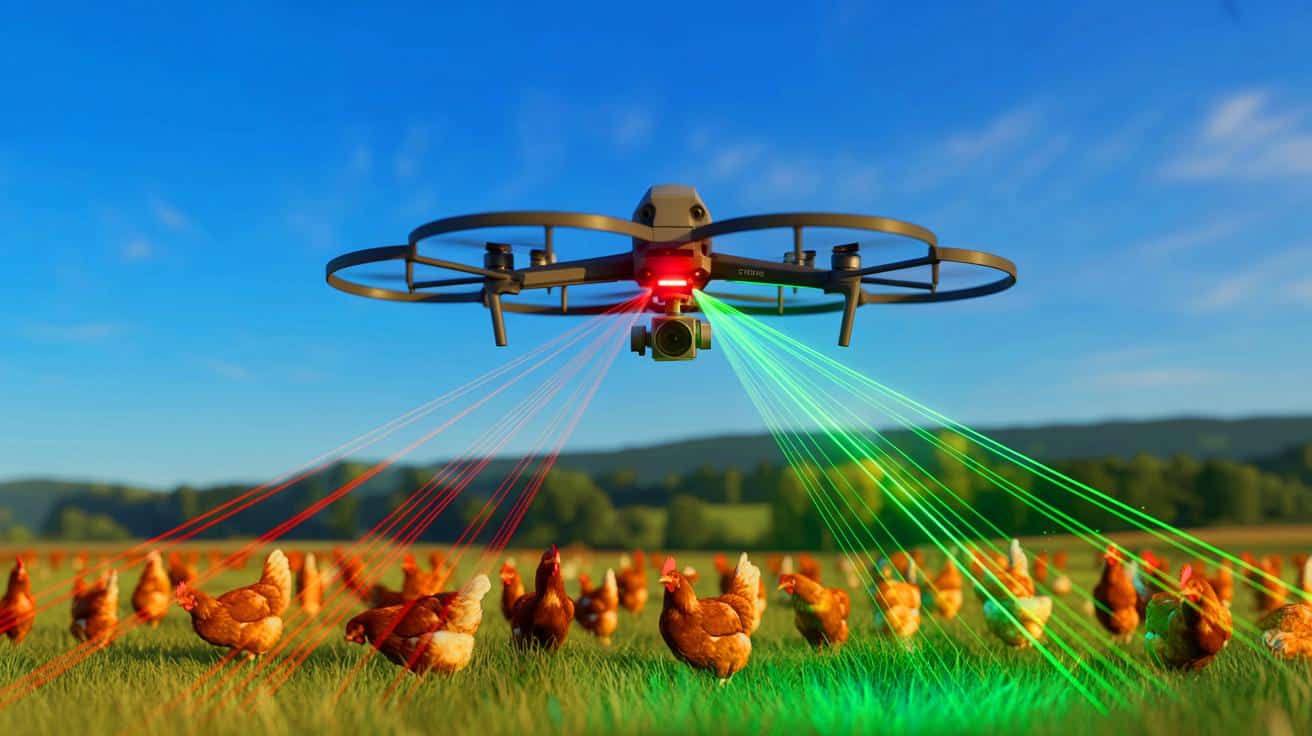
NTT e-Drone Technology’s new system is designed to transform how poultry farms protect their flocks. Equipped with a laser-grid projector, the drone autonomously navigates toward any perceived threat, such as wild birds and mammals, and emits a dazzling display of red and green lasers. This non-lethal method effectively scares away potential disease carriers without harming them. The technology is reminiscent of festive light shows, but its purpose is far from celebratory, it’s a serious attempt to combat the spread of avian diseases.
This innovative approach addresses the pressing need for effective biosecurity measures in poultry farming. Traditionally, farmers have relied on methods like chemical deterrents, guard animals, and netting to prevent wild animals from mingling with farmed birds. However, these methods can be harmful to the environment and are not always effective. By using laser drones, farmers could potentially reduce the reliance on harmful chemicals, contributing to a more sustainable and eco-friendly farming practice.
The Bird Flu Outbreak in Chiba
The laser drone system was developed in response to a severe bird flu outbreak in Chiba prefecture, which lies just east of Tokyo. Earlier this year, the outbreak led to the culling of approximately five million chickens, with 3.3 million from Chiba alone. The crisis prompted the Japanese government to deploy their version of the national guard to contain the highly pathogenic virus. The outbreak was a stark reminder of the vulnerability of poultry farms to infectious diseases and the need for improved preventive measures.
Bird flu not only threatens poultry health but also poses a risk to human health and the food supply chain. The outbreak in Chiba disrupted local food supplies, highlighting the importance of innovative solutions like the NTT drone system. By preventing wild birds and mammals from coming into contact with poultry, the drones could play a crucial role in preventing future outbreaks and ensuring the stability of food resources.
Potential Impact on Global Farming Practices
If successful, the deployment of laser drones could revolutionize farming practices worldwide. Currently, the use of chemicals such as diphacinone to deter pests has led to unintended consequences, such as the contamination of wildlife. For instance, a California trapper recently discovered wild boars with blue meat, attributed to their consumption of such chemicals. The adoption of non-toxic deterrents like laser drones could mitigate these risks.
As agriculture faces increasing pressure to become more sustainable, technologies like NTT’s drone system could offer viable solutions. By reducing the need for chemical deterrents and minimizing environmental impact, laser drones represent a step forward in sustainable farming. This technology not only aligns with global goals for sustainable development but also demonstrates how innovation can address critical challenges in food production and safety.
Future Prospects and Challenges
While the NTT drone system is still in the proof-of-concept stage, its potential has sparked interest among local authorities in Chiba. The prefectural government is considering the adoption of the drones, with subsidies planned to support farmers in deploying this technology. The success of this initiative could pave the way for broader implementation across Japan and beyond.
However, challenges remain. The effectiveness of the drones in diverse farming environments must be tested, and farmers will need training to operate the systems effectively. Moreover, the cost of implementation could be a barrier for smaller farms, despite potential subsidies. As the agricultural sector continues to evolve, balancing innovation with accessibility will be crucial for widespread adoption.
The introduction of laser drones in poultry farming represents a promising advancement in agricultural technology. By addressing biosecurity challenges and reducing reliance on harmful chemicals, this innovation could significantly impact farming practices. As the world grapples with food security and environmental sustainability, how might such technologies shape the future of agriculture on a global scale?
Continue reading