



“This Changes Everything About Ancient Egypt”: This Newly Found Fortress Reveals a Hidden Military Power Beneath the Sands of Sinai (and It’s Massive)
 By
Adam Kovács
By
Adam Kovács
| IN A NUTSHELL |
|
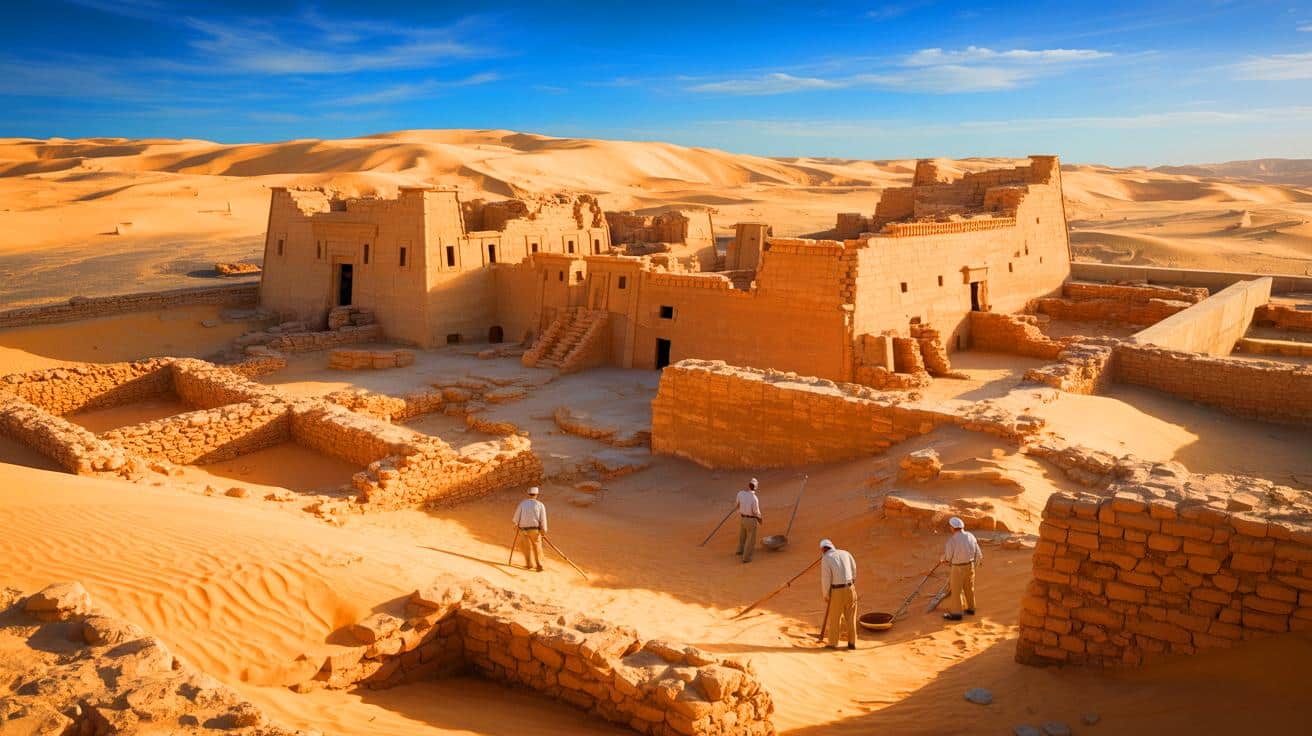
Recent archaeological discoveries in Egypt have once again highlighted the ingenuity and strategic prowess of ancient Egyptian civilization. In North Sinai, near the Mediterranean coast, Egyptian archaeologists have unearthed a massive military fortress, described as one of the largest ever found along the historic Horus War Road. This fortress, believed to have been constructed between 1550 and 1300 B.C.E., offers a fascinating glimpse into the defensive strategies employed by the Egyptians during the New Kingdom. The site’s remarkable design, featuring zigzagging walls and defensive towers, underscores the tactical brilliance of the ancient builders. These discoveries not only enrich our understanding of Egypt’s military history but also reinforce Sinai’s unique cultural significance throughout history.
The Strategic Importance of the Horus War Road
The Horus War Road was a vital military and trade route that connected the Nile Valley with Palestine. This strategic corridor was heavily fortified to protect Egypt’s eastern borders from potential invaders. The recent discovery of a large fortress along this route provides critical insights into the complexity of Egypt’s ancient defense network. Archaeologists have long known about the network of fortresses that dotted this area, but each new find adds a layer of understanding to the military organization of the time.
Mohamed Ismail Khaled, secretary general of the Supreme Council of Antiquities, emphasized the significance of this discovery. According to Khaled, “every fortress we discover adds a new brick to our understanding of the military and defensive organization.” This latest find helps to reconstruct the comprehensive defensive strategy that ancient Egyptians employed to safeguard their territory. The fortresses not only served military purposes but were also integral to the region’s trade routes, showcasing Egypt’s far-reaching influence.
Architectural Innovations and Defensive Features
The newly discovered fortress in North Sinai is an architectural marvel. Covering an area of 86,000 square feet, it is three times larger than a fortress previously found at the same site in the 1980s. The fortress’s southern wall, measuring 344 feet long and eight feet wide, is a testament to the meticulous planning of its builders. The wall underwent multiple reconstructions, highlighting the dynamic nature of military architecture in response to evolving threats.
One of the most intriguing aspects of the site is the zigzag wall on the western side, spanning 246 feet. This zigzag design was a distinct defensive feature, intended to confuse and hinder enemy forces. Mohamed Abdel Badi, head of the Egyptian Antiquities Sector, noted that these architectural elements demonstrate the strategic foresight of ancient Egyptian engineers. Additionally, the site includes 11 defensive towers, further reinforcing the fortress’s defensive capabilities.
Daily Life and Trade Within the Fortress
Beyond its military significance, the fortress provides valuable insights into the daily lives of the soldiers stationed there. Archaeologists have uncovered ceramics and vessels dating back to the first half of the 18th Dynasty. Among these finds is a vessel handle with a seal bearing the name of Pharaoh Thutmose I, offering a tangible connection to Egypt’s illustrious past.
The discovery of an oven for baking bread, complete with petrified dough, reveals that the fortress was well-equipped to support the daily needs of its inhabitants. The presence of volcanic stone, likely imported from the Greek islands, suggests that the site also played a pivotal role in Egypt’s trade networks. These findings underscore that ancient Egypt was not only a land of monumental temples and tombs but also a vibrant political and economic entity.
Reinforcing Sinai’s Cultural and Historical Significance
Egypt’s New Kingdom era was marked by significant construction efforts, not only in temples and monuments but also in fortifications along the Mediterranean coast. The discovery of this massive fortress in North Sinai adds a new chapter to the region’s rich cultural and historical narrative. As Sherif Fathy, Egypt’s minister of tourism and antiquities, stated, these findings “narrate new chapters of our extensive military history and reinforce Sinai’s position as a territory that holds unique cultural evidence across all eras.”
The continuous efforts to unearth and study these fortifications highlight the importance of preserving Egypt’s heritage. Each discovery not only enriches our understanding of ancient civilizations but also sheds light on the intricate tapestry of human history. As researchers continue to explore these sites, they paint a more comprehensive picture of the past, offering invaluable lessons for the present and future.
As the sands of North Sinai continue to reveal their ancient secrets, the question remains: What other hidden treasures lie beneath, waiting to offer fresh insights into Egypt’s storied past? Each discovery beckons further exploration, urging archaeologists to delve deeper into the mysteries of ancient civilizations. What new chapters will these discoveries write in the ongoing story of human history?
Continue reading